NodOn Zigbee Roller Shutter Relay Switch Review: A Hidden Module That Motorizes Your Blinds
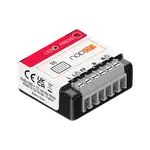
The NodOn Zigbee Roller Shutter Relay Switch is a concealed Zigbee 3.0 module that turns a motorized roller shutter, awning or rolling sunshade into one you can control remotely and automate. It switches 230V AC at up to 3A and drives motors rated up to 280W and 60 Nm with integrated zero crossing, auto-calibrates to the equipment, and keeps an optional existing wall switch working by detecting a rocker or push-button. It needs a Zigbee hub or coordinator and has no energy monitoring, no Matter and no native Apple Home support, so it suits homes and buildings already running a Zigbee network such as Home Assistant, Zigbee2MQTT, SmartThings or Alexa.
- Retrofitting roller shutters, awnings and sunshades
- Home Assistant and Zigbee2MQTT households
- Buildings centralizing many openings
- Keeping an existing wired wall switch
One relay per circuit you automate.
Buy on Amazon USACheck pricePros
- Motorizes roller shutters, awnings and rolling sunshades over Zigbee
- Auto-calibration with no settings needed
- Switches 230V AC up to 3A, with a 280W and 60 Nm motor rating and integrated zero crossing
- Optional wired wall switch with automatic rocker or push-button detection
- Over-the-air firmware updates
- Works with Home Assistant, Zigbee2MQTT, SmartThings and Alexa
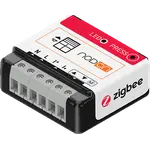
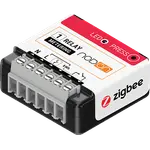
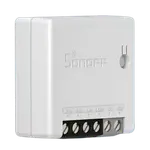
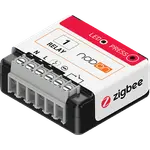
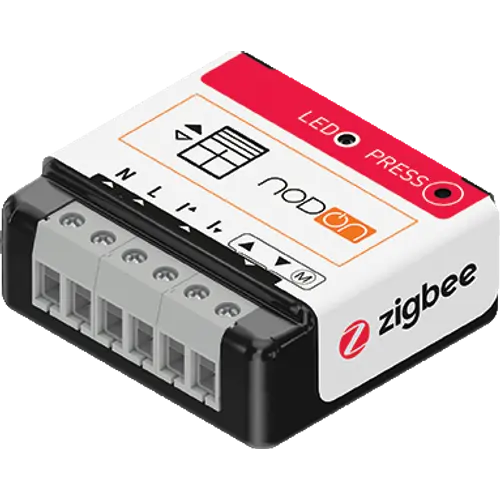
- Compact 44 x 40 x 16.9 mm module fits behind the switch or in a flush box
Cons
- Needs a Zigbee hub or coordinator; there is no Wi-Fi radio
- No energy monitoring
- No Matter and no native Apple Home support
- Alexa control is voice-only in NodOn's compatibility notes
- Panel installation needs the optional NodOn DIN Rail Box
- The motor rating caps at 280W and 60 Nm
- No manual on/off button for the motor itself
Who is the NodOn Zigbee Roller Shutter Relay Switch for?
This is a retrofit module for anyone who wants to add remote or scheduled control to a motorized opening without replacing the motor or running new cabling. It hides behind the existing wall switch or inside a flush box, and with the optional NodOn DIN Rail Box it also fits the electrical panel, which makes it a fit for a single bedroom shutter as much as for centralizing every opening on a floor or in a building. It joins a Zigbee 3.0 network, so it belongs in a home already using a coordinator such as Home Assistant, Zigbee2MQTT, SmartThings or Alexa rather than a plug-and-play Wi-Fi setup.
What the NodOn Zigbee Roller Shutter Relay Switch offers
The headline capabilities are its 230V AC switching at up to 3A and a motor rating of 280W and 60 Nm with integrated zero crossing to soften switching. Auto-calibration means the module learns the travel of the opening on its own, so there are no settings to enter, and it works with roller shutters, awnings and rolling sunshades. A wired wall switch is optional on the input terminals, and the module detects whether it is a two-way rocker or a push-button so an existing switch keeps working. It is Zigbee 3.0 certified for interoperability, takes over-the-air firmware updates, and at 44 x 40 x 16.9 mm and 34 g it slips into a standard flush box. It identifies as a Window Covering Device, which is how gateways expose it as a cover with open, close and position control.
What to know before you buy
This is a Zigbee device without Wi-Fi, so it needs a coordinator and will not work on its own. It requires a neutral wire, and the 3A contact rating and 280W motor ceiling set the limit for what it can drive. It has no energy monitoring, no Matter support and no native Apple Home path, and NodOn does not list Google Home among its compatible gateways, so it suits homes built around Zigbee rather than Apple or Matter-first setups. Alexa is listed as compatible but only for voice control. Local control comes from the optional wired switch rather than a button on the module, panel installation depends on the optional DIN Rail Box accessory, and the module is rated IP20 for indoor use inside a compliant connection box.
Is the NodOn Zigbee Roller Shutter Relay Switch worth it?
For a single hard-to-reach opening, the module does the job a smart blind motor would do at a fraction of the disruption, because it reuses the motor already installed and simply adds Zigbee control behind the existing switch. Its auto-calibration, wired-switch support and over-the-air updates make it practical to install and maintain, and its 280W and 60 Nm rating covers the common tubular motors found in homes and small buildings. Homes that want energy data, Matter or an Apple Home path should look elsewhere, but for local Zigbee control of roller shutters, awnings and sunshades in a network it already speaks, this is a clean fit.
Frequently asked questions
Does the NodOn Zigbee Roller Shutter Relay Switch need a hub?
Yes. It is a Zigbee 3.0 device with no Wi-Fi radio, so it needs a Zigbee coordinator or hub such as Home Assistant with Zigbee2MQTT or ZHA, a SmartThings hub, or an Echo device with a built-in Zigbee hub.
Does it need a neutral wire?
Yes. It is powered from 230V AC with a line and a neutral terminal, plus the motor output terminals and the optional wired-switch inputs.
What kind of motor can it control?
It drives 230V AC motors rated up to 280W and 60 Nm, and NodOn publishes a list of compatible motors. It is built for roller shutters, awnings and rolling sunshades, including equivalent mechanical limit switch motors under 60 Nm.
Does it work with Apple Home, Google Home or Matter?
No. It has no Matter support and no native Apple Home path, and NodOn does not list Google Home among its compatible gateways. It works with Home Assistant, Zigbee2MQTT, SmartThings and Alexa, with Alexa limited to voice control.
Can I keep my existing wall switch?
Yes. A wired wall switch is optional on the input terminals, and the module automatically detects whether it is a two-way rocker or a push-button, so an existing switch keeps working.
Does it update over the air?
Yes. It supports Zigbee over-the-air firmware updates through a compatible gateway or the NodOn Connect app.
Does it measure energy use?
No. It switches the motor but does not report power consumption.