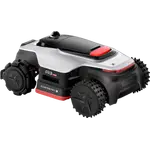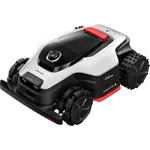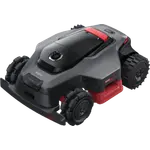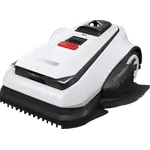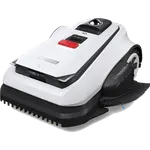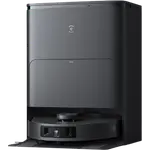
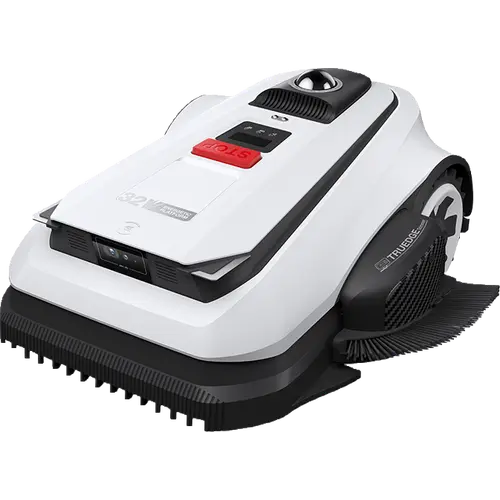
Ecovacs GOAT A2000 LiDAR PRO
Model: GOAT A2000 LiDAR PRO
Summary
Everything this robot lawn mower supports, grouped by category.
- Size & Materials
- Weather Resistance (IPX6)
- Coverage & Terrain
- Max Mowing Area (0.5 acre, 2023 m²)Max Slope (50%)
- Navigation
- Navigation TypeNo Perimeter WireLiDAR NavigationAI Vision Obstacle AvoidanceMulti-Zone MappingNo-Go Zones
- Cutting
- Cutting Width (13 in, 33 cm)Cutting Height (1.18 - 3.54 in, 30 - 90 mm)Cutting Height Adjustment (App-controlled)Edge Cutting (TruEdge trimmer)Blade System (Dual blade disc + TruEdge trimmer)Mowing Efficiency (4306 sq ft/h, 400 m²/h)
- Power
- Battery Capacity (3.0 Ah)Battery Life (150 minutes)Charging Time (50 minutes)
- Connectivity
- 2.4 GHz WiFiBluetooth
- Integrations
- Google HomeAlexa
- Safety
- Rain SensorLift & Tilt SensorPet & Child DetectionEmergency Stop Button
- Features
- SchedulingReal-Time Tracking in AppManual Remote Control
Price History
Loading price history...

Ecovacs
Ecovacs is a home robotics company best known for its DEEBOT robot vacuums and mops with strong suction, LiDAR navigation, obstacle avoidance and all-in-one stations that self-empty, self-wash and dry the mop. Its lineup also includes WINBOT window-cleaning robots, GOAT robotic lawn mowers, ULTRAMARINE robotic pool cleaners and AIRBOT air purifiers. Devices are managed through the ECOVACS HOME app and integrate with Alexa and Google Home.
Every spec, organized
Browse the full breakdown by category. Tap the on any row for what it means, or the for sources and documentation.
Size & Materials
- Dimensions
?
Length x Width x Height of the mower itself, without the charging station.
- Length: the longest side of the device
- Width: the shorter side of the device
- Height: the vertical dimension of the device
The width decides whether the mower fits through the gates and side passages of your garden, and the height decides whether it can drive under low benches and shrubs.
- Weight
?
The physical weight of the mower, without the charging station.
Heavier mowers usually carry bigger batteries and stronger drive motors, which helps on slopes, but they are harder to lift over steps and are more likely to leave tracks on soft lawns.
- Weather Resistance
IPX6
Robot mowers live outdoors all season, so their Ingress Protection (IP) rating is a core spec: it tells you whether the mower survives rain, sprinklers and a garden hose.
An IP rating (Ingress Protection rating) is a standardized way to describe how well a device is protected against solids (like dust) and liquids (like water). The rating consists of two digits:
- The first digit represents protection against solid particles (e.g., dust).
- The second digit represents protection against liquids (e.g., water).
First Digit (Protection Against Solids):
- IP0X: No protection against solid objects.
- IP1X: Protection against solid objects larger than 50 mm (e.g., accidental touch by hand).
- IP2X: Protection against objects larger than 12.5 mm (e.g., fingers).
- IP3X: Protection against objects larger than 2.5 mm (e.g., tools or thick wires).
- IP4X: Protection against objects larger than 1 mm (e.g., thin wires or small tools).
- IP5X: Dust-protected. Limited ingress of dust is allowed, but it won't interfere with operation.
- IP6X: Dust-tight. Complete protection against dust, ensuring no ingress of particles.
Second Digit (Protection Against Liquids)
- IPX0: No protection against water.
- IPX1: Protection against vertically falling water droplets (e.g., light rain).
- IPX2: Protection against vertically dripping water when tilted up to 15°.
- IPX3: Protection against water sprayed at an angle of up to 60° (e.g., light splashing).
- IPX4: Protection against water splashes from any direction.
- IPX5: Protection against water jets from any direction (e.g., a garden hose).
- IPX6: Protection against powerful water jets (e.g., heavy rain or washing with a hose).
- IPX7: Protection against temporary immersion in water up to 1 meter deep for up to 30 minutes.
- IPX8: Protection against continuous immersion in water beyond 1 meter.
Most robot mowers rate the body around IPX4 to IPX6. A mower you plan to rinse with a hose should be IPX5 or better, and the charging station usually carries its own, lower rating.
Coverage & Terrain
- Max Mowing Area
0.5 acre (2023 m²)
The largest lawn the manufacturer rates the mower for, in square feet. As a reference, a quarter acre is about 10,900 sq ft and a full acre is about 43,560 sq ft.
The figure assumes the mower can run several sessions per week. Buying a model rated close to your actual lawn size leaves no margin for a rainy week, so it is common to pick one size class above your lawn.
Manufacturers measure only mowable grass, not the total plot: driveways, beds, pools and the house itself do not count.
- Max Slope
50%
The steepest gradient the mower can climb, expressed as a percentage. A 45% slope rises 45 cm over 1 metre of travel, which is roughly 24 degrees.
Entry-level models stop around 30%, mid-range two-wheel-drive units reach 45% to 50%, and all-wheel-drive models go up to 80% or more.
Slope ratings assume dry grass. Wet or thatchy lawns cut the usable figure, so leave some headroom over the steepest part of your garden.
- Drive Type
?
How many wheels the mower drives: front-wheel drive (FWD), rear-wheel drive (RWD, also sold as 2WD) or all-wheel drive (AWD, also sold as 4WD).
Two-wheel-drive mowers are lighter, cheaper and fine on flat and gently rolling lawns. All-wheel drive adds traction for steep banks, wet grass, ruts and thick thatch, at a clear price premium.
- Obstacle Crossing Height
?
The tallest step, root or paving edge the mower can drive over without getting stuck.
Gardens split into zones by a path or a low kerb need a mower that can cross it on its own, otherwise you have to carry the mower between zones or set up a separate map for each one.
Cutting
- Cutting Width
13 in (33 cm)
The width of grass the mower cuts in a single pass, in inches.
A wider deck covers the lawn in fewer passes, so the mower finishes sooner and runs fewer sessions per week. Narrow decks, around 8 to 9 inches, are easier to steer through tight gardens; large models reach 17 inches.
- Cutting Height
1.18 - 3.54 in (30 - 90 mm)
The range of grass heights the mower can be set to, from the lowest to the highest setting.
Fine ornamental lawns are cut around 1 to 1.5 inches, while shaded lawns, drought-prone lawns and most warm-season grasses are healthier at 3 inches or more. Check that the range your lawn needs is actually inside the mower's range.
- Cutting Height Adjustment
App-controlled
How the cutting height is changed: by hand with a dial on the mower, or electronically from the app.
App-controlled height lets you drop the cut for a garden party and raise it for a dry spell without walking to the mower, and it allows a different height per zone.
- Edge Cutting
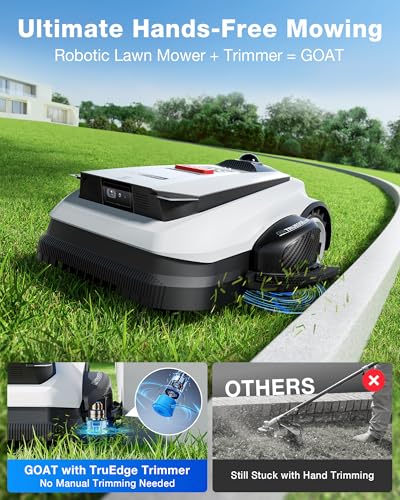
TruEdge trimmer
The ability to cut right up to a wall, fence or bed, either with a blade disc that reaches past the wheels or with a dedicated side trimmer arm.
Without it, a strip of a few centimetres is left standing along every border and you finish the job by hand with a string trimmer, which is the most common complaint about robot mowers.
- Blade System
Dual blade disc + TruEdge trimmer
The cutting hardware itself: small pivoting razor blades on a spinning disc, a single rotary blade like a traditional mower, or two blade discs side by side.
Pivoting blades are cheap to replace and fold away on impact, which is safer, but they need frequent changes and cope badly with tall or wet grass. Rotary and dual-disc systems cut heavier growth and leave a cleaner finish.
- Mowing Efficiency
4306 sq ft/h (400 m²/h)
How much lawn the mower covers per hour, in square metres, as rated by the manufacturer.
It combines cutting width, driving speed and how systematic the mowing pattern is, so it is the best single number for how long a session takes. Figures range from about 120 m²/h on small vision models to 500 m²/h and more on large systematic ones.
Power
- Battery Capacity
3.0 Ah
The size of the mower's battery pack, usually given in amp-hours (Ah) or milliamp-hours (mAh).
Capacity alone does not decide runtime, because motors and voltage differ between models, but within a brand a larger pack means longer sessions and fewer charging breaks on a big lawn.
- Battery Life
150 minutes
How long the mower cuts on a single charge before returning to the station.
Runtimes between 60 and 220 minutes are typical. A short runtime is not a problem in itself, because the mower recharges and resumes on its own, but it stretches a large lawn over more hours and more of the day.
- Charging Time
50 minutes
Time required to fully recharge the battery at the station.
Together with battery life it sets how much lawn the mower gets through in a day: a model that cuts for 90 minutes and charges in 50 works far more than one that cuts for 90 and charges for 180.
- Swappable Battery
?
Whether the battery pack can be removed and replaced by the owner without opening the mower.
A swappable pack lets you keep a charged spare for large lawns and, more importantly, means a worn battery after a few seasons is a cheap part rather than the end of the mower.
Connectivity
- 2.4 GHz WiFi
YES
Range: The 2.4 GHz band offers a longer range, meaning it can cover larger areas and penetrate solid objects like walls more effectively than 5 GHz.
Speed: Generally, 2.4 GHz provides slower speeds compared to 5 GHz due to a lower maximum data rate.
Interference: More prone to interference since many other devices (like cordless phones, microwaves, and Bluetooth devices) operate on the 2.4 GHz frequency, leading to potential congestion and slower network performance.
For a robot mower, the relevant question is whether your home WiFi actually reaches the far end of the garden, which is where the mower and its station sit.
- 5 GHz WiFi
NO
Range: Offers a shorter range compared to 2.4 GHz and may have difficulty penetrating walls and other obstacles.
Speed: Typically provides faster speeds and higher data rates due to more available bandwidth.
Interference: Less prone to interference as fewer devices operate on this frequency, leading to a more stable connection.
- Bluetooth
YES
Bluetooth is a wireless communication technology used for exchanging data over short distances.
On a robot mower, Bluetooth is mainly used for the initial setup and as a local fallback: when the garden is out of WiFi range, you can still start, stop and steer the mower while standing next to it.
- 4G Cellular
NO
A built-in mobile data module, sometimes with a bundled data plan for the first years.
Cellular connectivity keeps the mower reachable in gardens where WiFi does not reach, delivers network RTK corrections without a local antenna, and is what makes GPS theft tracking work once the mower leaves your property.
- Other
NO
Additional connectivity options not covered by the standard protocols.
This may include proprietary radio links between the mower and its RTK antenna, LoRa-style long-range links, or other specialized communication methods.
Integrations
- Google Home
YES
Google Home serves as a central hub for a variety of smart devices, including lights, thermostats, cameras, and speakers. It leverages Google Assistant for voice control, enabling users to manage their smart home with simple commands.
- Alexa
YES
Amazon Alexa is one of the most widely used smart home systems, known for its compatibility with a vast array of devices. Users can control everything from smart lights to appliances using voice commands through Echo devices.
- Apple HomeKit
NO
Apple HomeKit is designed for users in the Apple ecosystem, providing a seamless way to control compatible smart devices through iOS devices using the Home app or Siri. It emphasizes security and user privacy.
- Samsung SmartThings
NO
SmartThings is a flexible platform that connects a wide range of devices from different brands, offering a unified interface for control. It supports various communication protocols, allowing for extensive device compatibility.
- Home Assistant
NO
Home Assistant is an open-source platform that allows for extensive customization and integration of a wide variety of smart devices. It supports a multitude of protocols and brands, making it ideal for tech-savvy users.
Robot mower support in Home Assistant ranges from an official integration to community add-ons that talk to the manufacturer's cloud, so it is worth checking which of the two a brand offers.
- IFTTT
NO
IFTTT (If This Then That) is a web-based service that allows users to create simple automation sequences, known as applets, which enable different devices, services, and applications to work together seamlessly. It connects a wide range of products and services, facilitating interoperability and enhancing functionality.
- Matter
NO
Matter is a unified, open-source connectivity protocol designed to standardize and simplify communication between smart home devices from different manufacturers. Developed by the Connectivity Standards Alliance (formerly the Zigbee Alliance), Matter aims to improve interoperability, security, and reliability across various smart home ecosystems.
Matter operates over existing networking technologies, including Ethernet, Wi-Fi, and Thread, providing flexibility in device connectivity. Its IP-based nature allows seamless integration with existing internet infrastructure and cloud services.
Robot mowers are a late arrival to Matter: the specification only added an appliance-style device type for them recently, so most models on sale still integrate through their own cloud instead.
Safety
- Rain Sensor
YES
A sensor that detects rain and sends the mower back to its station, resuming when the lawn is dry.
Cutting wet grass tears the blades, clogs the deck and leaves ruts on soft ground, so this protects the lawn as much as the mower. Some models replace the physical sensor with an online weather forecast.
- Lift & Tilt Sensor
YES
Sensors that stop the blades within a fraction of a second when the mower is lifted off the ground or tipped over.
This is the core safety mechanism of any robot mower and the reason it can run around children and pets. It is close to universal, but the reaction time and whether the mower also stops on a steep tilt differ between models.
- Pet & Child Detection
YES
Recognition of people and animals as a distinct category of obstacle, so the mower slows down, stops or drives around them instead of nudging them.
Only mowers with a camera or LiDAR can do this. Bumper-only models detect a child or a pet the same way they detect a fence post: by touching it first.
- Emergency Stop Button
YES
A physical stop button on the mower that immediately halts the blades and the drive motors.
Regulations in several markets require one, and it is the fastest way to stop the machine when something goes wrong within arm's reach.
Anti-Theft
- GPS Tracking
NO
The mower reports its own position, so you can locate it on a map if it is taken from the garden.
A robot mower is a four-figure machine that sits unattended in an open garden, which makes it a target. Tracking is most useful when the mower also has its own cellular connection, because a stolen mower is quickly out of WiFi range.
- PIN Code Lock
YES
A numeric code required on the mower's keypad or in the app before it will operate.
It makes a stolen mower useless to the thief and stops unauthorized starts, for example by a curious child.
- Anti-Theft Alarm
Lift alarm
An audible alarm that sounds when the mower is lifted or moved outside its mapped garden.
It is a deterrent rather than a lock, but it works even when the mower has no data connection, and it is usually paired with a push notification to your phone.
Features
- Scheduling
YES
Setting the days and hours the mower is allowed to work, so it stays in its station while the garden is in use or during quiet hours.
Every mower schedules by day and time slot; what differs is whether each zone can carry its own schedule.
- Weather Adaptive Scheduling
YES
The mower adjusts how often it cuts based on grass growth, the local forecast or the season, instead of following a fixed calendar.
In practice this means fewer sessions during a dry August and more during a wet spring, which saves battery cycles and keeps the mower off the lawn when the grass is soaked.
- Real-Time Tracking in App
YES
A live view of the mower's position on the garden map while it works.
It is the quickest way to find the mower when it stops with an error somewhere behind the hedge, and it shows which parts of the lawn have already been cut.
- Manual Remote Control
YES
Driving the mower from the phone app like a remote-controlled vehicle.
Used for spot mowing a patch that grew too tall, for recovering the mower from a corner it got stuck in, and for walking the boundary during setup.
- Headlights
?
LED lights on the front of the mower.
They let camera-based models keep recognizing obstacles after dark, which matters because night mowing is the main way to keep the machine out of the way, and they make the mower easier to spot in the garden.
- Automations
YES
The ability to trigger the mower from other events in the smart home, or to have the mower trigger other devices.
Typical examples are pausing the mow when the irrigation system starts, or having outdoor lights turn on when a night session begins.
3 other Robot Lawn Mowers on sale
Ecovacs GOAT A2000 LiDAR PRO vs the competition
SegwayGOAT A2000 LiDAR PRO vs Segway Navimow i110N
EcovacsGOAT A2000 LiDAR PRO vs Ecovacs GOAT O1000 LiDAR PRO
EufyGOAT A2000 LiDAR PRO vs eufy Robot Lawn Mower E15
SegwayGOAT A2000 LiDAR PRO vs Segway Navimow X430
MOVAGOAT A2000 LiDAR PRO vs MOVA LiDAX Ultra 1000
MammotionGOAT A2000 LiDAR PRO vs Mammotion LUBA 3 AWD 3000H
More from Ecovacs
Robot Lawn MowersEcovacsGOAT A2000 LiDAR PRO
Robot Lawn MowersEcovacsGOAT O1000 LiDAR PRO
$1499.99
Robot VacuumsEcovacsDEEBOT N20 Plus
$549.99
Robot VacuumsEcovacsDEEBOT N30 OMNI
55% OFF$669.99$299.00
Robot VacuumsEcovacsDEEBOT N30 PRO Omni
$314.00
Robot VacuumsEcovacsDEEBOT T30C
57% OFF$699.99$299.00
Robot VacuumsEcovacsDEEBOT T30S Combo
$1399.99
Robot VacuumsEcovacsDEEBOT T30S
$999.99
Robot VacuumsEcovacsDEEBOT T50 MAX PRO Omni
$449.00
Robot VacuumsEcovacsDEEBOT T50 Omni
23% OFF$389.99$299.00
Robot VacuumsEcovacsDEEBOT T50 PRO Omni
25% OFF$399.99$299.00
Robot VacuumsEcovacsDEEBOT T80 Omni
$549.00
Robot VacuumsEcovacsDEEBOT T80S Omni
26% OFF$649.99$479.00
Robot VacuumsEcovacsDEEBOT T90 Omni
14% OFF$699.99$599.99
Robot VacuumsEcovacsDEEBOT T90 Pro Omni
25% OFF$799.99$599.00
Robot VacuumsEcovacsDEEBOT X11 OmniCyclone
32% OFF$1099.99$749.00
Robot VacuumsEcovacsDEEBOT X11 PRO Omni
30% OFF$999.99$699.99
Robot VacuumsEcovacsDEEBOT X12 OmniCyclone
$1499.99
Robot VacuumsEcovacsDEEBOT X12 Pro Omni
40% OFF$1499.99$899.00
Robot VacuumsEcovacsDEEBOT X2 COMBO
$1371.66