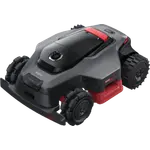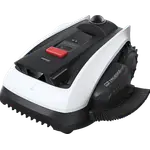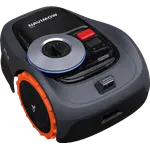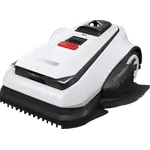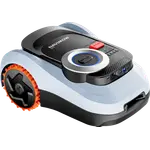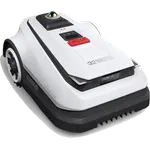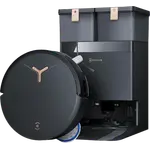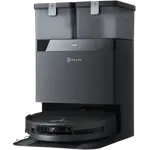


Ecovacs GOAT O1000 LiDAR PRO Review: Satellite-Free Mowing for a Quarter-Acre Lawn
The GOAT O1000 LiDAR PRO is the accessible way into LiDAR mowing: no RTK antenna, no perimeter wire and no clear view of the sky required, which makes it a genuine option for shaded or fenced-in gardens where satellite mowers fail. Owners consistently praise how quiet it is, how clean the cut looks when it runs every couple of days, and the built-in rain detection that sends it home on its own. The trade-off is pace, and it is a real one: an 8.66 in deck at 180 m²/h means a quarter-acre lawn is a multi-hour job spread over several charges, and the TruEdge trimmer is the part owners rate lowest. Buy it for a small, level lawn where hands-off beats fast.
- Small to quarter-acre lawns
- Shaded gardens where RTK fails
- Owners who want no subscription or antenna
- Quiet night-time mowing
Pros
- LiDAR plus vision navigation with no antenna, no wire and no satellite dependency
- Maps are stored on the mower and only backed up online
- Very quiet, so night sessions are practical
- Built-in rain sensor returns it to the dock automatically
- Per-zone cutting height, direction, speed and separate mow and trim schedules
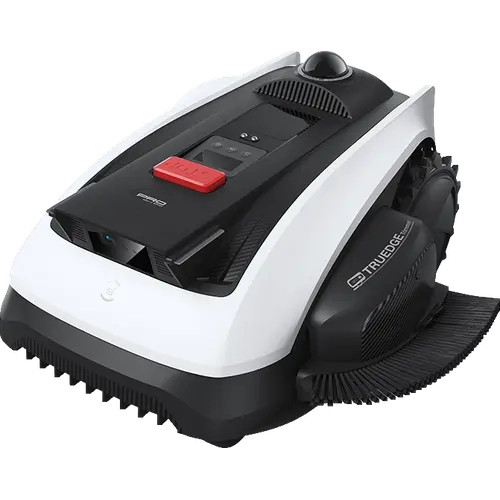
- TruEdge trimmer plus a blade disc for border cutting
- Marks the spots where it gets stuck and avoids them on later runs
- IPX6 body, pet and child detection, and Alexa and Google Home support
Cons
- Slow going: 8.66 in deck and 180 m²/h mean multi-hour sessions with charging breaks
- Mapping complex perimeters takes far longer than advertised
- Single-joystick manual control makes precise mapping awkward
- Edge trimmer results are inconsistent and can scuff fences
- Only 1.2 in obstacle crossing, so twigs, anthills and soft edges stop it
- Only a 1 year warranty, and mixed reports on support and parts availability
- 45% slope limit and no all-wheel drive
- No GPS tracking, no 4G, and no HomeKit, SmartThings or Matter integration
Who is the GOAT O1000 LiDAR PRO for?
This is a mower for a compact, mostly level lawn, rated up to 10,890 sq ft, roughly a quarter acre. Its selling point is what it does not need: no boundary cable, no reference antenna, no satellite fix. A rotating 360 degree LiDAR and a 3D time-of-flight sensor build the map on board and store it locally, using the internet only to back it up and talk to the app. Owners who moved over from RTK mowers, or who gave up on cloud-dependent models, single that out as the reason they chose it. Setup lands around half an hour to an hour for a simple garden, with auto-mapping for well-defined boundaries and an in-app joystick, plus a backtrack button that rewinds mistakes, for the awkward parts.
What buyers love
Quietness comes up in almost every positive review: it can run at night or while the family is outside without being intrusive. Cut quality is the second theme, because mowing every two or three days keeps the lawn looking permanently freshly cut rather than cycling between neat and overgrown. Owners like the depth of the per-zone settings (cutting height, mowing direction, speed and grass height detection can differ per area), the schedule that lets mowing and trimming run on separate days, and the maintenance alerts for blades and trimmer line. The rain sensor works as advertised, sending the mower back to the dock when it gets wet, with configurable weather behaviour in the app. Several people also mention that when it does get snagged, it marks the spot on the map and avoids it on later runs, and that the app messages them rather than leaving the mower stranded.
What to know before you buy
Speed is the main complaint, and the spec sheet explains it: an 8.66 in cutting width and 180 m²/h rated efficiency, with a 90 minute runtime and a 70 minute recharge. Owners report full sessions of several hours on lawns well under a quarter acre, with one or two charging breaks in between. Mapping can also take longer than the marketing suggests, especially where the perimeter is broken up by beds and planting, which is when the manual joystick comes out; the single-stick control scheme is the app's weakest point and draws steady criticism. The TruEdge trimmer is divisive: some find it does most of the border, others rate it at roughly 80% and note it can scuff a wooden fence, so a string trimmer stays in the shed. Ground clearance is limited too, with obstacle crossing rated at 1.2 in, so twigs, anthills, sandy patches and soft edges can stop it. Finally, the mower carries only a 1 year warranty, support experiences are mixed and some spare parts are easier to source from European distributors.
Is the GOAT O1000 LiDAR PRO worth it?
For a small lawn, yes, and it is one of the cheaper routes to LiDAR navigation with an edge trimmer included. You get wire-free setup, no antenna and no dependence on satellite coverage, multi-zone maps with no-go zones, a rain sensor, pet and child detection, an IPX6 body and Alexa and Google Home support, all at a price well under the premium all-wheel-drive class. What you give up is throughput and terrain: the narrow deck and 45% slope limit make it a poor match for large, steep or rough lawns, and the 1 year warranty is short next to the three years several rivals offer. If your lawn is under a quarter acre, reasonably even and shaded enough to defeat RTK, it is a strong pick.
Frequently asked questions
Does the GOAT O1000 LiDAR PRO need RTK or a perimeter wire?
No. It uses a rotating 360 degree LiDAR with a 3D time-of-flight sensor and AI vision, so there is no boundary cable to lay and no satellite antenna to mount. That is what lets it work under trees and beside buildings where RTK mowers lose their fix.
How long does it take to mow a quarter-acre lawn?
Plan on several hours. It cuts an 8.66 in path at a rated 180 m²/h, runs about 90 minutes per charge and recharges in about 70 minutes, so a full quarter acre needs more than one charge cycle and is usually spread across a session or two.
Does the GOAT O1000 trim the lawn edges?
It has a TruEdge string trimmer alongside the blade disc, and it does reach along walls and borders. Results vary by garden: it covers most of the edge but not all of it, so a hand trimmer is still useful for tight corners.
Will it stop when it rains?
Yes. Unlike models that rely only on a weather forecast, the O1000 has a rain sensor and returns to the charging station when it detects water, with the exact weather behaviour configurable in the app.
What lawn size and slope is it rated for?
Up to 10,890 sq ft, about a quarter acre, on slopes up to 45%. Obstacle crossing is rated at 1.2 in, so it needs a fairly even lawn without high kerbs between zones.
Does it work with Alexa, Google Home or Home Assistant?
Alexa and Google Home are supported, and Home Assistant reaches it through the official Ecovacs integration, which covers the GOAT line. Apple HomeKit, Samsung SmartThings, IFTTT and Matter are not.