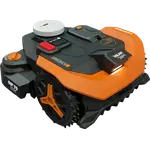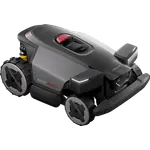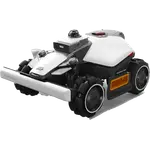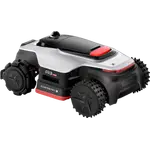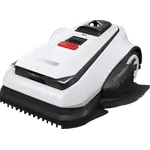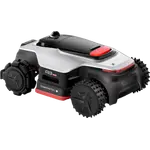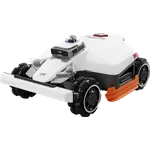
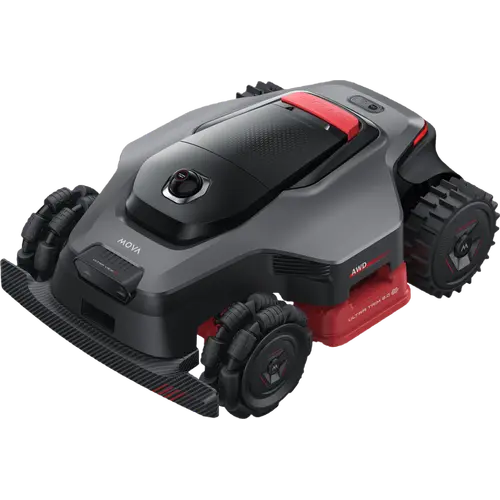



MOVA LiDAX Ultra 3000 AWD Review: All-Wheel Drive Meets Wire-Free LiDAR Mapping
The LiDAX Ultra 3000 AWD is MOVA's answer to a large, awkward garden: all-wheel drive on four hub motors rated for 80% slopes and 2.4 in kerbs, a 15.8 in twin-disc deck, and UltraView 3.0 mapping that combines a 360° 3D LiDAR with dual AI cameras, so there is no boundary wire to bury and no RTK mast to plant under trees. It covers up to 0.75 acre per map and holds two maps, which is what lets one machine run a front and a back garden with their own schedules and up to 150 zones between them. The trade-off is the smart home side: it is an app-and-4G product with a community Home Assistant integration, and no vendor voice assistant support. At this price tier you are paying for traction and mapping, not for ecosystem breadth.
- Large lawns up to three quarters of an acre
- Steep or uneven ground
- Gardens with poor sky view
- Two separate lawns
- Home Assistant households
Pros
- All-wheel drive on four hub motors, rated for 80% slopes and 2.4 in vertical crossings
- Wire-free and RTK-free: 360° 3D LiDAR plus dual AI cameras map the garden on their own
- Rated for 0.75 acre per map, with two saved maps and up to 150 zones
- 15.8 in twin-disc deck with UltraTrim 2.0 keeping the uncut edge under 1.2 in
- Cutting height set from 1.2 to 3.9 in electronically in the app
- 170 minutes of runtime and a 65 minute recharge
- Built-in 4G with three years of Link service, GPS tracking, PIN lock and lift and off-map alarms
- IPX6 body, rain and frost protection, a physical stop button and a 3 year warranty
- Runs in Home Assistant through a community integration, which is also what makes it automatable
Cons
- No Alexa, Google Home, Apple HomeKit, SmartThings or Matter support
- 2.4 GHz Wi-Fi only
- No headlights, so the cameras get no help after dark
- The battery is not user-swappable
- The included cellular service runs out after three years and then has to be renewed
- MOVA publishes no hourly mowing rate, so session length has to be estimated
- Priced at the top of the robot mower range
Who is the MOVA LiDAX Ultra 3000 AWD for?
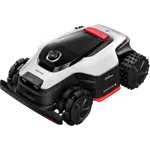
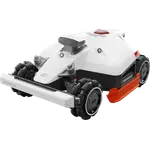
This is the mower for the garden that defeats the cheaper machines. All-wheel drive across four hub motors, independent suspension and omni wheels at the front give it an 80% slope rating and a 2.4 in vertical crossing, which covers banks, tree roots and the lip between lawn and path. Navigation is where it earns the rest of its money: UltraView 3.0 pairs a 360° 3D LiDAR with dual AI cameras, so it maps and positions itself without a buried perimeter wire and without an RTK reference station, which is the setup that fails under dense foliage and beside tall buildings. It is rated for 0.75 acre per map and keeps two maps, so a front and a back garden can each carry their own schedule, and up to 150 zones can be given their own cutting height, direction and avoidance settings. If the lawn is small and flat, this is far more machine than the job needs.
What stands out on paper
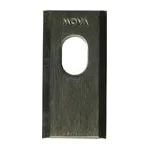
The deck is the headline: two floating discs with six blades each across a 15.8 in cutting width, with the cutting height set from 1.2 to 3.9 in electronically in the app rather than by turning a knob. UltraTrim 2.0 slides the discs sideways along a boundary so the uncut strip stays under 1.2 in, which is the difference between finishing the edges with a strimmer and not bothering. Power is a 7.5 Ah pack good for 170 minutes and back to full in 65 minutes, so a session and a recharge fit inside an afternoon. Security is unusually complete for the category: built-in 4G with three years of Link service included, GPS position on a map in the app, a PIN lock, lift and off-map alarms, a compartment for an AirTag, and a patrol mode that uses the mower's own cameras to watch the garden when it is not cutting. The body is IPX6, a rain sensor sends it home when the weather turns, frost protection keeps it off frozen grass, and the whole thing carries a 3 year warranty.
What to know before you buy
The smart home column is thin. There is no Alexa, Google Home, Apple HomeKit, SmartThings or Matter support on this model, so voice control and vendor routines are out; what does exist is a community Home Assistant integration installed through HACS, which signs in to the MOVA cloud, exposes the mower as a lawn_mower entity with start, pause and dock actions, and handles the two-map switching. That integration is also the only route to automations, since the MOVAhome app itself offers schedules and zones but no third-party triggers. Wi-Fi is 2.4 GHz only, which is worth knowing on a mesh network that hides the band. There are no headlights, so night mowing leans entirely on the LiDAR rather than on lit cameras. The battery is not user-swappable, so a second pack cannot be used to double a session. And the bundled cellular service is free for three years from activation rather than for the life of the mower, after which it is a renewal to budget for. MOVA does not publish an hourly mowing rate for this model, so session length has to be estimated from the deck width and runtime.
Is the MOVA LiDAX Ultra 3000 AWD worth it?
For a big, sloping or awkwardly shaped garden, the case is strong. Wire-free and RTK-free navigation removes the two installation jobs that make robot mowers a weekend project, all-wheel drive removes the terrain excuse, and dual maps plus 150 zones mean one premium machine can replace two cheaper ones. The 3 year warranty and the three years of included cellular service soften a price that sits at the top of the category. What you give up is ecosystem breadth: this is a mower run from its own app, its own 4G link and, if you want it in the wider smart home, Home Assistant. Buyers who want to start the mow by voice, or to wire it into Matter alongside the rest of the house, should look at the models that advertise it.
Frequently asked questions
Does the MOVA LiDAX Ultra 3000 AWD need a boundary wire or an RTK antenna?
No. UltraView 3.0 combines a 360° 3D LiDAR with dual AI cameras to build the map and hold its position, so there is nothing to bury and no reference station to mount. That is also why it keeps working under trees and beside buildings, where satellite-based mowers lose their fix.
How big a lawn can it handle?
It is rated for 0.75 acre (about 32,670 sq ft) per map, and it stores two maps, each rated for that same area, so a front and a back garden can be managed by the same machine with separate schedules.
What slope can it climb?
80%, which is about 38.6 degrees, driven by four 116 W hub motors with independent suspension. It also crosses vertical obstacles up to 2.4 in, so kerbs and roots are less likely to strand it than on a rear-wheel-drive mower.
Does it work with Alexa, Google Home or Home Assistant?
Home Assistant is the one that works: a community integration installed through HACS signs in to the MOVA cloud and exposes the mower as a lawn_mower entity with start, pause and dock actions, plus the two-map switching. Alexa, Google Home, Apple HomeKit, SmartThings and Matter are not supported on this model, so everything else runs through the MOVAhome app.
How long does it run and how long does it take to charge?
The 7.5 Ah pack is rated for 170 minutes of mowing and recharges in 65 minutes. It returns to the station on its own when the battery is low and resumes where it stopped, so a large lawn is covered across several cycles rather than in one pass.
What stops it being stolen?
A built-in 4G link with three years of service included keeps it reachable without Wi-Fi, GPS shows its live position on a map in the app, and lifting it or taking it off the map locks the machine and sounds an alarm that only a PIN clears. There is also a compartment for an AirTag if you want a second tracker.
Can it mow in the rain?
It is built to survive it, not to work through it. The robot body is IPX6, but a rain sensor on the top cover pauses the session and sends it back to the station when it starts raining, with a drying delay you set in the app, because cutting wet grass damages the lawn.