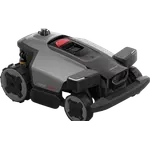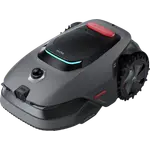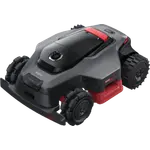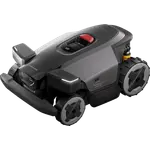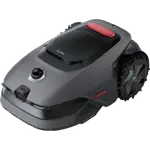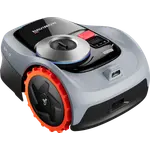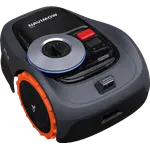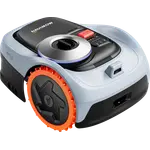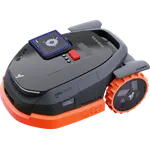


Segway Navimow i215 LiDAR Review: Solid-State Laser Mapping With No Antenna to Plant
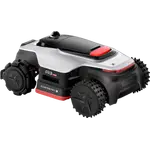
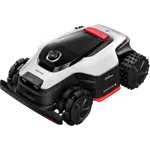
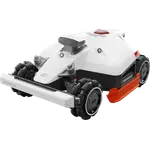
The Navimow i215 LiDAR is the model to look at when a garden defeats satellite navigation: it drops the RTK antenna entirely and finds its way with a solid-state LiDAR paired to a 140 degree camera, so trees, walls and darkness stop being the problem they are for GNSS mowers. Segway rates it for 0.37 acre on slopes up to 45%, and the app side is unusually complete for the class, with real-scene map editing, 20 zones, no-go islands, GPS theft tracking over built-in 4G and an official Home Assistant integration. The compromises are physical rather than digital: two driven wheels rather than all-wheel drive, an 8.66 in deck rated at 160 m²/h, and only 1.18 in of step clearance. For a shaded, awkward, medium lawn it is one of the easiest mowers to set up; for a big open field or a rutted bank there are faster and grippier machines.
- Lawns up to about a third of an acre
- Shaded gardens and yards near tall buildings
- Gardens with no room for an antenna mast
- Night mowing
- Home Assistant setups
Pros
- Solid-state LiDAR and vision navigation, with no boundary wire and no RTK antenna to install
- Works in shade, under trees and at night, where satellite mowers lose position
- Automatic mapping with GeoSketch real-scene editing, 20 zones and no-go islands
- VisionFence recognizes 200+ obstacle types to 0.4 in, with an animal-friendly mode
- 45% (24 degree) slope rating with off-road wheels and electronic stability control
- App-controlled cutting height from 2 to 4 in, plus EdgeSense boundary cutting
- Built-in 4G with GPS tracking, geo-fence and lift alarms, PIN lock and Apple Find My
- Alexa and Google Home voice control, plus Segway's own Home Assistant integration
- IP66 mower and charging station, 59 dB(A) operation and a 3 year warranty
Cons
- Rear-wheel drive only, so it gives up traction to all-wheel-drive mowers at the same size
- Narrow 8.66 in deck rated at 160 m²/h, roughly 16 hours a week for its rated area
- Only 1.18 in of step clearance, so a kerb between zones can stop it
- No physical rain sensor: weather pauses come from the online forecast
- Battery pack is not owner-swappable, replacement goes through a technician
- 2.4 GHz Wi-Fi only, with no 5 GHz support
- No Matter, Apple Home or SmartThings support
- No headlights on the body, only a status ambient light
- The 4G data service is free for one year and then renews at $32.90 a year
Who is the Navimow i215 LiDAR for?
This is a medium-lawn machine, rated for 16,117 sq ft, roughly 0.37 acre of real grass, and Segway expects it to need about 16 hours a week to keep that area cut. What separates it from most wire-free mowers at this size is the positioning: instead of an RTK antenna on a mast that needs a clear view of the sky, it uses a solid-state LiDAR scanning around 200,000 points per second alongside a 140 degree camera, so the two conditions that break satellite mowers, dense tree cover and tall buildings, are the conditions it was built for. That also makes it the right pick for a garden where there is nowhere sensible to put a mast, or where the owner simply does not want one. Off-road wheels and electronic stability control take it up 45% (24 degree) slopes, though the boundary rating is a gentler 25%.
What the Navimow i215 LiDAR offers
Setup is the headline feature: no perimeter cable, no antenna, and automatic mapping that draws the boundary itself rather than asking for a walk around the garden. The map it produces is a real-scene one, GeoSketch, which can be redrawn in the app without connecting to the mower, and it holds up to 20 zones, each with its own name, mowing direction and schedule, plus off-limit islands for flower beds, ponds and sprinkler heads. VisionFence recognizes more than 200 object types to 0.4 in and includes an animal-friendly mode that steers clear of pets and wildlife. Cutting height is set from the app anywhere between 2 and 4 in across a single 6-blade disc, and EdgeSense lets it ride the boundary for a cleaner finish along fences and walls. Security is a genuine strength: built-in 4G carries GPS tracking, a geo-fence alarm and a lift alarm, backed by a PIN code, proximity unlock and Apple Find My. The body and charging station are IP66 rated, the mower runs at 59 dB(A), and Segway covers it for 3 years, with 2 years on the battery pack.
What to know before you buy
The chassis is the compromise. Only the two rear wheels drive, so on wet banks and rutted ground it gives away traction to the all-wheel-drive mowers it sits beside on price, and vertical passing ability is 1.18 in, which is low enough that a kerb between two zones can stop it. Throughput is modest too: the deck is 8.66 in wide and Segway rates the mower at 160 m²/h, covering about 426 m² on a 160 minute charge before a 130 minute recharge, so a lawn near the top of its rating stays busy most of the week. There is no physical rain sensor, weather pauses are driven by the online forecast instead, so a shower that the forecast missed will not send it home. The battery is not an owner-swappable pack: the manual routes replacement through an authorized technician. Wi-Fi is 2.4 GHz only. And the smart home list is short, Alexa and Google Home for voice plus Segway's own Home Assistant integration, with no Matter, Apple Home or SmartThings support. The built-in 4G data service is free for the first year and then renews at $32.90 a year.
Is the Navimow i215 LiDAR worth it?
It buys a specific thing, and it buys it well: navigation that does not care about sky view. Nothing else in Segway's line at this lawn size skips the antenna, and the LiDAR is also what lets the mower work through the night without needing lights. Against all-wheel-drive rivals in the same bracket the i215 LiDAR trades traction and deck width for setup that takes minutes and a map that can be corrected on a phone screen. If the lawn is medium, reasonably flat and full of trees, shade or awkward corners, that is the better trade. If it is large, open and steep, the money is better spent on drive and cutting width.
Frequently asked questions
Does the Navimow i215 LiDAR need an RTK antenna?
No. Its locating system is EFLS Dual-fusion, a solid-state LiDAR combined with a 140 degree camera, and Segway's spec sheet marks antenna installation as not required and the signal enhancement antenna as unsupported. There is no perimeter wire either: the mower maps the lawn automatically.
How big a lawn can the i215 LiDAR handle?
Segway rates it for 16,117 sq ft, about 0.37 acre of mowable grass, on slopes up to 45% inside the working area and 25% at the boundary. At 160 m²/h it needs roughly 16 hours a week to keep that area cut, so leave headroom if your lawn is near the top of the rating.
Can the i215 LiDAR mow at night?
Yes. LiDAR does not depend on daylight, so the mower keeps navigating and detecting obstacles after dark. It has no headlights, and it does not need them: the laser is doing the seeing, not the camera alone.
How long does it mow on a charge?
About 160 minutes on a full 7.65 Ah charge, covering roughly 426 m², then about 130 minutes to recharge before it resumes on its own. The pack is not designed to be swapped by the owner, so a spare battery is not an option for shortening that cycle.
Does the i215 LiDAR work with Alexa, Google Home or Home Assistant?
Alexa and Google Home are both supported for voice control, and Segway publishes its own Home Assistant integration, installed through HACS, which signs in with the Navimow account and exposes the mower as a lawn mower entity with a battery sensor. Matter, Apple Home and SmartThings are not supported.
What happens if someone steals the mower?
It carries GPS tracking over its built-in 4G connection, an alarm that fires when it is lifted or when it crosses the geo-fence you set, and a PIN code that has to be entered on the mower to silence either one. It can also be added to the Apple Find My network from the Navimow app.