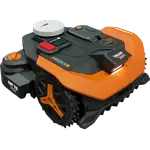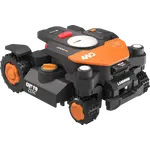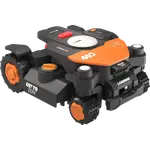



WORX Landroid Vision Cloud WR340 Review: A Wire-Free Acre Mower With a Steep Learning Curve
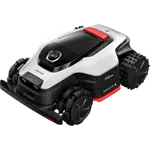
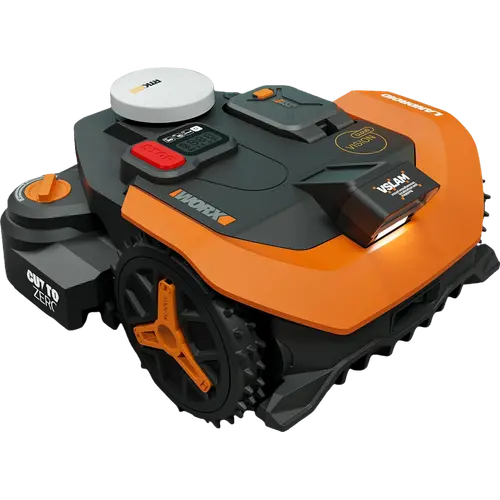
The WR340 is a two-wheel-drive, boundary-wire-free robot mower for lawns up to about an acre, using cloud RTK corrections and a stereo camera instead of a base-station antenna. Owners who get through setup describe an even, quiet cut, straight stripes, clean edges and a mower that needs little attention, while a vocal group finds the mapping process confusing, the error messages cryptic and the per-area size limit unclear. It suits flat or gently sloping lawns and owners already invested in WORX PowerShare batteries; steep ground, tall coarse grass and anyone unwilling to troubleshoot the app are better served elsewhere.
- Flat to gentle lawns up to an acre
- Gardens where an RTK mast is impractical
- WORX PowerShare battery owners
- Homes with weak Wi-Fi at the lawn
Pros
- Even, quiet cut with straight lines and edge trimming once mapped
- No perimeter wire and no reference antenna: cloud RTK plus Vision AI
- Built-in 4G keeps the mower reachable where Wi-Fi does not
- WORX PowerShare battery shared with other WORX tools
- Firmware updates keep improving the app
- Responsive customer support reported by one owner
Cons
- Setup and auto mapping can be confusing, with cryptic error codes and a minimal screen
- Mapping can get stuck and need a restart from the base
- One-acre limit applies per mapped area, with little feedback when it is exceeded
- Two-wheel drive with a 30% maximum slope, so best on flat lawns
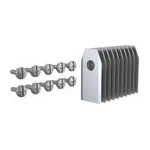
- Only three blades and an 8.7 in cutting width, a struggle on some coarse grass
- One owner reports an expected night lamp missing
Who is the WORX Landroid Vision Cloud WR340 for?
It is aimed at a homeowner with a lawn of up to roughly an acre who does not want to bury a perimeter wire or mount a reference antenna. Positioning comes from RTK corrections delivered over the internet plus a stereo camera and V-SLAM sensor fusion, the lawn is mapped automatically and then edited in the app, and a built-in 4G link keeps the mower reachable where Wi-Fi does not reach. Owners with a small to mid-size, mostly flat yard report the best results, including one who runs it on a lawn of a third of an acre and says it covers the whole yard, and another who rotates it between zones so a different part is mowed each day.
What owners like about the WR340
Once it is mapped, owners praise the quality of the cut: an even finish, straight lines, trimming right up to the edge, and quiet operation that draws attention from the neighbours. Several say it is reliable and low maintenance after setup, and one owner who bought two WORX mowers is very happy with both and describes support that could connect quickly and look at the mowers remotely to fix an issue. The battery is a WORX PowerShare pack, so owners with other WORX cordless tools can swap packs between them, and several mention that firmware updates keep arriving and improving the app. Alexa control and Home Assistant through community integrations are listed on the spec sheet for people who want it in their smart home.
What to know before you buy
Setup is the recurring pain point. Even an owner who loves the result calls it a grind, and others report that auto mapping got stuck several times and could only be restarted from the base, that the mower's small screen and numbered error codes are hard to decode, and that the choice between 4G and Wi-Fi is confusing. The one-acre rating is enforced per mapped area: an owner who split a three-acre property into six or seven sections says the mower would start a section over the limit, then turn around and head home without any useful message, which he found arbitrary. Expect it to struggle on steep ground: the spec is a 30% slope (about 17 degrees), and owners call it best for flat lawns. One owner with St. Augustine grass says the three small blades do not cut it, and another was disappointed that an accessory they expected, the night lamp, was not on their unit even though the spec sheet lists headlights as included, so check what is in the box. Cutting width is only 8.7 in.
Is the WORX Landroid Vision Cloud WR340 worth it?
For a suitable lawn it is a capable, wire-free mower with no subscription for 4G or RTK, and the owners who settle in are enthusiastic. The mixed average rating comes mostly from setup frustration and from lawns that fall outside what a two-wheel-drive, one-acre machine is designed for. Measure your largest single area against the limit, avoid steep terrain, and be ready to spend time on the first mapping before judging it.
Frequently asked questions
Does the WORX Landroid Vision Cloud WR340 need a boundary wire?
No. It maps the lawn automatically with RTK corrections delivered over the internet and a stereo camera, then lets you edit the boundary in the app. There is no perimeter cable and no antenna to install in the garden.
How big a lawn can it handle?
It is rated for about one acre. Owners say the limit applies to each mapped area, so a very large property has to be split into sections that each stay under it, and the mower gives little feedback when a section is too big.
Is the setup difficult?
Several owners find it so. Auto mapping can stall and need a restart from the base, and the error codes and Wi-Fi versus 4G options are described as confusing, although owners who persist say it is worth it.
Can it handle slopes?
It is a two-wheel-drive model with a 30% maximum slope, about 17 degrees, and the manual advises staying under 15 degrees when the Cut-to-Zero module is fitted. Owners call it best for flat or gently sloping lawns.
Does it work with Alexa or Home Assistant?
Alexa can start, stop and send it home through the Landroid skill, and Home Assistant is reached through community integrations. Apple Home, SmartThings and Matter are not supported.
Is there a subscription for 4G or RTK?
No. WORX advertises the built-in 4G connectivity and the RTK Cloud service as free for the life of the product.