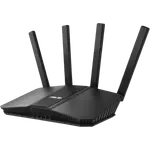




ASUS ROG Rapture GT-BE19000AI Review: A Wi-Fi 7 Powerhouse for Serious Home Networks
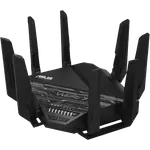
The ASUS ROG Rapture GT-BE19000AI is a tri-band Wi-Fi 7 router built for power users who want maximum wired and wireless throughput plus granular control over their home network. Owners consistently praise its speed, its dual 10 Gbps wired backbone, and how easily it folds older Asus routers into an AiMesh network to cover large homes. The tradeoffs are a genuinely premium price and an AI-driven security layer that some buyers find too heavy-handed, occasionally blocking legitimate sites until manually tuned. For enthusiasts, gamers and multi-device households willing to dig into the settings, it delivers a top-tier network, while casual users who just want plug-and-play simplicity may find it more router than they need.
- Gamers and streamers
- Large homes upgrading from mesh systems
- Power users who like tuning settings
- Multi-device smart homes
- Existing Asus AiMesh owners
Pros
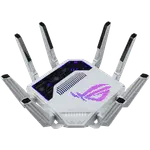
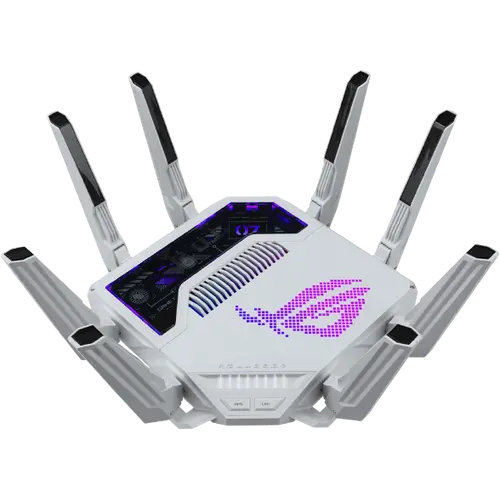
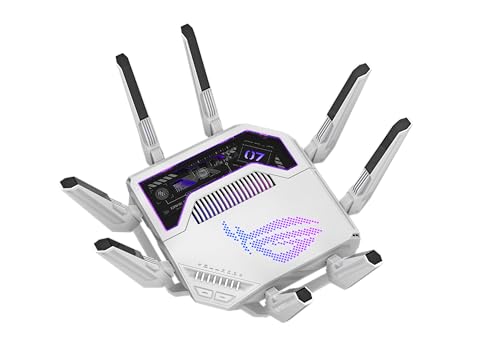
- Consistently fast, wide-reaching Wi-Fi 7 performance across all three bands, backed by 8 external antennas
- AiMesh support lets you repurpose older Asus routers as mesh nodes instead of buying new hardware
- Dedicated IoT network keeps smart-home devices isolated from your main devices
- Dual 10 Gbps ports plus multiple 2.5 Gbps LAN ports for a fast wired backbone
- Full VPN suite (WireGuard, OpenVPN, PPTP, L2TP/IPSec) with DDNS for secure remote access
- Deep customization via web interface and command line, with support for third-party firmware
- 3-year warranty, longer than many routers in this class
Cons
- Premium price that several buyers feel outpaces the real-world performance gain
- AI-driven security can be overly aggressive, blocking legitimate traffic until manually adjusted
- No native Matter controller or Thread border router, so it can't serve as a smart-home hub on its own
- AiMesh only pairs with other Asus AiMesh devices, not a cross-vendor mesh standard
- No built-in speed test tool or SNMP monitoring for network administrators
- No cellular backup, so WAN failover depends on having a second wired connection
Who is the ASUS ROG Rapture GT-BE19000AI for?
This is a flagship, tri-band Wi-Fi 7 router aimed squarely at power users: gamers, streamers, and households running many connected devices who want maximum wired and wireless throughput plus full control over how their network behaves. Reviewers who upgraded from older high-end Asus routers, and even from mesh systems like Netgear Orbi, describe replacing multiple mesh nodes with a single unit placed centrally in the home, since AiMesh lets it absorb older Asus routers as satellite nodes rather than requiring a fresh matching kit. It suits enthusiasts comfortable poking around a detailed web interface and command line, less so someone who wants to plug in a router and never open the app again.
What buyers love
The most consistent praise is for raw speed: owners moving up from previous-generation Wi-Fi 6/6E Asus routers report a clear jump in both wireless and wired throughput, helped by the router's dual 10 Gbps ports and multiple 2.5 Gbps LAN ports for a fast wired backbone. AiMesh flexibility is another standout, letting owners fold in older Asus hardware as mesh nodes to cover large, multi-story homes without buying new hardware. Several buyers also highlight the dedicated IoT network for isolating smart-home devices from laptops and phones, the depth of the web-based settings (down to CLI access and support for third-party firmware), and the wide VPN toolkit, useful for anyone who wants to reach their home network securely while away.
What to know before you buy
The price is the most repeated concern: multiple buyers call it expensive for what it delivers, and a couple feel the jump in real-world performance does not fully match the jump in price. The built-in AI-powered security also draws mixed feedback: a few owners found it overly aggressive, blocking legitimate sites and services with no straightforward way to whitelist them, and one large-network owner found the web interface slow and AiMesh less capable of managing many clients across multiple network segments than expected. It's also worth knowing that AiMesh only pairs with other Asus AiMesh routers rather than a cross-vendor mesh standard, and that despite its AI branding the router has no native Matter controller or Thread border router, so it won't double as a dedicated smart-home hub. A couple of reviewers also needed a few tries to get the router talking to specific cable modems or older mesh nodes before everything ran smoothly.
Is the ASUS ROG Rapture GT-BE19000AI worth it?
For a household that wants top-tier Wi-Fi 7 speeds, a serious wired backbone, and the flexibility to build out a whole-home network using AiMesh, most owners come away satisfied, especially anyone already invested in Asus hardware who can repurpose an old router as a node. Buyers weighing it purely on value for money, or running an unusually large number of devices, are the ones most likely to feel it doesn't fully justify its premium price. It's best matched to enthusiasts and gamers who want a fast, deeply configurable network and are willing to spend time tuning it, rather than someone after the simplest possible setup.
Frequently asked questions
Does the ASUS ROG Rapture GT-BE19000AI support Wi-Fi 7?
Yes. It's a tri-band Wi-Fi 7 router with MLO (Multi-Link Operation), letting compatible devices use multiple bands at once for lower latency and higher combined throughput, on top of full backward compatibility with Wi-Fi 6E, Wi-Fi 6 and Wi-Fi 5 devices.
Can I use my old Asus router as a mesh node with this one?
Yes, through Asus's AiMesh technology. Several owners fold older Asus routers into the same network as satellite nodes, extending coverage without buying a matching mesh kit. Keep in mind AiMesh only pairs with other Asus AiMesh-capable routers, not third-party mesh systems.
Does it work as a smart-home hub with Matter or Thread?
No. The router does not include a native Matter controller or Thread border router, so it won't commission or control Matter/Thread smart-home devices on its own, though it can still connect Wi-Fi based smart-home gear to its network and IoT segment like any Wi-Fi router.
How many wired ports does it have?
Two WAN ports, one 2.5 Gbps and one 10 Gbps, for flexible multi-gigabit internet connections, plus LAN ports including two at 10 Gbps and four at 2.5 Gbps for a fast wired backbone, with link aggregation available to bond two LAN ports into a single faster connection.
Does it support VPN?
Yes, extensively: a VPN client and server, with OpenVPN, PPTP, L2TP/IPSec and WireGuard protocols, plus Dynamic DNS (DDNS) so you can reach the router from outside your network even as your public IP changes.
Is it a good fit for a very large smart home with many connected devices?
Most owners report strong speeds and stable coverage, but one owner running an unusually large network found the AiMesh setup and web interface strained when managing that many clients and multiple network segments, so extremely device-dense homes should weigh that tradeoff against the router's otherwise strong performance.