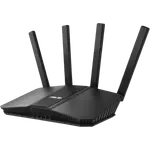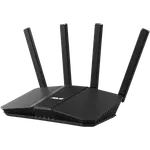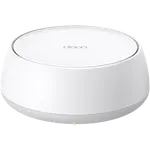
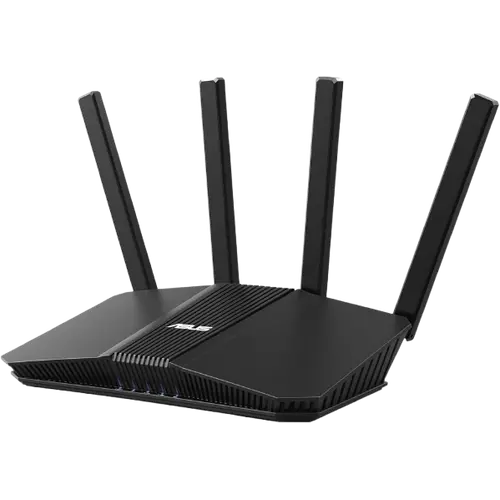


Asus RT-BE58U Review: Wi-Fi 7 Speed and AiMesh Reliability Without the Subscription Traps
The RT-BE58U is a budget-friendly entry into Wi-Fi 7, aimed at buyers replacing a tired ISP router or adding a fast node to an existing Asus AiMesh network rather than chasing every Wi-Fi 7 spec. Owners consistently praise the quick setup, full local control without a forced cloud account, and a genuinely deep VPN toolkit, while the main trade-offs are the lack of a 6 GHz band and multi-gig wired ports. It is a well-reviewed pick for households that value control and value over top-end throughput.
- AiMesh upgraders with an older Asus router
- No-subscription VPN and remote-access users
- Budget-conscious Wi-Fi 7 adopters
- Smart-home households wanting isolated guest/IoT networks
Pros
- Wi-Fi 7 with Multi-Link Operation (MLO) for faster, more efficient connections
- Pairs cleanly into an AiMesh network with older Asus routers for whole-home coverage
- Full local administration via web interface, mobile app or command line, no mandatory cloud account
- Extensive VPN toolkit (client and server, OpenVPN, WireGuard, PPTP, L2TP/IPSec) plus DDNS
- Separate guest and IoT networks, plus USB 3.0 storage sharing (FTP, Samba, Time Machine, media)
Cons
- Dual-band only, no Wi-Fi 6E or 6 GHz support
- Tops out at one 2.5 Gbps port, no 10 Gbps, SFP+ or LAN link aggregation
- No cellular backup, and no built-in Thread border router or Matter controller
- A few buyers reported ISP modem compatibility hiccups and weaker standalone range or throughput than their previous router
- Built-in content filtering can be fiddly, with deeper parental-control customization pointing toward a paid tier
Who is the Asus RT-BE58U for?
Positioned as an entry point into Wi-Fi 7 rather than a tri-band flagship, the RT-BE58U pairs a 2.4 GHz and 5 GHz radio with Multi-Link Operation (MLO) and skips the 6 GHz band, so it suits buyers replacing a slow ISP-supplied router or expanding an existing Asus AiMesh setup more than gamers chasing every Wi-Fi 7 feature. Reviewers most often mention using it to cover apartments and single-floor homes, or as an AiMesh satellite feeding a larger house from a basement or back room. Households running a dozen or more connected devices, including IoT gadgets, and anyone who wants a separate guest or IoT network report it keeps up comfortably.
What buyers love
The most consistent praise is for setup speed and reliability: several owners describe going from box to a stable network in well under 15 minutes, without the constant device drop-and-reconnect issues they had with their previous router. Buyers who mesh it with an older Asus router say AiMesh pairs cleanly and noticeably improves whole-home coverage. A recurring theme, especially among more technical reviewers, is that Asus lets you fully administer the router locally through the web interface, mobile app or command line without being funneled into a mandatory cloud account, something several buyers explicitly call out as a plus over other brands. The built-in VPN toolkit (client and server, with OpenVPN, WireGuard, PPTP and L2TP/IPSec all on board) and DDNS support come up often from users setting up remote access, and the separate guest and IoT networks are appreciated by smart-home households that want to keep those devices isolated.
What to know before you buy
The RT-BE58U is a dual-band Wi-Fi 7 router, not tri-band. It skips Wi-Fi 6E and the 6 GHz band entirely, so buyers expecting the extra clean spectrum of a tri-band flagship will need to look elsewhere. Wired connectivity tops out at one 2.5 Gbps port; there is no 10 Gbps port, SFP+ or LAN link aggregation for higher-end home labs or NAS setups. It also has no cellular backup and no built-in Thread border router or Matter controller, so it will not double as a smart-home hub on its own. A handful of buyers ran into rough edges: a few reported trouble getting an internet connection with certain ISP modems, one found range and throughput underwhelming when running it standalone in access-point mode compared with their previous router, and a couple mention the built-in content filtering can be finicky, with deeper parental-control customization nudging toward Asus's paid tier.
Is the Asus RT-BE58U worth it?
For anyone upgrading from an aging ISP router or adding Wi-Fi 7 speed to an existing AiMesh network, the RT-BE58U lands as a well-liked, no-subscription-required upgrade with a strong software feature set (VPN, DDNS, parental controls, USB storage sharing) for its price tier. It is not the router for buyers who specifically want a 6 GHz band, a multi-gig wired backbone or built-in smart-home hub duties, features it deliberately leaves out to hit its price. Within that scope, it holds up as a dependable, budget-friendly way into Wi-Fi 7.
Frequently asked questions
Does the Asus RT-BE58U support Wi-Fi 6E or a 6 GHz band?
No. It is a dual-band Wi-Fi 7 router covering 2.4 GHz and 5 GHz only; it does not include Wi-Fi 6E or a 6 GHz radio.
Can the RT-BE58U work as an AiMesh node with an older Asus router?
Yes. It supports Asus's AiMesh standard, and multiple owners use it to mesh with older Asus routers to extend whole-home coverage.
Does it include VPN support?
Yes. It has both a VPN client and server with support for OpenVPN, WireGuard, PPTP and L2TP/IPSec, plus DDNS for remote access, all built into the router without an extra subscription.
Does the RT-BE58U work with Thread or Matter smart-home devices?
It does not include a built-in Thread border router or Matter controller, so it will not act as a smart-home hub or bridge on its own.
Can I connect a USB drive for network storage?
Yes. Its USB 3.0 port supports FTP, Samba file sharing, Time Machine backups for Mac and general media sharing.
How many wired ports does the RT-BE58U have?
Five total: two WAN ports (one 1 Gbps, one 2.5 Gbps) and up to four LAN ports, with no link aggregation.