

ASUS ZenWiFi BQ16 Pro Review: Quad-Band Wi-Fi 7 With Two 6 GHz Radios and 10G Ports
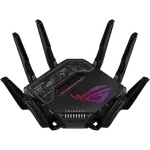
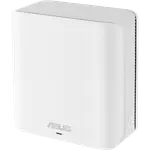
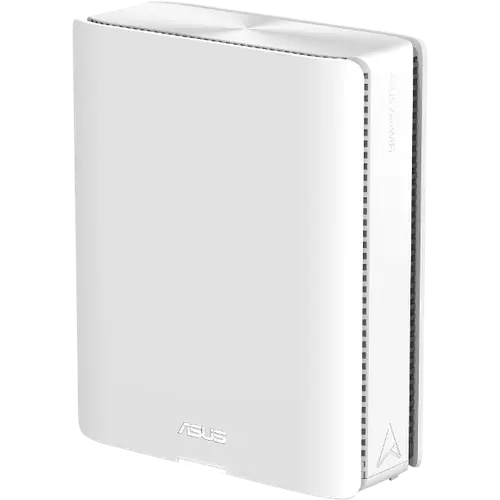
The ZenWiFi BQ16 Pro is a quad-band mesh node rather than a conventional router: alongside 2.4 GHz and 5 GHz it carries two separate 6 GHz radios, which is what allows one of them to be dedicated to mesh backhaul while clients still get a full 6 GHz band to themselves. The combined rating is 30 Gbps, and wired connectivity is serious too, with a 10 GbE WAN, two 10 GbE LAN ports and link aggregation. It supports MLO, WPA3, AiMesh expansion, a full VPN stack and USB storage sharing including Time Machine, with a three year warranty. It is large and expensive, and it hides its antennas inside the case.
- Large homes needing mesh with fast backhaul
- Multi-gigabit internet connections
- Wi-Fi 7 clients on 6 GHz
- Mac users wanting network Time Machine
Pros
- Quad-band Wi-Fi 7 with two 6 GHz radios, 30 Gbps combined
- A full 6 GHz band can be dedicated to mesh backhaul
- 10 GbE WAN plus two 10 GbE LAN ports and link aggregation
- MLO and WPA3, with AiMesh for expansion
- Twelve internal antennas, so no external aerials
- Complete VPN suite with WireGuard, OpenVPN and L2TP/IPsec, client and server
- USB storage sharing including Samba, FTP, media and Time Machine
- Guest and IoT networks, parental controls, QoS and firewall
- Three year warranty
Cons
- Very expensive, especially as a multi-unit mesh
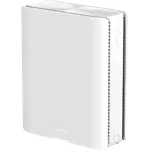
- Large and heavy at 1.34 kg per node
- Three of the five LAN ports are only gigabit
- Not a Thread border router or Matter controller
- Power consumption, antenna gain and device limits are not documented
- Includes obsolete PPTP
- Overkill unless your internet and clients can use multi-gig and 6 GHz
Who is the BQ16 Pro for?
The second 6 GHz radio is the reason to pay for this over a normal tri-band router. In a mesh, node-to-node traffic normally competes with your devices for airtime, which is why mesh throughput collapses at distance. Dedicating an entire 6 GHz band to backhaul removes that contention, so a second unit performs closer to a wired access point. That makes it a fit for a large home where running Ethernet to every room is not practical, and where you have Wi-Fi 7 clients that can actually use 6 GHz.
Wi-Fi and wired performance
Four bands: 1376 Mbps on 2.4 GHz, 5764 Mbps on 5 GHz and two 6 GHz radios at 11529 Mbps each, for 30 Gbps combined, with twelve internal antennas and no external ones, so it looks like a piece of furniture rather than a spider. MLO lets compatible clients bond bands for lower latency, and WPA3 covers security. On the wired side there is a 10 GbE WAN port, two 10 GbE LAN ports and three gigabit LAN ports, plus link aggregation for combining links to a NAS or switch. Multi-WAN with failover is supported, and access point mode is available.
Software and management
The software matches ASUS's usual depth: guest and IoT networks for isolating smart home devices, parental controls with schedules, instant pause and content blocking, QoS, a firewall and new-connection notifications. VPN support covers client and server modes with WireGuard, OpenVPN and L2TP/IPsec, plus dynamic DNS. The USB 3 port adds Samba and FTP sharing, media serving and Time Machine backups. Management is by web interface, iOS and Android apps, or command line.
What to know before you buy
It is physically large at 214 x 174 x 72 mm and 1.34 kg per unit, and mesh means buying more than one, so plan the space and the budget. Three of the five LAN ports are only gigabit, so the 10 GbE count is two, not five. It is not a smart home hub: no Thread border router and no Matter controller. Power consumption, antenna gain and maximum device count are not documented, and configuration backup support is unclear. PPTP is offered but is obsolete and should be left off. Quad-band and 10 GbE hardware only pays off if your internet plan and client devices can use it.
Is the BQ16 Pro worth it?
It is one of the most expensive mesh systems available, and the justification is specific: a dedicated 6 GHz backhaul band plus 10 GbE wired ports. If you have a multi-gigabit connection and a large house that needs wireless backhaul, that combination is genuinely hard to match. If your internet is a few hundred megabits and your house is average sized, a tri-band Wi-Fi 7 system will feel identical in daily use for a fraction of the price.
Frequently asked questions
What does the second 6 GHz band actually do?
It can be dedicated to mesh backhaul, so traffic between nodes does not compete with your devices for airtime. That is what keeps throughput high on a second unit placed far from the main router.
How fast are the wired ports?
There is a 10 GbE WAN port and two 10 GbE LAN ports, plus three gigabit LAN ports, with link aggregation available.
Can I add more units later?
Yes, through AiMesh, which lets compatible ASUS devices join as mesh nodes.
Does it back up Macs?
Yes. With a drive on its USB 3 port it works as a Time Machine target, and also supports Samba, FTP and media sharing.
Is it a Matter or Thread hub?
No. It handles networking only, with no Thread border router or Matter controller functionality.