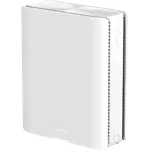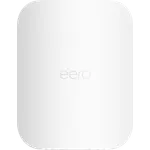


eero Outdoor 7 Review: The Weatherproof Mesh Node That Takes Wi-Fi Past Your Walls
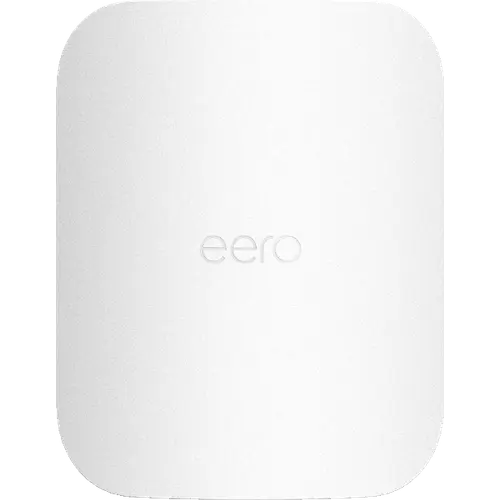
The eero Outdoor 7 is the eero network's answer to the yard, the barn and the far end of the property: a dual-band Wi-Fi 7 node sealed to IP66, powered over Ethernet and rated for up to 15,000 square feet of outdoor coverage. It is not a standalone router, so it only makes sense for a home or business that already runs eero hardware. Hardwired over PoE+ it is the smoothest way to reach outdoor cameras and a detached building, though the same owners who praise its range warn that the wireless mesh backhaul can be slow and occasionally unstable. Buy it for coverage you cannot reach any other way, not as a replacement for a main router.
- Existing eero households
- Large yards and acreage
- Outdoor cameras and smart gear
- Detached buildings such as a barn or shed
Pros
- Dual-band Wi-Fi 7 (BE2800) with MLO and wireless speeds up to 2.1 Gbps
- IP66 weatherproof shell, rated from -40 to 131 degrees Fahrenheit
- One 2.5 GbE PoE+ port that both powers the unit and carries a wired backhaul
- Thread border router, Matter controller and Zigbee hub in the same box
- Up to 15,000 square feet of outdoor coverage, with a point-to-point bridge up to 1,000 feet
- Joins an existing eero network alongside all earlier eero generations
- Three-year warranty and free automatic updates
Cons
- Requires an existing eero network and cannot replace a modem or a main router
- Needs a PoE+ (802.3at or better) source; standard PoE is not enough
- A single RJ45 port handles both power and data, so there is no second Ethernet jack
- Wireless mesh backhaul can run on 2.4 GHz and slower than a wired run, with some owners reporting drops
- No 6 GHz band and no 320 MHz channels
- App-only management, with content filtering, dynamic DNS, the IoT network and backup failover behind an eero Plus subscription
Who is the eero Outdoor 7 for?
This is an extender for the outside of a property, and it assumes one thing up front: there is already an eero network to join. It cannot connect to a modem on its own, so a first-time buyer without eero gear should start with an indoor eero unit instead.
For the people who do own eero hardware, it is built for the jobs indoor nodes do badly: reaching security cameras down a driveway, keeping a patio or a pool deck covered, or sending wifi to a garage, workshop, barn or ADU that never got a cable. Owners describe farms, acres and metal workshops that were dead zones, and a pair can bridge point to point across up to 1,000 feet of clear line of sight. Small businesses with outdoor seating are the other audience eero points at.
What the eero Outdoor 7 offers
The hardware is dual-band Wi-Fi 7 (2.4 and 5 GHz) rated BE2800, with eero quoting wireless speeds up to 2.1 Gbps and support for Multi-Link Operation. A single auto-sensing 2.5 GbE port both powers the unit over PoE+ and carries its wired backhaul, which is the cleanest way to use it. The shell carries an IP66 rating and eero rates it from -40 degrees Fahrenheit to 131 degrees, so it can stay mounted on a wall or post year round; a three-year warranty covers it.
It also does the smart home part of the job. The Outdoor 7 is a Thread border router, a Matter controller and a Zigbee hub, so outdoor sensors, locks and lights can join the network without a separate bridge. eero's TrueMesh, TrueRoam and TrueChannel software steer the mesh and hand devices between nodes, and setup, guest wifi, profiles and pause controls all live in the eero app for Android and iOS.
What to know before you buy
The biggest caveat is the network it needs. The Outdoor 7 extends eero; it does not create a network or replace a router, and it has no way to plug straight into a modem. It also needs a real PoE+ source: this pack includes eero's 30W Outdoor PoE+ adapter, and a PoE+ switch or injector with an outdoor-rated CAT5e cable will do, but standard PoE will not deliver enough power. Because the single RJ45 jack carries both power and data, there is no spare Ethernet port for a wired device at the far end.
Performance depends heavily on how it connects to the rest of the mesh. Hardwired, owners report strong and stable coverage; on a wireless backhaul, some report the link dropping to 2.4 GHz, speeds below expectations and occasional disconnects, especially when the next node is far away. As with every current eero, there is no 6 GHz band, no web interface and no USB or VPN features, and content filtering, dynamic DNS, a dedicated IoT network and backup failover all sit behind an eero Plus subscription. It also has to be mounted vertically on a wall or post, so it is not a set-it-on-a-table device.
Is the eero Outdoor 7 worth it?
At the premium end of mesh extenders, yes, but only for the right buyer. If you already run eero and you have a spot where an indoor node cannot go, it is one of the few ways to put real wifi outside without trenching a cable, and it folds cleanly into an existing network alongside every earlier eero generation. Owners who hardwire it are the happiest, and the built-in Thread, Matter and Zigbee hub saves buying a separate bridge.
If you do not own eero, or you can only use it wirelessly and the building is far, a cheaper indoor node near a window may cover the same ground with less frustration. Treat the Outdoor 7 as the tool for the last, hardest part of the property rather than the first router you buy.
Frequently asked questions
Does the eero Outdoor 7 need an existing eero network?
Yes. It is an extender, not a standalone router, so it joins a network that already runs eero hardware. It cannot connect directly to a modem on its own.
How is the eero Outdoor 7 powered?
It runs on PoE+ (802.3at or better) over its 2.5 GbE port. This 1-pack includes eero's 30W Outdoor PoE+ adapter, and you can also power it from a PoE+ switch or injector with an outdoor-rated Ethernet cable. Standard PoE will not provide enough power.
Does it work with Matter, Thread and Zigbee?
Yes. It is a Thread border router, a Matter controller and a Zigbee hub, so Thread, Matter and Zigbee accessories can join the network without a separate bridge.
Does the eero Outdoor 7 have a 6 GHz band?
No. It is dual-band Wi-Fi 7 on 2.4 GHz and 5 GHz only, so there is no 6 GHz radio and no 320 MHz channels.
Can the eero Outdoor 7 be used indoors or left on a table?
It is designed to be mounted vertically on a wall or post outdoors, and eero says it must not be placed on a flat surface. The IP66 shell is what lets it stay outside year round.
How much area does one eero Outdoor 7 cover?
eero rates a single unit at up to 15,000 square feet of outdoor coverage, and it can also bridge point to point with another unit across up to 1,000 feet of line of sight to reach a detached building.