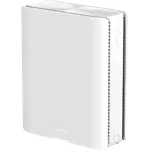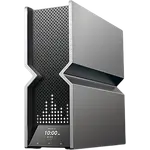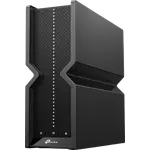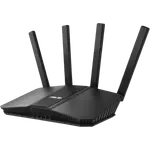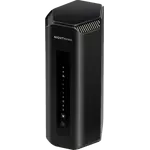
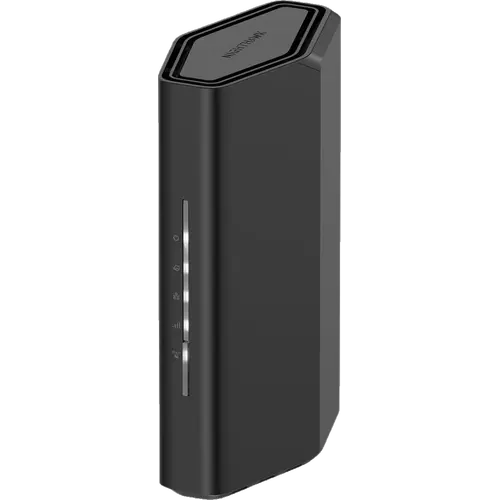
NETGEAR Nighthawk RS90 Review: Affordable Wi-Fi 7 With a 2.5 Gig Internet Port
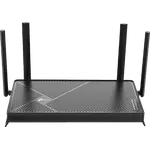
The NETGEAR Nighthawk RS90 is a dual-band Wi-Fi 7 router for a straightforward single-router setup: a 2.5 Gbps internet port, four Gigabit LAN ports, WPA3, separate guest and IoT networks, and support for up to 50 devices. What it does not offer is a growth path beyond one box (there is no mesh), multi-gig LAN ports or Wi-Fi 7's multi-link operation, so larger or busier homes should look higher up the range. At its accessible price it is a simple way onto Wi-Fi 7 without paying for features it leaves out.
- Small and mid-size homes
- Budget Wi-Fi 7 buyers
- Single-router setups
- Multi-gig cable or fibre plans
Pros
- Dual-band Wi-Fi 7 rated at BE3600, up to 3.6 Gbps across 2.4 GHz and 5 GHz
- 2.5 Gbps internet port for multi-gig cable and fibre plans
- Four Gigabit Ethernet LAN ports for wired devices
- Dedicated guest and IoT networks alongside the main network
- WPA3 encryption, a built-in firewall and automatic firmware updates
- VPN server and Dynamic DNS support for remote access
- Parental controls with device pausing, scheduling and content blocking
- Access point mode to reuse the router behind another gateway
- Setup and management through the Nighthawk app or a web browser
Cons
- No mesh support, so a single unit cannot be extended wirelessly
- No MLO, so a Wi-Fi 7 client cannot use both bands at once
- Dual-band only, with no 6 GHz band
- No multi-gig LAN ports; all four LAN ports are Gigabit
- No USB port, so no USB storage or media sharing
- Not a Thread border router or a Matter controller
- No cellular backup or dual-WAN failover
Who is the Nighthawk RS90 for?
The RS90 suits a household that wants one router to cover a small or mid-size space and does not plan to add more units later. It is a dual-band Wi-Fi 7 router rated at BE3600, with a combined 3.6 Gbps across its 2.4 GHz and 5 GHz radios, and it is designed for up to 50 connected devices. That makes it a fit for apartments and modest houses with a normal mix of laptops, phones, TVs and smart home gear. The 2.5 Gbps internet port is the part that future-proofs it: it will not be the bottleneck on a multi-gig cable or fibre plan, and the four Gigabit LAN ports cover wired devices like a desktop, a console or a NAS.
What the Nighthawk RS90 offers
On paper the RS90 is a focused router rather than a feature-packed one. Its radios are 2x2 on both bands with two internal antennas, and it supports the core Wi-Fi 7 features of MU-MIMO and OFDMA for handling several clients at once. Security runs through WPA3 for the wireless connection and a built-in firewall, with automatic firmware updates. Besides the main network it can run a dedicated IoT network for smart home devices and a guest network for visitors, and it can also be configured as a Wi-Fi access point behind another router. Management is through the Nighthawk app on iOS or Android or the web interface, which adds speed tests, parental controls that pause devices, schedule access and block content, plus a VPN server for reaching the home network remotely and support for Dynamic DNS.
What to know before you buy
The RS90 is deliberately a single box, and the main trade-offs follow from that. It supports no mesh standard, so coverage cannot be extended wirelessly the way an Orbi system can. It is dual-band only, so there is no 6 GHz band, and it does not support MLO, the Wi-Fi 7 feature that lets a single client use more than one band at once. None of its LAN ports are multi-gig, so the fast port is reserved for the internet connection. There is no USB port, which rules out USB storage and media sharing, and the router is not a Thread border router or a Matter controller, so those smart home protocols still need their own hub. There is also no cellular backup and no dual-WAN failover; if the wired internet drops, the network drops with it.
Is the Nighthawk RS90 worth it?
The RS90 is the entry point to Wi-Fi 7 in the Nighthawk line, and it earns its place by covering the basics well: current wireless standard, a multi-gig WAN port, four wired ports and a full set of parental and guest network controls. Where it holds back is everything that suggests expansion. Buyers who need to blanket a large or multi-storey home, want a 6 GHz band or multi-gig LAN, or want the fastest possible Wi-Fi 7 features should step up to a tri-band model or a mesh system. For a compact, single-router setup on a budget, it offers the Wi-Fi 7 upgrade without the extras.
Frequently asked questions
Does the Nighthawk RS90 support mesh?
No. It is a standalone router with no mesh standard, so it cannot pair wirelessly with a second unit to extend coverage. A larger home is better served by a tri-band router or an Orbi mesh system.
How fast is the Nighthawk RS90?
It is a dual-band Wi-Fi 7 router rated BE3600, with a combined wireless speed of up to 3.6 Gbps across its 2.4 GHz and 5 GHz radios. Real-world speeds depend on the client devices and the internet plan.
Does the Nighthawk RS90 have a 2.5 Gig port?
Yes. It has one 2.5 Gbps port, which is used as the internet (WAN) input, plus four Gigabit Ethernet LAN ports for wired devices. The Gigabit ports are not multi-gig.
Does the Nighthawk RS90 work with older Wi-Fi devices?
Yes. Wi-Fi 7 is backward compatible, so the router also serves Wi-Fi 6, Wi-Fi 5 and earlier clients on the 2.4 GHz and 5 GHz bands.
Can the Nighthawk RS90 be used as a VPN server?
Yes. It supports VPN to reach the home network remotely and it supports Dynamic DNS, so a stable hostname can point at the connection. There is no cellular modem, so the VPN depends on the wired internet.
What ports does the Nighthawk RS90 have?
One 2.5 Gbps internet port, four Gigabit Ethernet LAN ports and the power input. There is no USB port on this model.