

UniFi Express 7 Review: Wi-Fi 7 and a 10 Gbps WAN in a Palm-Sized UniFi Console
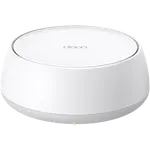
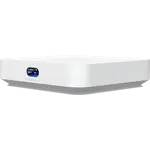
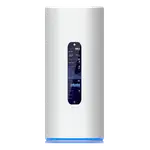
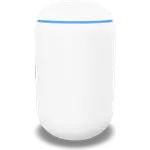
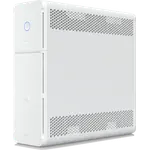
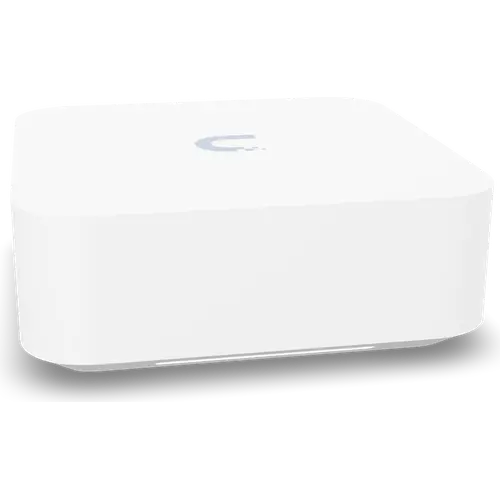
The UniFi Express 7 packs Ubiquiti's tri-band Wi-Fi 7 (10.7 Gbps combined, with MLO and WPA3) and a full UniFi console into a compact 443 g unit, and gives it a 10 GbE WAN port, which is faster than the WAN on the larger Dream Router 7. The catch is wired capacity at the other end: there is exactly one 2.5 GbE LAN port, no multi-WAN and no failover. If your devices are wireless, or you already own a switch, that is a fine trade for the smaller size and lower price, and you still get the firewall, VLANs, VPN server and management tools that make UniFi worth running.
- Wi-Fi 7 in a small space
- Fibre connections up to 10 Gbps
- Homes that already have a switch
- UniFi ecosystem starters
Pros
- Tri-band Wi-Fi 7 rated at 10.7 Gbps combined, with MLO and WPA3
- 10 GbE WAN port, faster than the Dream Router 7's WAN
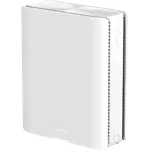
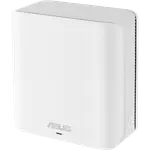
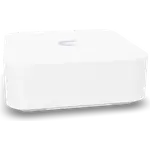
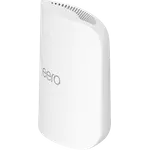
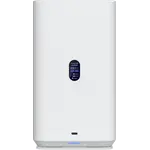
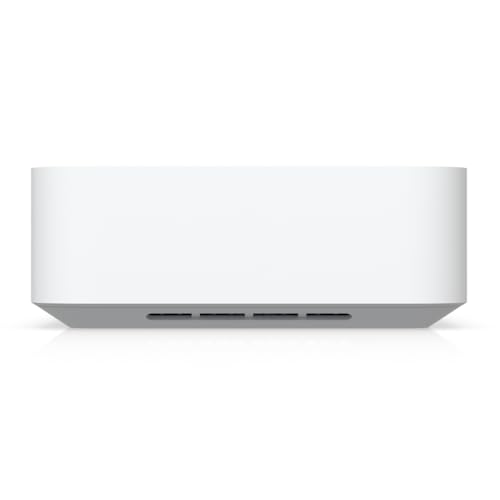
- Compact and light at 117 x 117 x 42.5 mm and 443 g
- Full UniFi management: web, iOS, Android, CLI and SNMP
- VPN client and server with WireGuard, OpenVPN and L2TP/IPsec, plus DDNS
- Separate guest and IoT networks
- Firewall, QoS, speed tests and configuration backup and restore
- Rated for 300+ connected devices
- Lower price than the Dream Router 7 with the same radio
Cons
- Only one LAN port, so a switch is needed for more wired devices
- No multi-WAN, failover or cellular backup
- No USB ports, so no drive sharing, Samba, FTP, Time Machine or media serving
- No Thread border router or Matter controller
- No LAN link aggregation
- Mesh uses a proprietary standard rather than EasyMesh
- One year warranty
Who is the UniFi Express 7 for?
It suits someone who wants UniFi's software and current-generation Wi-Fi without a large box or a large bill. The 10 GbE WAN port makes it a good match for a fast fibre connection, and because it runs a UniFi console it can also serve as the starting point of a wider UniFi network. With one LAN port it assumes most of your devices connect wirelessly, or that a switch sits downstream, which is a normal setup in a flat or a smaller home.
Wi-Fi and wired performance
The radio matches Ubiquiti's larger router: Wi-Fi 7 across 2.4 GHz (688 Mbps), 5 GHz (4300 Mbps) and 6 GHz (5700 Mbps), a 10.7 Gbps combined rating, MLO so a compatible client can use several bands simultaneously for lower latency, WPA3 encryption, and backward compatibility with Wi-Fi 6E, 6 and 5. On the wired side the WAN port runs at 10 Gbps, so the internet connection itself is not the bottleneck, and the single LAN port is 2.5 GbE. Mesh is supported for extending coverage with more UniFi units, over Ubiquiti's own protocol rather than EasyMesh.
The software you get
This is a full UniFi console, not a cut-down router app. Guest and IoT networks let you keep smart home devices separate from personal ones, the firewall and QoS are properly configurable, and parental controls include scheduled Wi-Fi pauses, instant pause and content blocking. VPN support is complete in both directions, working as client and server with WireGuard, OpenVPN and L2TP/IPsec, plus dynamic DNS for reaching home from outside. Management is available through the web interface, iOS and Android apps, the command line and SNMP, with built-in speed tests, new-connection notifications and configuration backup and restore. It is rated for 300+ connected devices.
What to know before you buy
One LAN port is the defining limitation: any second wired device needs a switch. There is no multi-WAN and no failover, so a dropped connection means a dropped connection, and no cellular backup either. There are no USB ports, so no Samba or FTP shares, no Time Machine backups and no media serving, and no link aggregation. It is not a smart home hub, with no Thread border router and no Matter controller. Access point mode support is not documented, and the warranty is one year. It draws 22 W.
Is the UniFi Express 7 worth it?
It is the value pick of the pair: identical Wi-Fi 7 performance to the Dream Router 7 and a faster 10 Gbps WAN port, for meaningfully less money and in a fraction of the space. You are paying less because you get fewer wired ports and no WAN redundancy, so the decision comes down to how many devices you plug in and whether a second internet line matters. For a wireless-first home with fast fibre, it is the more sensible buy.
Frequently asked questions
How many wired ports does the UniFi Express 7 have?
Two: a 10 GbE WAN port and a single 2.5 GbE LAN port. Connecting more than one wired device requires a switch.
Is its Wi-Fi slower than the Dream Router 7?
No. Both use the same tri-band Wi-Fi 7 radio, rated at 10.7 Gbps combined with MLO and WPA3. The difference is in wired ports and WAN redundancy, not wireless performance.
Can it fail over to a second internet connection?
No. Multi-WAN, failover and cellular backup are all unsupported on this model.
Does it run a full UniFi console?
Yes. You get the firewall, VLANs, guest and IoT networks, VPN server and client, parental controls, and management through the web interface, mobile apps, CLI and SNMP.
Does it support Matter or Thread?
No. It is neither a Matter controller nor a Thread border router.