Eufy Smoke Alarm E10 Review: A Palm-Sized Photoelectric Alarm That Lives on Your HomeBase
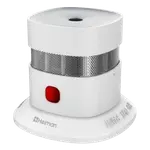
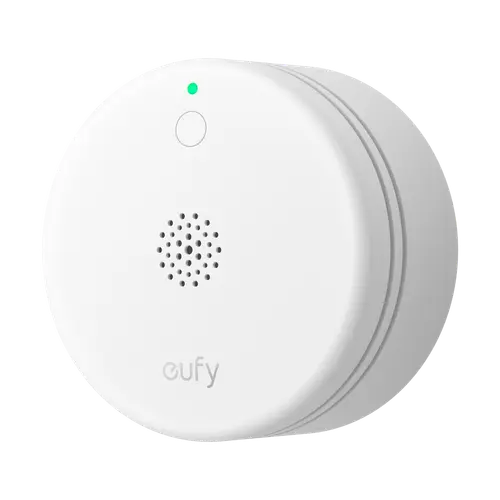
The Eufy Smoke Alarm E10 is a compact photoelectric smoke alarm built to slot into an existing eufy Security setup rather than stand on its own. It carries UL 217 10th Edition compliance and CSFM listing, runs on a sealed CR123A cell rated for five years, sounds an 85 dB local alarm and pushes smoke notifications to the eufy Security app through a HomeBase over a long-range sub-GHz link. The catch is the same thing that makes it smart: without a compatible eufy HomeBase and its app account it cannot operate, and it detects smoke only, with no carbon monoxide sensing or third-party smart home support.
- Homes already running a eufy HomeBase system
- Discreet installations that suit a small 70 mm alarm
- Buyers who want app notifications without a monitoring subscription
- Covering hallways, bedrooms and living areas
One alarm per floor, plus one per bedroom.
Buy on Amazon USACheck pricePros
- Photoelectric sensing that is UL 217 10th Edition compliant and CSFM listed
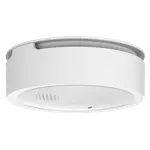
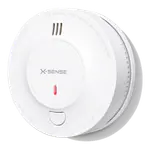
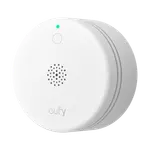
- Very compact 70 mm (2.75 in) body next to full-size alarms
- Sealed CR123A battery rated for five years with low-battery alerts
- Long-range sub-GHz link to the HomeBase, up to about 656 feet (200 m) in open air
- Local 85 dB siren plus smoke notifications in the eufy Security app
- Tap-to-mute and a two-second self-test button
- Dual-beam sensor filters low-density cooking smoke to cut false alarms
Cons
- Requires a compatible eufy HomeBase (Mini, 2, 3 or Pro) and cannot work standalone
- No Wi-Fi, Bluetooth, Zigbee, Z-Wave or Thread radio of its own
- No Matter, Apple HomeKit or SmartThings support, so it stays in the eufy app
- Smoke detection only: no carbon monoxide sensor
- No built-in emergency light or pathlight
- Eufy advises against kitchen installation because of cooking fumes
Who is the Eufy Smoke Alarm E10 for?
It is for someone who already owns a eufy Security HomeBase (the Mini, 2, 3 or Pro models on a recent firmware) and wants smoke detection that shows up in the same app as the rest of the system. Because the alarm reaches the HomeBase over a long-range sub-GHz radio rather than Wi-Fi, it holds a connection across an open-air distance of up to about 656 feet (200 m), which suits spreading several units through a house, hallway or garage. It is a smoke-only photoelectric detector, so it belongs alongside, not instead of, a carbon monoxide alarm and the conventional alarms a home already relies on.
What the Eufy Smoke Alarm E10 offers
The headline is the size: a diameter of just 70 mm (2.75 in), which eufy describes as about one-third the footprint of a conventional alarm, so it disappears against a ceiling. Detection is photoelectric, the type that responds well to smouldering fires, and the dual-beam sensor is tuned to filter low-density cooking smoke and reduce nuisance alarms. It meets UL 217 10th Edition and is CSFM listed for California fire safety. Power comes from a sealed CR123A lithium battery rated for five years, with low-battery and replacement warnings pushed to the app, and the low-power design refreshes status roughly every 20 minutes while keeping detection always active. The built-in siren hits 85 dB at 10 feet, a two-second press of the test button runs a self-check, and a single tap mutes a nuisance alarm. It also carries a 24/7 professional monitoring option through the wider eufy ExpertSecure system.
What to know before you buy
The E10 is not a standalone device. It has no Wi-Fi, Bluetooth, Zigbee, Z-Wave or Thread radio of its own and needs a compatible eufy HomeBase on a recent firmware (HomeBase Mini v4.0.5.2 or above, HomeBase 2 v3.4.1.2 or above, HomeBase 3 v3.7.2.6 or above, or HomeBase Pro v4.1.4.3 or above) to pair, report and alert. There is no Matter certification and no Apple HomeKit or SmartThings path, so it stays inside the eufy app rather than joining a cross-brand smart home. It detects smoke only, with no carbon monoxide sensor, and there is no built-in emergency light or pathlight. Eufy also warns against installing it in a kitchen, where cooking fumes are likely to trigger false alarms. These limits make it a companion to a complete alarm plan, not a whole solution.
Is the Eufy Smoke Alarm E10 worth it?
If a eufy HomeBase already anchors your home, the E10 is an easy way to add certified smoke sensing to the same app for a modest outlay, and the tiny body means you can place several without them dominating a ceiling. The five-year sealed battery keeps maintenance to a minimum, and the local siren means it still protects the room even when a phone is out of reach. Buy it for what it is: a eufy-ecosystem sensor. Anyone without a HomeBase, or wanting carbon monoxide detection, Matter support or an emergency light, should look at a self-contained alarm instead.
Frequently asked questions
Does the Eufy Smoke Alarm E10 work on its own?
No. It has no Wi-Fi or other standalone smart radio and must be paired to a compatible eufy HomeBase (Mini, 2, 3 or Pro) running recent firmware. Without the HomeBase it will not connect, report or alert through the app.
Which eufy HomeBase models are compatible?
HomeBase Mini on v4.0.5.2 or above, HomeBase 2 (S280) on v3.4.1.2 or above from the 2021 revision, HomeBase 3 (S380) on v3.7.2.6 or above, and HomeBase Pro on v4.1.4.3 or above. Eufy recommends updating the HomeBase to the latest firmware.
How long does the battery last?
The sealed CR123A lithium battery is rated for five years under normal conditions. Status such as battery level and connection is refreshed about every 20 minutes to save power, while smoke detection stays active at all times.
Does it detect carbon monoxide?
No. The E10 is a photoelectric smoke alarm only. A separate carbon monoxide alarm is still needed.
How does it alert me to smoke?
It sounds an 85 dB siren at 10 feet (3 m) for people on the scene and sends a smoke notification to the eufy Security app through the HomeBase, so you can be told while away.
Can I install it in the kitchen?
Eufy does not recommend it. A high concentration of cooking fumes can trigger false alarms, and the dual-beam sensor is designed to filter low-density cooking smoke rather than tolerate it. Hallways, bedrooms and living areas are the intended spots.