
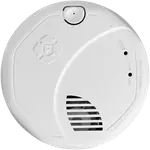
Updated November 2026
Data from the official First Alert and Google sites.
2026 verdict
If you want a smoke alarm that shows up in the Google Home app, the Google Nest Protect (Wired) is the one to buy here.
It senses smoke and carbon monoxide plus occupancy, temperature, humidity, ambient light and motion, runs on mains power with a battery backup, speaks an early warning that names the room, interconnects so every unit sounds together, tests itself and doubles as a pathlight. The First Alert SMCO410 Smoke Detector & CO Alarm is the Z-Wave option: a sealed ten-year battery pack and a ten-year warranty, reporting into Ring Alarm, SmartThings or Home Assistant, but with no Wi-Fi, no Google Home and no self-test. Choose the Google Nest Protect (Wired) for a Google or Nest home with wired alarms, and the First Alert SMCO410 Smoke Detector & CO Alarm for a Z-Wave system that wants a maintenance-free detector.
Works with
Connectivity
vs
Winner
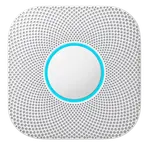
Price unavailable right now
Works with
Connectivity
- Wi-Fi 2.4 GHz
- Bluetooth
News by email
Still comparing? Get what's new by email
New releases and the smart home news worth knowing, in your inbox.
No spam. Unsubscribe in one click.
| Feature | First Alert SMCO410 Smoke Detector & CO Alarm | Google Nest Protect (Wired) | Winner |
|---|---|---|---|
| Rating | 3.5 | 4.4 | Google Nest Protect (Wired) |
| Warranty | 10 years | 2 years | First Alert SMCO410 Smoke Detector & CO Alarm |
| Connectivity | Z-Wave | 2.4 GHz WiFi, Bluetooth, Other | Google Nest Protect (Wired) |
| Sensors | Smoke, CO | Smoke, CO, Occupancy, Temperature, Humidity, Ambient Light, Motion | Google Nest Protect (Wired) |
| Built-in Light | NO | YES | Google Nest Protect (Wired) |
| Tests Itself | NO | YES | Google Nest Protect (Wired) |
| Pathlight | NO | YES | Google Nest Protect (Wired) |
| Local Control | YES | Partially | First Alert SMCO410 Smoke Detector & CO Alarm |
| Integrations | Samsung SmartThings, Home Assistant | Google Home, Home Assistant | Tie |
| Screen | NO | NO | Tie |
| Alerts | Fire Alerts, CO Alerts, Low Battery Alerts | Fire Alerts, CO Alerts, Low Battery Alerts | Tie |
| Built-in Siren | YES | YES | Tie |
What the differences mean
Power
The First Alert SMCO410 Smoke Detector & CO Alarm runs on a sealed lithium battery rated for ten years, so it needs no wiring and no battery changes. The Google Nest Protect (Wired) runs on mains power with a small battery backup, so it needs hardwired alarm wiring but never asks you to climb a ladder to replace a cell.
Sensors on board
The First Alert SMCO410 Smoke Detector & CO Alarm senses smoke and carbon monoxide. The Google Nest Protect (Wired) senses those two plus occupancy, temperature, humidity, ambient light and motion, which is what enables its room-naming voice, its Steam Check and its pathlight.
How it connects
The First Alert SMCO410 Smoke Detector & CO Alarm is Z-Wave only, with no Wi-Fi, Zigbee, Thread or Matter, so it needs a Z-Wave controller such as a Ring Alarm base station or Home Assistant. The Google Nest Protect (Wired) uses 2.4GHz Wi-Fi and Bluetooth and a proprietary link between its own units.
Self-test and pathlight
The Google Nest Protect (Wired) checks its batteries and sensors hundreds of times a day, runs a monthly speaker test and lights a path when you walk under it at night. The First Alert SMCO410 Smoke Detector & CO Alarm has no self-test, no built-in light and no pathlight, so you test it by hand.
Ecosystem and voice
The Google Nest Protect (Wired) is managed through the Nest app and works with Google Home and Home Assistant, and can tell a Nest thermostat to cut the heat on CO, but it supports no Alexa, HomeKit, SmartThings or Matter. The First Alert SMCO410 Smoke Detector & CO Alarm works with Ring Alarm, SmartThings and Home Assistant, and with neither Google Home nor Alexa.
Which one to buy if
- you want your smoke alarm to appear in Google Home
The Google Nest Protect (Wired) is managed through the Nest app and works with Google Home, where the First Alert SMCO410 Smoke Detector & CO Alarm never appears.
- your home runs on Z-Wave or Ring Alarm
The First Alert SMCO410 Smoke Detector & CO Alarm joins a Z-Wave mesh directly, turning a fire or CO event into a monitored alert.
- you have hardwired alarm wiring and dislike battery changes
The Google Nest Protect (Wired) takes mains power, so there are no routine battery swaps, only the backup cell every few years.
- you want no wiring at all and a decade without maintenance
The First Alert SMCO410 Smoke Detector & CO Alarm screws on like a normal alarm and its sealed battery and warranty both run ten years.
- you want a night light and self-testing built in
The Google Nest Protect (Wired) has a pathlight and tests itself, neither of which the First Alert SMCO410 Smoke Detector & CO Alarm offers.
$64.93
- + Warranty: 10 years
- + Local Control: YES
- - Rating: 3.5 vs 4.4
- - Connectivity: Z-Wave vs 2.4 GHz WiFi, Bluetooth, Other
Winner
Price unavailable right now
- + Rating: 4.4
- + Connectivity: 2.4 GHz WiFi, Bluetooth, Other
- + Sensors: Smoke, CO, Occupancy, Temperature, Humidity, Ambient Light, Motion
- - Warranty: 2 years vs 10 years
- - Local Control: Partially vs YES
What owners say
Google Nest Protect (Wired) owners describe the same handful of wins: hardwiring means no low-battery chirps in the night, installation takes minutes with clear app guidance, and the early spoken warning naming the room lets them silence a cooking false alarm before the horn sounds. They praise the phone alerts when away, the units sounding together even with Wi-Fi off, the self-test with its monthly report, the pathlight and Steam Check. Their complaints are consistent too: it only interconnects with other Nest Protects rather than their existing wired alarms, it is expensive, spoken room names come from a fixed list, and it works only with Google Home and Home Assistant.
Frequently Asked Questions
Which is better overall: First Alert SMCO410 Smoke Detector & CO Alarm or Google Nest Protect (Wired)?
For a Google or Nest home the Google Nest Protect (Wired) is the better alarm, with more sensors, spoken room warnings, self-testing, a pathlight and Google Home support. The First Alert SMCO410 Smoke Detector & CO Alarm is the stronger pick for a Z-Wave home, trading those extras for a maintenance-free ten-year sealed battery and a ten-year warranty.
What is the biggest difference between the First Alert SMCO410 Smoke Detector & CO Alarm and the Google Nest Protect (Wired)?
How they connect and what they sense. The First Alert SMCO410 Smoke Detector & CO Alarm is a Z-Wave device with a sealed ten-year battery and no self-test, while the Google Nest Protect (Wired) is a mains-powered Wi-Fi alarm packed with climate, occupancy and motion sensors, a room-naming voice, self-testing and a pathlight.
Does the First Alert SMCO410 Smoke Detector & CO Alarm work with Google Home?
No. The First Alert SMCO410 Smoke Detector & CO Alarm uses Z-Wave and is designed for Ring Alarm, SmartThings and Home Assistant, so it does not appear in Google Home. For Google Home support you need an alarm like the Google Nest Protect (Wired).
Which smoke detectors work with Google Home?
Of these two, only the Google Nest Protect (Wired), which is managed through the Nest app and exposed to Google Home. The First Alert SMCO410 Smoke Detector & CO Alarm speaks Z-Wave rather than Google Home, so it works with Ring Alarm, SmartThings and Home Assistant instead.
Who should buy the First Alert SMCO410 Smoke Detector & CO Alarm?
Homes already running Z-Wave, especially on Ring Alarm or Home Assistant, that want a combination smoke and CO alarm with a sealed ten-year battery and no Wi-Fi or app of its own.
Who should buy the Google Nest Protect (Wired)?
Google and Nest households with hardwired alarm wiring who want combined smoke and CO detection, room-naming voice warnings, phone alerts, self-testing, a pathlight and no routine battery changes.
Spotted something wrong on this page? Tell us and we will fix it.
 Our store on AmazonShop our ideas on AmazonLists of the smart home setups we would put together ourselves, ready to add to your Amazon cart.Shop on Amazon
Full comparison table
Compare all 28 Smoke & CO Detectors side by side
You are looking at two of them. The full table lines up all Smoke & CO Detectors in the catalog with the same specs, so you can filter by what you need and sort by price or rating.
- 28 Smoke & CO Detectors
- 45 specs compared
- 42 filters
- Smoke & CO Detectors

Photoelectric Smoke Alarm
- Smoke & CO Detectors
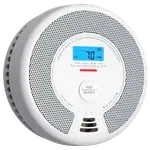

WiFi Smoke & CO Detector
- Smoke & CO Detectors
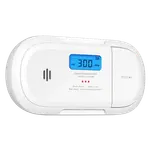
Wi-Fi CO Alarm
- Smoke & CO Detectors
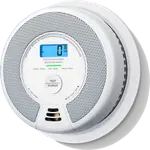
SC07-MR Smart Smoke & CO Alarm
- Smoke & CO Detectors
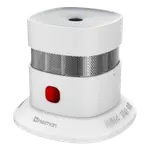

HS1SA-E Zigbee Smoke Alarm
- Smoke & CO Detectors
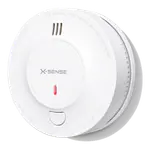
SD19-MN Interconnected Smart Smoke Alarm
- Smoke & CO Detectors
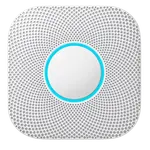

Nest Protect (Battery)
- Smoke & CO Detectors
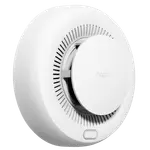

Smart Smoke Detector
- Smoke & CO Detectors
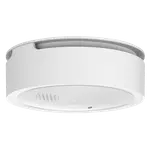

Smoke Alarm
- Smoke & CO Detectors
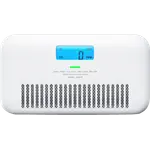
XC0M-iR Smart Carbon Monoxide Alarm with Voice Alerts
- Smoke & CO Detectors
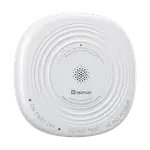
Smoke and CO Alarm HM-636THS
- Smoke & CO Detectors
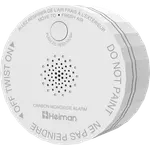
Carbon Monoxide Detector C1-S
- Smoke & CO Detectors
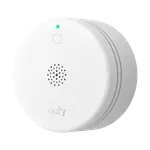

Smoke Alarm E10
- Smoke & CO Detectors
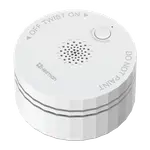
Interconnected Smoke Alarm S1-R
- Smoke & CO Detectors
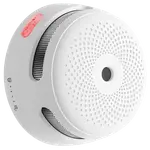
Wi-Fi Smoke Alarm
- Smoke & CO Detectors
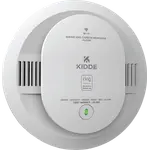

Smart Smoke & CO Detector with Ring
- Smoke & CO Detectors
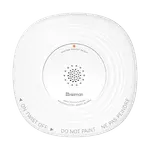
Smoke Alarm HM-636PHS
- Smoke & CO Detectors
Matter Smoke Detector S1-TM
- Smoke & CO Detectors
Interconnected CO Alarm C1-R
- Smoke & CO Detectors


SC5 Battery Smart Smoke & CO Alarm
- Cameras
Nest Cam (outdoor or indoor, battery)
- Cameras
Nest Cam Floodlight
- Cameras
Nest Cam Indoor (Wired, 3rd Gen)
- Cameras
Nest Cam Outdoor (Wired, 2nd Gen)
- Cameras
Nest Cam (indoor, wired)
- Displays
Nest Hub (2nd Gen)
- Displays
Nest Hub Max
- Doorbells
Nest Doorbell (battery)
- Doorbells
Nest Doorbell (wired, 3rd Gen)
- Doorbells
Nest Doorbell (wired, 2nd Gen)
- Door Locks
Nest x Yale Lock
- Routers

Nest WiFi Pro
- Smoke & CO Detectors
Nest Protect (Battery)
- Speakers

Nest Audio
- Speakers
Nest Mini (2nd gen)
- Streaming Devices

TV Streamer (4K)
- Temperature & Humidity Sensors

Nest Temperature Sensor (2nd gen)
- Temperature & Humidity Sensors
Nest Temperature Sensor
- Thermostats
Nest Learning Thermostat (4th gen)
- Thermostats
Nest Learning Thermostat