




Google Nest Protect (Battery) Review: A Smart Smoke and CO Alarm That Warns You Early
The battery-powered Google Nest Protect is a premium smart alarm that detects both smoke and carbon monoxide, gives a spoken early warning that names the room before the loud alarm, and pushes alerts to your phone even when you are away (great peace of mind for pets or sleeping family). It interconnects wirelessly so all units sound together, tests itself hundreds of times a day with a monthly email report, lights your way with an automatic pathlight, and uses Steam Check to cut nuisance alarms from showers and cooking. The trade-offs: it is expensive, has a hard 10-year lifespan (it disables itself when expired), needs specific Energizer Lithium AA batteries, and is managed mainly through the Nest app (it works with Google Home and Home Assistant but not Alexa, HomeKit, SmartThings or Matter). Also watch for old Amazon stock, since a unit's life starts at its manufacture date.
- Smoke and CO peace of mind
- Pet and family households
- Google / Nest homes
- Homes without hardwired alarms
Pros
- Detects both smoke and carbon monoxide in one unit
- Spoken early warning that names the room before the loud alarm
- Phone alerts even when you are away, plus interconnected units
- Tests itself hundreds of times a day with a monthly email report
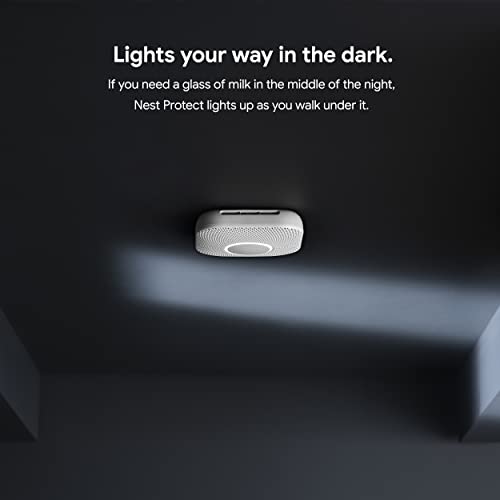
- Automatic pathlight/night light and Steam Check to cut false alarms
- Easy ~5-minute install with app guidance and a rotating, self-leveling mount
Cons
- Expensive, with a fixed ~10-year life (disables itself when expired)
- Amazon stock can be old, cutting into the 10-year lifespan (check the date)
- Requires specific Energizer Lithium AA batteries; low-battery warning can be abrupt
- Managed via the Nest app; no Alexa, HomeKit, SmartThings or Matter
- Spoken room names limited to a fixed list (no custom voice labels)
- 2.4GHz Wi-Fi only, with occasional connection issues
Who is the Google Nest Protect (Battery) for?
This is a smart, battery-powered smoke and carbon monoxide alarm for people who want more than a beeping detector. It runs on 6 AA batteries (no wiring needed), connects over 2.4GHz Wi-Fi and Bluetooth, and uses a split-spectrum sensor to catch both fast-flaming and slow-smoldering fires plus a CO sensor rated for 10 years. It speaks an early warning that names the affected room, sends alerts to your phone, interconnects with other Protects so they all sound together, and adds a pathlight, ambient-light, temperature, humidity, occupancy and motion sensing. Steam Check reduces false alarms, it tests itself over 400 times a day, and a big front button silences alerts. It works with Google Home and Home Assistant (there is no Alexa, Apple HomeKit, SmartThings or Matter support) and is set up and managed through the Nest app. It best suits households wanting combined smoke/CO protection and remote alerts, pet and family homes, Google/Nest users, and homes (especially older ones) without hardwired alarms.
What buyers love
The early, spoken warning is the most praised feature: owners value that it announces where smoke or CO is detected before the piercing alarm, giving time to silence a cooking false alarm or clear pets and kids. Phone alerts when away are repeatedly called peace of mind, with several stories of being notified instantly (one caught a real toaster-oven fire, another credits it with detecting dangerous carbon monoxide well before a traditional alarm). Owners love that it tests itself and emails a monthly report, so they do not have to remember, and that all units interconnect and identify which one is alarming. The automatic pathlight doubles as a handy night light, Steam Check genuinely cuts shower and kitchen false alarms, and installation is quick (around five minutes) with the app walking you through it and a rotating mount that makes leveling easy. Adding extra units copies your Wi-Fi settings automatically, the build quality and aesthetics are well regarded, and tech support gets good marks.
What to know before you buy
It is expensive per unit, and like all CO alarms it has a fixed lifespan (about 10 years), after which it disables itself with a spoken expiry warning. A recurring caution: check the manufacture date on the back, because Amazon stock can be a few years old, which eats into that 10-year life, so return units more than about a year old. It requires specific Energizer Ultimate Lithium AA (L91) batteries (not alkaline or rechargeable), which are pricey, and the low-battery warning can arrive abruptly and loudly rather than as a gentle app notification first, with some owners finding the spent batteries hot to the touch. On smarts, it is managed through the Nest app and works with Google Home and Home Assistant, but it does not integrate with Amazon Alexa, Apple HomeKit, SmartThings or Matter, and some owners are frustrated it does not appear as a controllable device the way cheaper smart alarms do. The spoken room names come from a fixed list (no custom voice labels like garage), multi-unit setup requires placing units side by side briefly, and it is 2.4GHz Wi-Fi only with occasional connection hiccups reported.
Is the Google Nest Protect (Battery) worth it?
For combined smoke and CO protection with genuinely useful early warnings and remote alerts, yes, it is a well-reviewed, reassuring choice, especially for homes without hardwired alarms and for anyone who wants to be notified away from home. The self-testing, interconnection, pathlight and Steam Check add real day-to-day value over a basic detector. Just go in knowing it is costly, locked to a 10-year life (buy fresh stock and check the date), needs specific lithium batteries, and is Nest-app-centric with limited smart-home integration beyond Google and Home Assistant. If you want Alexa/HomeKit control or the lowest price, a different smart alarm may fit better; if you prioritize early, spoken smoke-and-CO warnings and phone alerts, the Protect earns its place.
Frequently asked questions
Does the Nest Protect detect carbon monoxide as well as smoke?
Yes. It detects both smoke (with a split-spectrum sensor for fast and smoldering fires) and carbon monoxide, with a CO sensor rated for about 10 years. Owners report it warning of CO well before traditional alarms.
What batteries does the battery version use, and how long do they last?
It uses 6 AA batteries, and Google specifies Energizer Ultimate Lithium AA (L91), not alkaline or rechargeable. They last a long time, but they are pricey, and the low-battery alert can be abrupt and loud rather than a gentle app warning first.
Which smart home platforms does it work with?
It is set up and managed through the Nest app and works with Google Home and Home Assistant. It does not integrate with Amazon Alexa, Apple HomeKit, Samsung SmartThings or Matter.
How long does it last before needing replacement?
About 10 years, limited by the CO sensor, after which it disables itself and announces that it has expired. Because the clock starts at manufacture, check the date on the back when buying, since older Amazon stock leaves you less usable life.
Does it cause false alarms when cooking or showering?
Less than a basic alarm. Its Steam Check uses a humidity sensor to distinguish steam from smoke, and the early spoken warning plus a large silence button let you stop a cooking false alarm before the loud horn sounds.