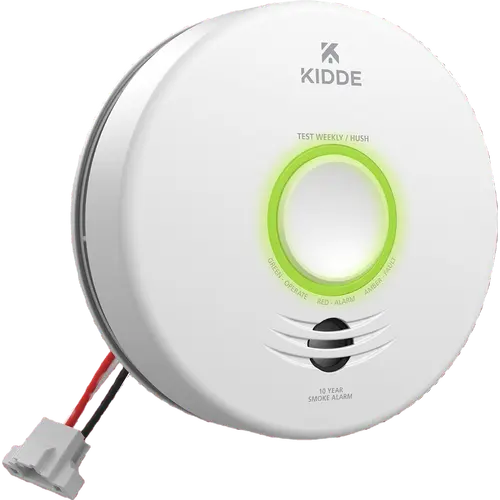




Kidde Smart Smoke Alarm Review: An Easy Hardwired Upgrade, With Nuisance Alarms as the Catch
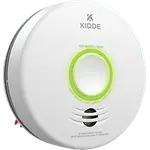
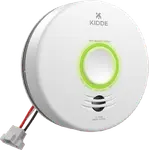
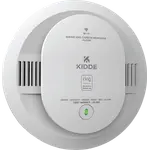
The Kidde Smart Smoke Alarm (P4010ACS-WF) is a hardwired 120 V photoelectric alarm that adds Wi-Fi phone alerts and a voice announcement to a conventional interconnected setup. Owners like how quickly it swaps in for an old hardwired unit, the sealed ten-year battery that ends 2 a.m. chirping, and being told about an alarm while away. The recurring complaint is nuisance alarms, often at night, along with an app that can be clumsy and a Wi-Fi link that sometimes drops. It detects smoke only (no carbon monoxide) and runs on 2.4 GHz Wi-Fi only.
- Homes with hardwired Kidde alarms
- Ten-year sealed battery seekers
- Remote alert seekers
- Google Home households
Pros
- Quick swap for an existing hardwired alarm, with app setup by scanning a code
- Sealed lithium backup battery rated for ten years, no battery to change
- Phone push alerts plus a spoken hazard announcement with the 85 dB siren
- Interconnects with existing hardwired Kidde alarms
- Photoelectric sensor suited to smouldering fires
- Works with Google Home
Cons
- Many owners report false alarms, often in the middle of the night
- The app can be clumsy and may refuse to hush an alarm remotely
- Wi-Fi can drop offline, and the Google Home link may show it as offline
- Smoke only, no carbon monoxide sensor
- 2.4 GHz Wi-Fi only, with no Alexa, Apple Home, SmartThings or Matter support
- The housing can crowd a small ceiling box
Who is the Kidde Smart Smoke Alarm for?
It suits a home that already has hardwired, interconnected smoke alarms and wants to hear about an alarm while away. It wires into a 120 V AC circuit with the included AC connector, and because it interconnects with other hardwired Kidde alarms, one smart unit can join an existing chain: when one alarm sounds, they all sound, while the smart unit is the one that reports to the phone. Owners with large houses have fitted many of them, and others use one in an attached garage. It is not a battery-only retrofit for a ceiling with no wiring.
What do owners like about the Kidde Smart Smoke Alarm?
Installation is the most praised part: buyers replacing an older hardwired alarm describe a swap of about twenty minutes, an app setup that scans a code on the back, and wiring that matched their old Kidde or other hardwired units. The sealed lithium battery rated for ten years is the other favourite, since nobody has to climb a ladder when a battery dies in the middle of the night. When it works as intended, the Kidde app sends a push notification naming the alarm that triggered, the siren is joined by a spoken hazard announcement, and the ability to link the smart unit to existing wired alarms makes a whole-house chain feel like one system. Detection is handled by a photoelectric sensor, the type suited to slow, smouldering fires.
What to know before you buy
Nuisance alarms are the dominant complaint, and they are serious for a safety device: many owners report units going off at night or without any visible cause, from cooking, steam, humidifiers or nothing at all, and say that blowing the sensors out with compressed air did not stop it. Some who fitted several units had alarms from more than one of them. The app adds to the frustration: owners describe being logged out, a fiddly sequence to silence an alarm, and a message that there is too much smoke to hush from the phone, which sends them up a ladder. Wi-Fi is another weak spot, with units that drop offline for no reason or fall off the network, and a Google Home link that can show the alarm as offline. Smart home reach is narrow: it works with Google Home, but owners who bought it for Alexa routines say it does not appear as a device there, and it has no Apple Home, SmartThings or Matter support. On the install side, the housing on top can crowd a small ceiling box, some older Kidde wireless models would not link to it, and a few buyers found wiring that did not match their old alarms. A handful of units arrived used or defective, and owners describe slow support. It is a smoke alarm only, with no carbon monoxide sensor, and its Wi-Fi is 2.4 GHz only.
Is the Kidde Smart Smoke Alarm worth it?
The average rating is middling, and the reviews explain why: a clean, quick upgrade with a long-life battery on one side, and repeated nuisance alarms and app problems on the other. It makes sense for a house already wired for interconnected Kidde alarms where a phone alert is the goal and the rooms are kept away from steam and cooking fumes. Buyers who want carbon monoxide detection, Alexa routines or Apple Home, or who cannot tolerate a false alarm in the night, should look at a combination alarm or another model.
Frequently asked questions
Does the Kidde Smart Smoke Alarm detect carbon monoxide?
No. The P4010ACS-WF has a photoelectric smoke sensor only, with no carbon monoxide sensor and no CO alerts, so a home with fuel-burning appliances needs a separate CO alarm.
Does the Kidde Smart Smoke Alarm give false alarms?
It is the most common complaint. Many owners report alarms in the night or with no visible smoke, from cooking, steam or no clear cause, and cleaning the sensor with compressed air did not always help. Others use it for years without a problem.
Do I ever need to replace its battery?
No. It runs on 120 V AC power, and its backup battery is a sealed lithium cell rated for ten years, the same span as the ten-year warranty.
Will it work with my other hardwired smoke alarms?
It interconnects with other hardwired Kidde alarms over the AC interconnect, so when one sounds they all sound. Only the smart alarm itself sends notifications to the app. Some owners with older wireless Kidde models could not link them, so check the wiring and the model first.
Does it work with Google Home, Alexa or Apple Home?
It works with Google Home, and Home Assistant can add it through the community Kidde HomeSafe integration. It does not work with Alexa, Apple Home, SmartThings or Matter, and owners who bought it expecting Alexa routines were disappointed.
Does it need 5 GHz Wi-Fi?
No, it connects on 2.4 GHz Wi-Fi only and does not support 5 GHz.