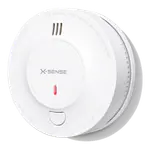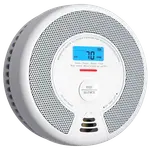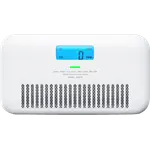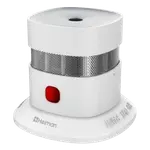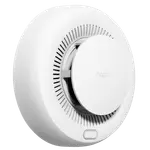

X-Sense XP0J-iA Review: A Hardwired Smoke and CO Alarm That Finally Talks to an App on Its Own
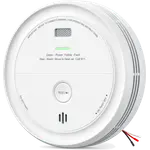
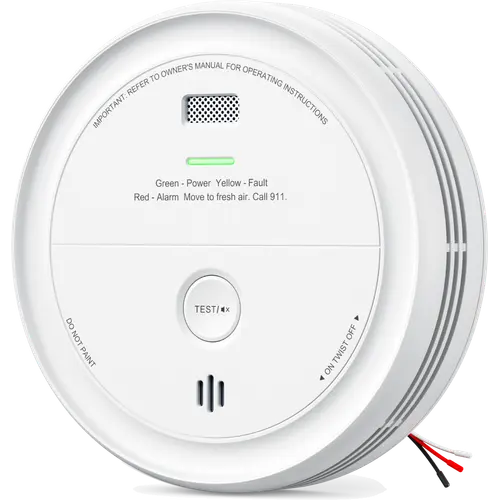
The XP0J-iA is the alarm to fit when the ceiling already has power and interconnect wire running to it and you want push notifications without adding a bridge. It combines a photoelectric smoke sensor with an electrochemical CO sensor, backs the 85 dB sounder with a voice alert that names the room, joins a 2.4 GHz network by itself, and links up to 18 hardwired units so one detecting alarm sounds the whole house. It is a life safety device first and a smart device second: there is no Alexa, Google Home, HomeKit, SmartThings or Matter support, and no automation engine, so the app is where the intelligence stops. At an affordable price for a hardwired connected combination alarm, that trade is easy to accept.
- Homes with existing hardwired alarm wiring
- Whole-house interconnected coverage
- Homes with gas appliances
- App alerts without a hub
Pros
- Hardwired 120 V with a replaceable CR123A backup battery
- Photoelectric smoke and electrochemical CO detection in one unit
- Voice alerts announce the hazard and the room, not just a beep
- Joins 2.4 GHz Wi-Fi on its own, no base station required
- Interconnects up to 18 hardwired alarms across a 1000 ft run
- Self-monitors for sensor faults, chamber contamination and end of life
- Remote one-tap test and shared household access in the app
- Five year warranty on a ten year service life
Cons
- Requires existing mains wiring and professional installation is recommended
- No Alexa, Google Home, Apple Home, SmartThings or Matter support
- Home Assistant support is not documented for this model
- No automations, so it cannot trigger other smart devices
- 2.4 GHz Wi-Fi only, and app features stop if mains power is lost
- Interconnect works only with other X-Sense hardwired alarms
- No display, no escape light and no steam check to curb nuisance alarms
- Dimensions, weight and backup battery life are not published
Who is the X-Sense XP0J-iA for?
This is a replacement alarm for a house that was built with wired smoke detectors, not a first smart alarm for a rental. It takes a 120 V wire-in connector, joins the existing interconnect line, and keeps a CR123A cell in the back so detection carries on when the power is out. Combining smoke and carbon monoxide in one ceiling unit covers both hazards from a single fixture, which matters most in a home with a furnace, a gas range or an attached garage, because carbon monoxide is odorless and a detector is the only way to know it is there. Because it reaches Wi-Fi on its own, it also suits anyone who wants alerts on a phone without buying into a base station first.
What the XP0J-iA offers
Detection is split across two sensor technologies: a photoelectric smoke chamber rated at 1.02 to 1.66 percent obscuration per foot, which responds well to the smouldering fires that fill a house with smoke before there are flames, and a separate electrochemical CO sensor that alarms in four to fifteen minutes at 400 ppm. When something triggers, the 85 dB sounder at 10 ft is paired with a spoken message that names the hazard and the location, which is the difference between waking up confused and knowing which way not to run. Up to 18 alarms interconnect over the AC wire, across a run as long as 1000 ft, so every unit sounds together. The app side is small but useful: an instant push when smoke or CO is detected, a one-tap remote test so nobody has to climb a ladder, and shared access so more than one person in the household gets the alert. The alarm also watches itself, announcing a failed smoke or CO sensor, a contaminated smoke chamber, or the end of its ten year service life without being asked. X-Sense covers combination alarms for five years.
What to know before you buy
It has to be wired. This is not a peel-and-stick alarm, the manufacturer recommends professional installation, and the interconnect only works with other X-Sense hardwired alarms, so mixing brands on the same wire is out. The radio is 2.4 GHz only, so a router broadcasting a single merged band needs a separate 2.4 GHz SSID before setup will complete, and when mains power is lost the Wi-Fi and app features stop while the battery keeps detection running. On the smart home side the list is short: no Alexa, no Google Home, no Apple Home, no SmartThings and no Matter certification, and the community Home Assistant integration for X-Sense does not list this model, so treat it as app-only for now. There is no automation engine either, so the alarm cannot switch on lights or trigger another device when it fires. There is no screen, only a four colour status LED, and no escape light or pathlight. X-Sense does not publish the unit's dimensions or weight, or how long the CR123A backup lasts.
Is the X-Sense XP0J-iA worth it?
Judged as a hardwired combination alarm it is a strong buy: two sensor types, spoken location alerts, whole-house interconnection, continuous self-monitoring and a five year warranty on a ten year unit, at a price that undercuts most connected alarms from the big safety brands. Judged as a smart home product it is deliberately narrow, and that is the honest way to read it. If the goal is a routine that unlocks doors and turns on lights when smoke is detected, this is the wrong alarm and a Matter or platform-certified model is worth the premium. If the goal is replacing a row of beeping wired detectors with ones that tell you which room is on fire and put it on your phone, it does exactly that for very little money.
Frequently asked questions
Does the X-Sense XP0J-iA need a base station or hub?
No. It connects directly to a 2.4 GHz Wi-Fi network, and X-Sense states it is not compatible with the SBS50 base station. That makes a single unit a complete connected alarm on its own.
Does it work with Alexa, Google Home, Apple Home or Matter?
No. The XP0J-iA is controlled only through the X-Sense Home Security app. It is not Matter certified, and X-Sense does not list it as working with Alexa, Google Home, Apple Home or SmartThings. Home Assistant support is not documented either: the community X-Sense integration maps models by code and does not include this one.
How many alarms can be interconnected?
Up to 18 units over the hardwired interconnect line, with a maximum run of 1000 ft (300 m) between the first and last alarm. When one detects smoke or carbon monoxide, all of them sound. Only X-Sense hardwired alarms may share that wire.
What happens during a power cut?
A CR123A lithium cell in the back keeps smoke and CO detection running, so the alarm still sounds. Wi-Fi and the app features do not work while mains power is out, so push notifications resume once power returns.
How long does the XP0J-iA last?
Ten years from manufacture. At the end of that service life the alarm announces that it needs replacing and flashes its status LED, and the same self-monitoring reports a failed sensor or a contaminated smoke chamber before then. The warranty runs five years.
Can it be tested without a ladder?
Yes. A Device Test button in the app runs the same check as the physical Test button, and the alarm announces whether it is working normally or reports the specific fault it found.