Winner
50% OFF
$39.99
$79.99
33% above its lowest price of the last 6 months ($29.99)

Full Smart Speakers comparison in 2026
We follow prices across the catalog and email you the best deals we find.
No spam. Unsubscribe in one click.
| Feature | Amazon Echo Dot (5th Gen) | Amazon Echo Pop | Winner |
|---|---|---|---|
| Sensors | Motion, Temperature | None | Amazon Echo Dot (5th Gen) |
| Price | $39.99 | $39.99 | Tie |
| Rating | 4.7 | 4.7 | Tie |
| Warranty | 90 days | 90 days | Tie |
| Connectivity | 2.4 GHz WiFi, 5 GHz WiFi, Bluetooth | 2.4 GHz WiFi, 5 GHz WiFi, Bluetooth | Tie |
| Integrations | Alexa, Home Assistant | Alexa, Home Assistant | Tie |
| Hub | Matter Bridge | Matter Bridge | Tie |
| Voice Assistant | Amazon Alexa | Amazon Alexa | Tie |
| Alerts | Glass breaking, Smoke/CO alarm | Glass breaking, Smoke/CO alarm | Tie |
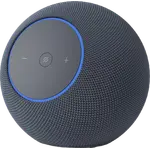
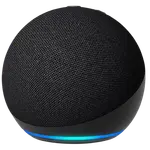
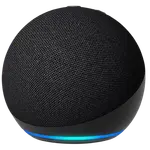
The Amazon Echo Dot (5th Gen) has temperature and motion sensors, so it can turn on a fan when the room warms up or a light when someone walks in. The Amazon Echo Pop has neither and can only read temperature from other devices.
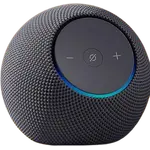
The Echo Dot adds tap-to-pause on top; the Echo Pop has volume buttons only. It matters for alarms and music you want to stop without speaking.
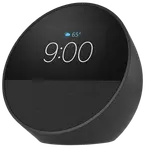
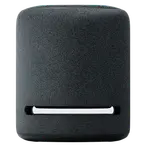
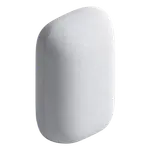
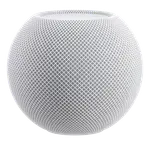
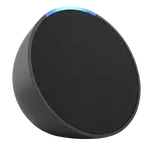
The Echo Dot is a 100 mm sphere weighing 304g; the Echo Pop is a front-firing half-sphere of 196g, easier to tuck against a wall or on a narrow shelf.
Only the Amazon Echo Dot (5th Gen) has built-in temperature and motion sensors.
The Amazon Echo Pop is the cheaper unit with the same Alexa, Matter bridge and multi-room audio.
Tap-to-pause on the Amazon Echo Dot (5th Gen) lets you stop an alarm or music without a voice command.
The Amazon Echo Pop's half-sphere shape sits flat against a wall and weighs 196g.
Owners of both Echos say the same thing first: the sound is fuller than such a small speaker should manage, Alexa responds fast and setup takes minutes. Both groups use them to run lights, plugs and cameras by voice, and both mention the missing 3.5 mm audio-out jack. Amazon Echo Dot (5th Gen) owners single out the temperature sensor, tap-to-pause, strong bass for music and using it as an Eero mesh extender, and they note 5 GHz drops far from the router, occasional unprompted wake-ups and only a modest step over the previous Dot. Amazon Echo Pop owners focus on value, building whole-home music and intercom from several units, and their complaints are a short power cable, needing to sit near the router, no tap-to-pause and no built-in temperature sensor.
Moving from the Amazon Echo Pop to the Amazon Echo Dot (5th Gen) adds three things: a temperature sensor, motion sensing for routines and tap-to-pause. Alexa, the Matter bridge, Wi-Fi, Bluetooth, the subscription alerts and the lack of an audio-out jack stay the same. If you never build routines around room temperature or presence and use voice to pause, your Amazon Echo Pop already does the job. If you want a speaker that reacts when someone walks in or the room heats up, the Amazon Echo Dot (5th Gen) is the one to add.
Every price change of both, in the same store, so the gap between the two lines is what one costs more than the other.
Loading price history...
The Amazon Echo Dot (5th Gen). It adds temperature and motion sensors and tap-to-pause to everything the Amazon Echo Pop does. The Echo Pop is the better value if you only need Alexa, music and smart home control.
The Amazon Echo Dot (5th Gen) has a temperature sensor, motion sensing and tap-to-pause, and is a full sphere. The Amazon Echo Pop is a lighter half-sphere without those sensors or the pause control. Both have Alexa, a Matter bridge, dual-band Wi-Fi and Bluetooth.
The Amazon Echo Dot (5th Gen) if you want to stop alarms with a tap and use temperature-based routines. The Amazon Echo Pop if you mostly ask for music, timers and lights and want to spend less.
Yes. The Amazon Echo Pop came out in 2023 and the Amazon Echo Dot (5th Gen) in 2022, but the Echo Pop is the simpler model, not a replacement for the Dot.
Both work as a Matter bridge for Alexa, and both support Home Assistant partially. Neither is a Zigbee coordinator or Thread border router.
Alexa users who want smart routines driven by temperature or motion, and a tap to pause music or silence an alarm.
Budget buyers and anyone adding Alexa to extra rooms who does not need built-in sensors.
You are looking at two of them. The full table lines up all Speakers in the catalog with the same specs, so you can filter by what you need and sort by price or rating.