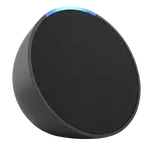



Amazon Echo Pop Review: The Cheapest Way Into a Full Alexa Smart Home
The Amazon Echo Pop is the entry-level Echo, and a genuinely good value: a compact, front-firing speaker that sounds clear and fuller than its size suggests, with the same fast, responsive Alexa and smart-home control as pricier Echos. It sets up in minutes, plays music, radio, podcasts and Audible, controls lights, plugs and cameras by voice, supports routines, multi-room audio and an intercom, and acts as a Matter bridge (it also works with Home Assistant). The trade-offs versus the Echo Dot: there is no built-in temperature sensor (it can only read temperature from other devices), no tap-to-pause, no audio-out jack, and it has a shorter power cable and prefers to be near the router. It is Alexa-only (no Google Assistant or Siri). For a bedroom, a starter smart home, or simply more Alexa around the house, it is hard to beat on price.
- Budget Alexa buyers
- Smart-home starters
- Bedrooms and small rooms
- Adding extra Echos cheaply
Pros
- Clear, fuller-than-expected sound from a very compact, cheap speaker
- Fast, responsive Alexa with easy plug-and-play setup
- Full smart-home control (lights, plugs, cameras) plus routines
- Matter bridge and Home Assistant support
- Stereo pairing, multi-room audio and intercom across several units
- Excellent value, with a microphone off switch and color choices
Cons
- No built-in temperature or motion sensor (unlike the Echo Dot)
- No tap-to-pause control and no 3.5mm audio-out jack
- Short power cable and prefers to be near the router
- Sound is good for its size but no match for a hi-fi
- Alexa only (no Google Assistant or Siri); always-listening privacy consideration
- Alexa Emergency Assist is a paid subscription
Who is the Amazon Echo Pop for?
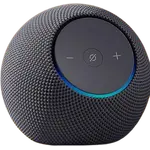
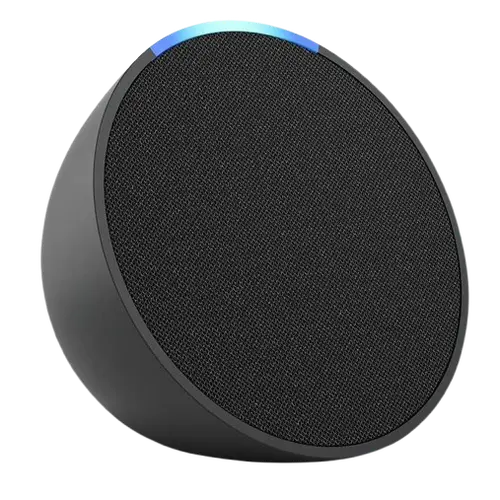
This is the most affordable Echo, aimed at people who want Alexa and basic smart-home control without spending much, or who want to add cheap voice control to more rooms. It is a compact, semi-sphere front-firing speaker that handles music, radio, podcasts, Audible, timers, alarms and questions, and controls smart devices by voice. It runs Amazon Alexa (no Google Assistant or Siri), works with Home Assistant, and acts as a Matter bridge to add compatible devices. It connects over dual-band 2.4/5GHz Wi-Fi and Bluetooth, has volume controls and a microphone off switch, and supports stereo pairing, multi-room audio and a drop-in intercom across several units. Unlike the Echo Dot, it has no temperature or motion sensors, no tap-to-pause, no 3.5mm line-out and no wall mount. It best suits budget buyers, smart-home starters, bedrooms and small rooms, and anyone expanding an Alexa setup on the cheap.
What buyers love
The recurring surprise is the sound: owners repeatedly say it is clear, balanced and more powerful than expected for such a small, cheap speaker, plenty for radio, Audible and everyday music. Alexa is praised as fast and responsive, with several finding it quicker and better at understanding commands than equivalent Google devices, and setup is described as easy plug-and-play that reuses your Wi-Fi. It is a favorite value pick for building a smart home: people use it to control Govee lights, smart plugs and Ring cameras by voice, set bedtime and wake-up routines with dimmed lights, and run music, podcasts or an intercom through the whole house across multiple Pops (which many call far better value than Sonos for whole-home audio). Buyers like linking Spotify and Audible, sending audio to a hi-fi over Bluetooth, the compact design and color choices, the strong value (often around the price of a couple of takeaways), and, for some, the Alexa emergency-calling feature has been a genuine lifeline for elderly relatives.
What to know before you buy
Set expectations for a budget speaker. The sound is impressive for the size but will not match a dedicated hi-fi or cinema system. Compared with the Echo Dot, the Pop has no built-in temperature sensor (it can report temperature from other devices but not measure it itself), no tap-to-pause control (only volume buttons on the top edge), and no 3.5mm audio-out jack. The included power cable is short, which can limit placement, and it prefers to be fairly close to the router, so on patchy Wi-Fi you may need a mesh or booster, especially with several units. A few owners find they need to raise their voice for it to respond depending on placement, some novelty features feel clunky, and the wake word can be hit or miss. The status light can flash with notifications (Do Not Disturb stops that). It is Alexa-only, with the usual always-listening privacy consideration, though you can mute the mic and review or delete what it sends to the cloud. Note the Alexa Emergency Assist feature is a paid subscription.
Is the Amazon Echo Pop worth it?
Yes, for the price it is excellent value: it brings full Alexa and smart-home control with genuinely good sound for its size, and it is the cheapest way to put a capable Echo in another room. For a bedroom, a first smart speaker, or filling out a multi-room Alexa setup, it does almost everything the Dot does. Step up to the Echo Dot or a larger Echo if you specifically want a built-in temperature sensor, tap controls, a portable battery option, or noticeably bigger sound; otherwise the Pop covers the basics beautifully. Skip it only if you want Google Assistant or Siri. As a low-cost, reliable Alexa speaker and smart-home front-end, it is an easy recommendation, especially on a deal.
Frequently asked questions
What is the difference between the Echo Pop and the Echo Dot?
The Pop is cheaper and more basic: it lacks the Dot's built-in temperature sensor (it can only read temperature from other devices), has no tap-to-pause control, and is a front-firing rather than omnidirectional speaker. Both run Alexa, support Matter and control smart devices.
Does it work with Google Assistant or Siri?
No. It uses Amazon Alexa only. For smart home it works with Home Assistant and acts as a Matter bridge, but it does not integrate with Google Home, Apple HomeKit or SmartThings.
How good is the sound for the price?
Better than most expect for such a small, inexpensive speaker, clear and balanced enough for radio, Audible and everyday music in a room. It will not replace a dedicated hi-fi or home cinema, but pairing two in stereo or using multi-room audio improves the experience.
Can it control my smart home?
Yes. It controls lights, plugs, cameras and more by voice and through routines, works with brands like Govee and Ring, and acts as a Matter bridge to add compatible devices. Multiple Pops also enable multi-room audio and a drop-in intercom.
Does it measure room temperature?
No. Unlike the Echo and Echo Dot, the Pop has no built-in temperature sensor. It can tell you the temperature reported by other devices that do have one, but it cannot measure the room itself.