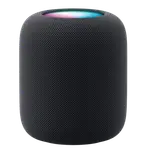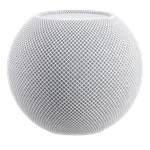
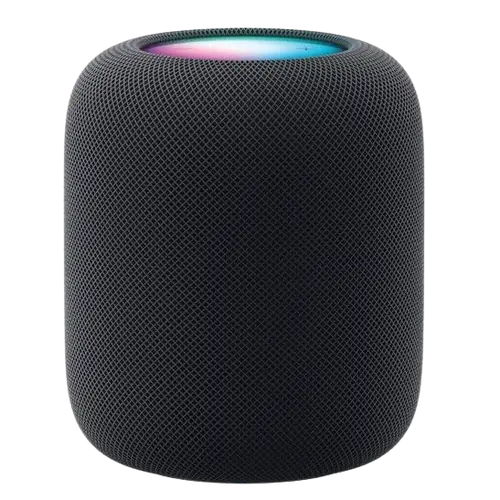


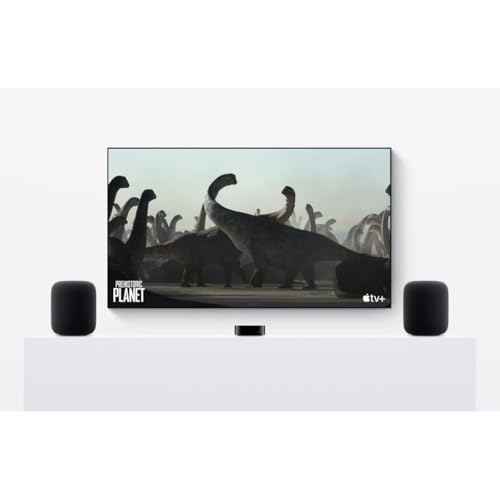
Apple HomePod (2nd gen) Review: A 2.3 kg Speaker That Is Also a Thread and Matter Hub
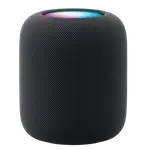
The second-generation HomePod is Apple's full-size speaker: 2.3 kg, 168 mm tall, and built around audio in a way the mini is not. Inside a HomeKit home it does more than play music, working as a Thread border router and a Matter bridge so Thread accessories reach the network, and it includes temperature and humidity sensors that automations can use. Speech to text and text to speech run on the device rather than in the cloud, which is a meaningful privacy difference from cloud-only assistants. The limits are familiar: Apple only, no Alexa or Google, no line-in, and no hardware microphone switch.
- Apple HomeKit homes
- Music-focused smart speakers
- Thread and Matter accessories
- Climate-based automations
Pros
- Works as a Thread border router and Matter bridge
- Acts as a HomeKit home hub for remote access and automations
- Built-in temperature and humidity sensors
- Speech to text and text to speech run on the device
- Voice match for personalised responses per family member
- Dual-band Wi-Fi plus Bluetooth
- Substantial 2.3 kg speaker hardware, in two finishes
Cons
- Apple HomeKit only: no Alexa, Google Home or SmartThings
- Home Assistant support is partial
- No hardware microphone off switch
- No 3.5 mm line-in and no Ethernet
- Not a Zigbee coordinator, so Zigbee devices need a separate hub
- No glass break or alarm sound detection, and no motion sensing
- No wall mount option
Who is the HomePod (2nd gen) for?
It is for an Apple household that wants one device to be both the good speaker in the room and the hub that makes the smart home work. HomeKit needs a home hub for remote access and automations, and this qualifies, while also acting as a Thread border router for battery accessories and a Matter bridge. The temperature and humidity sensors turn it into a room sensor too, so a HomeKit automation can run a fan or a dehumidifier from readings the speaker takes.
What it offers
Dual-band Wi-Fi on 2.4 and 5 GHz plus Bluetooth, physical volume and play/pause controls on the top, and two finishes. Siri handles voice, with speech to text and text to speech both running locally on the device, so the wake word and the spoken reply do not depend on a round trip to a server, while the conversation agent works locally or through the cloud depending on the request. Voice match recognises different family members and gives each their own messages, reminders and music.
What to know before you buy
Apple HomeKit is the only supported platform, Siri the only assistant, and Home Assistant support is partial. There is no 3.5 mm line-in, so external sources have to arrive over AirPlay or Bluetooth, and there is no Ethernet port. There is no hardware microphone off switch, so muting relies on software, which is worth weighing for an always-listening device. It is not a Zigbee coordinator, so Zigbee accessories still need their own hub. There is no glass break or alarm sound listening, no motion sensor, and no wall mount option. At 2.3 kg it needs a solid surface.
Is the HomePod (2nd gen) worth it?
Priced as a premium speaker, it earns that inside Apple's ecosystem: you get the audio hardware, a HomeKit hub, a Thread border router, a Matter bridge and a climate sensor in one purchase, which is several devices collapsed into one. Outside Apple's world it is simply unusable as a smart home device, and that, rather than price or sound, is the deciding factor.
Frequently asked questions
Does the HomePod work with Alexa or Google Home?
No. Apple HomeKit is the only supported platform and Siri the only assistant, with partial Home Assistant support.
Can it act as a smart home hub?
Yes, within Apple's ecosystem. It works as a HomeKit home hub, a Thread border router and a Matter bridge. It does not handle Zigbee.
Does it measure temperature and humidity?
Yes, both, so HomeKit automations can use the room's climate as a trigger.
Is voice processed locally?
Speech to text and text to speech both run on the device. The conversation agent works locally or through the cloud depending on the request.
Can I connect a record player or TV by cable?
No. There is no 3.5 mm line-in, so external audio has to arrive over AirPlay or Bluetooth.