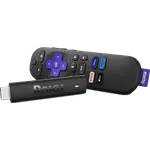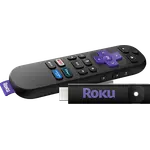




Amazon Fire TV Stick 4K Max (2nd Gen) Review: The Fastest Fire TV Stick, Now With Wi-Fi 6E
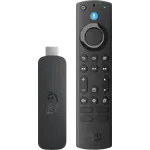
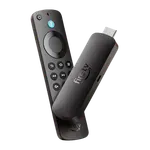
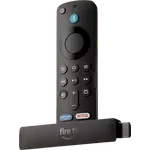
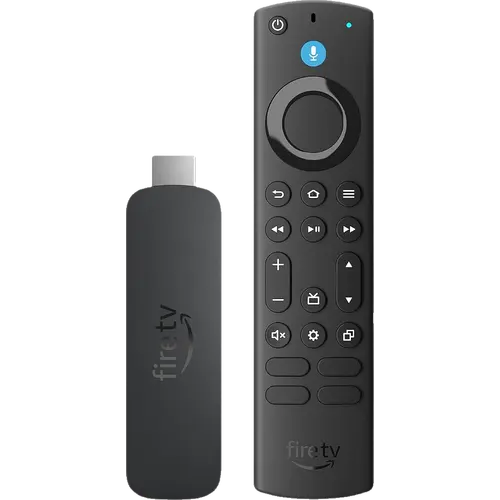
The Fire TV Stick 4K Max (2nd Gen) is the stick to buy if you want to turn an older or sluggish TV into a fast 4K streamer without moving to a box. It carries every major HDR format plus Dolby Atmos, tri-band Wi-Fi 6E and double the storage of Amazon cheaper sticks, and its Alexa Voice Remote Enhanced controls the TV and soundbar too. The trade-offs are Fire OS itself: a home screen full of ads, apps limited to the Amazon Appstore, no AirPlay or Google Cast, and no Ethernet port without an adapter.
- Reviving an older TV
- Alexa homes
- Prime Video viewers
- Cloud gaming on a budget
- Second-room TVs
Pros
- Fast 2.0GHz quad-core processor, noticeably snappier than older sticks
- Dolby Vision, HDR10, HDR10+, HLG and Dolby Atmos
- Tri-band Wi-Fi 6E with 6 GHz support
- 16GB of storage, double the cheaper Fire TV sticks
- Alexa Voice Remote Enhanced also controls TV and soundbar power and volume
- Bluetooth game controllers and cloud gaming support
Cons
- Home screen carries a lot of ads
- Amazon Appstore only, no Google Play
- No AirPlay or Google Cast, only Miracast mirroring
- No Ethernet port; the official adapter is limited to 10/100 Mbps
- Remote uses AAA batteries, with no backlight or remote finder
Who is the Fire TV Stick 4K Max (2nd Gen) for?
It is for anyone whose TV still has a good panel but slow or abandoned apps. The stick plugs into an HDMI port, outputs 4K up to 60 fps and brings a full app catalog back to screens that lost Netflix, Disney+ or iPlayer support, which is exactly the use case that comes up again and again in buyer reviews across the US, UK, Germany, France, Italy, Spain and Canada. It also suits homes already built around Alexa, since voice control is built into the remote and the stick can be driven from Echo devices, and people who want to try cloud gaming through Amazon Luna or Xbox Cloud Gaming with a Bluetooth controller.
What buyers love
Speed is the recurring theme. Owners upgrading from earlier Fire TV sticks, a Chromecast or a TV built-in platform describe menus and app launches as noticeably snappier, which matches the 2.0GHz quad-core processor and 16GB of storage, enough that some buyers no longer need to clear app caches. Picture quality earns steady praise, backed by support for Dolby Vision, HDR10, HDR10+ and HLG plus Dolby Atmos passthrough. Setup is described as a few minutes of plugging in and following the on-screen steps, Wi-Fi 6E keeps 4K streams stable for many, and several reviewers single out the remote for turning on the TV and adjusting soundbar volume so a second remote can go in the drawer. Many owners end up buying a second or third one for other rooms.
What to know before you buy
Fire OS is an Amazon storefront as much as a launcher: several buyers point out that a large part of the home screen is ads, video ads included. Apps come from the Amazon Appstore, not Google Play, so some Android apps are missing and sideloading is hit and miss. There is no AirPlay or Google Cast, only Miracast screen mirroring from Android phones and Windows PCs. The stick has no Ethernet port, and the official micro-USB adapter tops out at 10/100 Mbps, which one reviewer streaming very high-bitrate 4K files over Jellyfin found limiting. It ships with a wall adapter, so a tidy install needs a free outlet behind the TV. A minority of reviewers also feel 16GB fills up once many apps and games are installed, and the remote runs on AAA batteries with no backlight or finder.
Is the Fire TV Stick 4K Max (2nd Gen) worth it?
For most living rooms, yes. It is the most capable stick Amazon makes, its HDR and Atmos support matches far pricier boxes, and its high average rating across thousands of buyers rests on the same strengths the spec sheet shows: speed, picture and an easy setup. It is frequently discounted, which buyers note makes the step up from the cheaper 4K sticks an easy call. Skip it if you live in the Apple or Google casting world, need wired gigabit networking, or cannot tolerate ads on the home screen.
Frequently asked questions
Is the Fire TV Stick 4K Max (2nd Gen) the same as the first Fire TV Stick 4K Max?
No. The second generation, launched in October 2023, moves to a 2.0GHz quad-core processor, doubles storage to 16GB, adds tri-band Wi-Fi 6E and ships with the Alexa Voice Remote Enhanced.
Does the Fire TV Stick 4K Max support Dolby Vision and HDR10+?
Yes. It supports Dolby Vision, HDR10, HDR10+ and HLG, outputs 4K up to 60 fps, and passes through Dolby Atmos audio to a compatible soundbar or receiver.
Does the Fire TV Stick 4K Max have an Ethernet port?
No. It connects over Wi-Fi 6E (2.4, 5 and 6 GHz). Wired networking needs Amazon external Ethernet adapter, sold separately, which runs at 10/100 Mbps.
Can I cast from an iPhone or use Chromecast with it?
Not natively. The stick has no AirPlay and no Google Cast. It supports Miracast screen mirroring, which works with many Android phones and Windows PCs.
Can the Fire TV Stick 4K Max control my TV and smart home?
Its Alexa Voice Remote Enhanced controls power and volume on compatible IR TVs, soundbars and receivers, and Alexa voice commands work from the remote. Home Assistant can also control it through its official Android Debug Bridge integration. It is not a Matter controller or a Thread border router.
Can you play games on the Fire TV Stick 4K Max?
Yes. It pairs Bluetooth game controllers and runs cloud gaming services such as Amazon Luna (a rotating library included with Prime) and Xbox Cloud Gaming (Game Pass subscription and a compatible controller required).