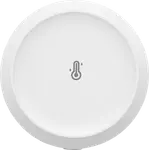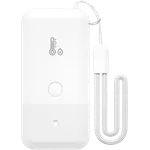


NodOn Zigbee Temperature and Humidity Sensor Review: Battery-Free Climate Sensing That Runs Itself
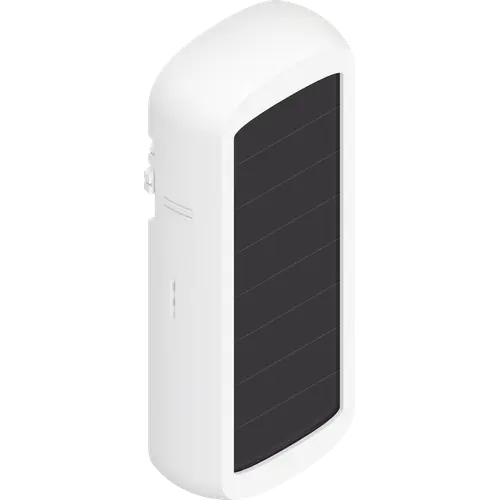
The NodOn Zigbee Temperature and Humidity Sensor is an indoor climate sensor that powers itself from ambient light, so a normal installation never asks for a battery change. It samples temperature and humidity every 100 seconds and pushes an update as soon as readings move by 0.5°C or 2% relative humidity, and it joins any Zigbee 3.0 network. What it gives up for that simplicity is a display, Wi-Fi and any Matter path, and it depends entirely on a Zigbee coordinator, with Home Assistant, Zigbee2MQTT and SmartThings documented as compatible gateways.
- Battery-free, maintenance-free rooms
- Home Assistant and Zigbee2MQTT users
- Multi-room temperature and humidity tracking
- Cellars and pantries
- SmartThings households
One sensor per room you want to read.
Buy on Amazon USACheck pricePros
- Solar energy harvesting means no mandatory battery to replace
- Optional CR2032 keeps it working for around three years in dark rooms
- Temperature and humidity sampled every 100 seconds, with updates on a 0.5°C or 2% humidity change
- Zigbee 3.0 with over-the-air firmware updates
- Works with Home Assistant through Zigbee2MQTT and with SmartThings
- Temperature and humidity alerts, automations and history through the gateway
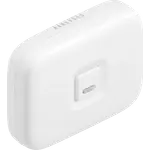
- Compact 85 x 34 x 15 mm body mounts with adhesive or screws
- 2 year warranty
Cons
- Needs a Zigbee coordinator or gateway, with no Wi-Fi, Bluetooth, Thread or Matter
- Indoor only, rated IP20 with no water protection
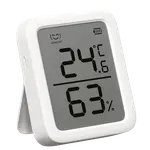
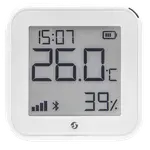
- No display, so readings are only visible in the app or dashboard
- Google Home and Apple Home are not documented for this model
- Temperature resolution is 0.5°C, coarser than the finest sensors in this category
Who is the NodOn Zigbee Temperature and Humidity Sensor for?
It suits anyone who wants climate readings in a room without adding another battery to maintain. Because it harvests energy from ambient light, the sensor suits a home that runs on Zigbee and wants several units scattered around without a replacement schedule: bedrooms, living rooms, a bathroom where humidity drives an extractor fan, a cellar or pantry that has some light, or a wine cellar where a steady temperature matters. The optional CR2032 is what makes the same sensor usable in a genuinely dark spot, and the small 85 x 34 x 15 mm body mounts with the supplied adhesive or with screws. It is a natural fit for a setup already running Home Assistant, Zigbee2MQTT, SmartThings or another documented Zigbee gateway.
What the sensor offers
The measurements are temperature from -5°C to 45°C with a 0.5°C resolution and humidity from 0 to 100% relative humidity, both specified for indoor use. Rather than streaming constantly, it checks the room every 100 seconds and sends an update the moment temperature shifts by 0.5°C or humidity by 2%, plus an hourly life signal so the gateway knows it is alive. Power comes from a photovoltaic cell, and an optional CR2032 keeps it running for around three years in complete darkness. On the network side it is Zigbee 3.0 at 2.4 GHz with a 30 m indoor range and over-the-air firmware updates, it carries an IP20 rating for indoor mounting, and it weighs 30g. Temperature and humidity alerts, automations and history all come from the gateway, which is where the readings live.
What to know before you buy
A Zigbee coordinator or gateway is not optional, because there is no Wi-Fi, Bluetooth, Thread or Matter radio in the sensor. That also means Google Home and Apple Home are not documented paths for this model, and the only voice ecosystem NodOn names is Alexa, reached through a compatible gateway. There is no display, so readings are only visible in the connected app or dashboard. It is rated IP20 and made for indoor use, so it should not be placed where water or weather can reach it, and the 0.5°C temperature resolution is coarser than the finest-resolution sensors in this comparison. In a room with no light at all, the optional CR2032 has to be installed for the sensor to keep reporting.
Is the NodOn Zigbee Temperature and Humidity Sensor worth it?
It is a straightforward value proposition: a standards-based Zigbee climate sensor that removes the one recurring chore of battery-powered sensors, with a documented path into Home Assistant, Zigbee2MQTT and SmartThings and a 2 year warranty. What you trade away is the convenience of Wi-Fi and the flexibility of Matter, plus a display you never get. For a Zigbee household that wants temperature and humidity in several rooms and does not mind its hub doing the work, the maintenance-free design is the reason to pick it; someone who needs a screen, Google Home, Apple Home or an outdoor rating should compare the display and IP-rated models in this category instead.
Frequently asked questions
Does the NodOn Zigbee Temperature and Humidity Sensor need a battery?
No. It harvests energy from ambient light through a photovoltaic cell, so a normal installation never needs a battery. An optional CR2032 can be added for genuinely dark places such as a cellar, where it is rated for around three years.
Does it need a hub?
Yes. It is a Zigbee 3.0 end device, so it needs a compatible Zigbee coordinator or gateway. NodOn lists Home Assistant, Zigbee2MQTT, SmartThings, Alexa, Jeedom, Homey, Tuya & Co, Domoticz and Energeasy Connect among the compatible gateways.
How does it measure temperature and humidity?
It reads temperature from -5°C to 45°C with a 0.5°C resolution and humidity from 0 to 100% relative humidity, both for indoor use. It checks the room every 100 seconds and transmits as soon as temperature moves by 0.5°C or humidity by 2%.
Does it work with Google Home or Apple Home?
Neither is documented for this model. It is a Zigbee device with no Matter radio, and the ecosystems NodOn names are Alexa, SmartThings, Home Assistant, Zigbee2MQTT, Jeedom, Homey and Tuya, all through a compatible gateway.
Does it have a screen?
No, there is no display. Readings are viewed through the connected Zigbee gateway, app or dashboard.
Can it be used outdoors?
No. It is rated IP20, an indoor protection level with no water resistance, and the measuring range of -5°C to 45°C is specified for indoor use.