

Sonoff SNZB-02B AirGuard TH Lite Review: A Slim Zigbee Sensor That Reads Dew Point and VPD
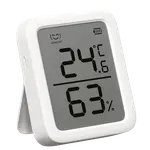
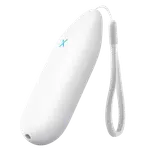
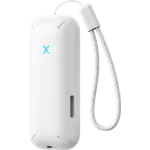
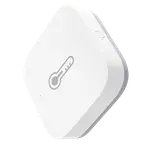
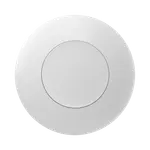
The AirGuard TH Lite is a Zigbee 3.0 temperature and humidity sensor built for places a normal hygrometer will not fit: 66.3 x 27.8 x 20 mm, 43 g with its two AAA cells, and a lanyard so it can hang inside a humidor, a guitar case or a wine rack. Its Sensirion sensor is rated to plus or minus 0.2 C and plus or minus 2% RH and refreshes every five seconds, and the eWeLink app turns those two readings into dew point and vapour pressure deficit plus six months of exportable history. The trade-offs are that it has no display of its own, it is indoor only with no IP rating, and like every Zigbee end device it does nothing until a coordinator is running. At this price tier it is the cheapest way to add a genuinely accurate probe to an existing Zigbee network.
- Humidors, cases and cabinets
- Existing Zigbee homes
- Mold and condensation watch
- Growers tracking VPD
- Budget buyers
Pros
- Swiss Sensirion element rated to plus or minus 0.2 C and plus or minus 2% RH, refreshed every five seconds
- Calculates dew point and VPD, not just temperature and humidity
- Very small: 66.3 x 27.8 x 20 mm and 43 g, with adhesive, lanyard and free-standing mounting
- Two standard AAA batteries rated for up to two years, with a low battery warning
- Six months of history for all four values, with trend curves and export
- Works with Alexa, Google Home, SmartThings and Home Assistant, and reaches Apple Home and Matter through a Sonoff bridge
- Two year warranty
Cons
- No display of its own: every reading is in the app or on the hub
- Zigbee end device, so a coordinator is mandatory and Philips, IKEA and Fritzbox gateways are excluded
- Apple Home and Matter only through a Sonoff Matter bridge, never a direct pairing
- ZHA needs a script from Sonoff, unlike Zigbee2MQTT which supports it directly
- Indoor only: no IP rating and not waterproof
- No barometric pressure or air quality channel
- Acts only as a trigger in scenes, never as an action
Who is the AirGuard TH Lite for?
This is a sensor for someone who already runs a Zigbee coordinator and wants to add a reading somewhere awkward. The body is only 20 mm thick and 27.8 mm wide, it weighs 43 g including batteries, and it mounts three ways: stuck down with adhesive, hung from the supplied lanyard, or simply stood on a shelf. Sonoff points it at cigar humidors, guitar cases, reptile terrariums, wine racks and jewellery cabinets, and the spec sheet backs that up: the accuracy is high enough for a collection, and the enclosure is small enough to hide inside one. It is not a bedside display and it is not an outdoor probe.
What stands out on paper
The measuring hardware is the headline. Sonoff specifies a Swiss Sensirion element rated to plus or minus 0.2 C (plus or minus 0.4 F) for temperature and plus or minus 2% RH for humidity, with a five second refresh, which is a tighter tolerance than most sensors in this class publish. On top of the two raw readings the app derives dew point and vapour pressure deficit, so condensation risk and plant transpiration conditions come out as numbers rather than as guesses. History is generous: six months of free cloud records for all four values, with trend curves and data export. Power is refreshingly ordinary, two standard AAA cells rated for up to two years, replaceable without a coin cell order, and the device reports its battery level and raises a low battery warning. The radio is Zigbee 3.0 (IEEE 802.15.4), and the warranty is two years.
What to know before you buy
There is no screen. Every reading, including dew point and VPD, lives in the eWeLink app or in whatever hub you pair the sensor with, so if you want a number visible on the shelf this is the wrong model in the family. It is also a Zigbee end device, which means a coordinator is mandatory: Sonoff lists its own ZBBridge-P, ZBBridge-U, NSPanel Pro and iHost, plus the Aeotec SmartThings Hub V3 and the Zigbee Echo models, and states that Philips, IKEA and Fritzbox gateways are not supported. Apple Home and Matter are reachable, but only by republishing the sensor through a Sonoff Matter bridge such as the ZBBridge-U or eWeLink CUBE, not by pairing it directly. Home Assistant works through Zigbee2MQTT out of the box, while ZHA currently needs a script Sonoff publishes in its help center. Finally, the application environment is indoor: there is no IP rating and Sonoff states the sensor is not waterproof, so a greenhouse is fine and a garden is not. In scenes the sensor is a trigger only, never an action.
Is the AirGuard TH Lite worth it?
For an existing Zigbee network it is easy to justify. You are paying a rock-bottom price for a calibrated-grade sensing element, four derived values instead of two, half a year of exportable history and AAA batteries instead of a button cell. What you give up against the pricier models in the same AirGuard family is the display and, on the SNZB-02M, the barometric channel. If the sensor needs to be read at a glance, or it is going anywhere that gets wet, spend more; if it is going inside something and reporting back to a hub, this is the version to buy.
Frequently asked questions
Does the Sonoff SNZB-02B need a hub?
Yes. It is a Zigbee 3.0 end device, so it needs a Zigbee coordinator. Sonoff lists the ZBBridge-P, ZBBridge-U, NSPanel Pro and iHost, and also supports the Aeotec SmartThings Hub V3 and the Zigbee-equipped Echo models. Philips, IKEA and Fritzbox gateways are not supported.
Does it have a screen?
No. The AirGuard TH Lite has no display. Temperature, humidity, dew point and VPD are read in the eWeLink app or through whichever hub the sensor is paired with.
Does it work with Apple Home and Matter?
Indirectly. The sensor speaks Zigbee, so Apple Home sees it once a Sonoff Matter bridge such as the ZBBridge-U or eWeLink CUBE republishes it into Matter. Alexa, Google Home, SmartThings and Home Assistant are all supported as well.
What are dew point and VPD used for?
Both are calculated from the measured temperature and humidity. Dew point tells you how close a surface is to condensing water, which is the early warning for mold on walls, furniture and stored valuables. Vapour pressure deficit describes how strongly the air pulls moisture out of a plant, which is the figure growers use to keep transpiration in a healthy range.
How long do the batteries last?
Sonoff rates two standard AAA cells at up to two years, a figure it describes as a laboratory value. Real life depends on how far the sensor sits from its coordinator, because a weak link makes it retry. The battery level is reported to the app and a low battery warning is raised.
Can it be used outdoors?
No. Sonoff gives the application environment as indoor, publishes no IP rating, and states that the sensor is not waterproof and should not be used where it can get wet. Its rated operating range is -20 C to 60 C and 5 to 95% RH, non-condensing.