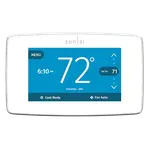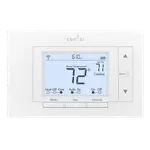


Sensi Smart Thermostat Review: The Easy DIY Wi-Fi Thermostat With Real Buttons
The Sensi ST55 is a no-frills smart thermostat that owners install themselves in minutes, guided step by step by the Sensi app, and then mostly forget about. They like its physical buttons, easy schedules, geofencing, fan circulation settings and the HVAC usage reports in the app, and it works with Alexa, Google Home, SmartThings and Home Assistant. The trade-offs are no remote room sensors, no Apple Home or Matter, occasional Wi-Fi drops and an app that only accepts US and Canadian addresses. For a North American home that wants a reliable, affordable smart thermostat without a touchscreen, it is a safe pick.
- DIY installers
- Budget smart thermostat buyers
- People who prefer physical buttons
- Homes on several smart home platforms
Pros
- Easy DIY installation guided by the Sensi app
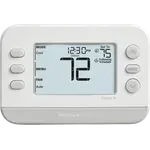
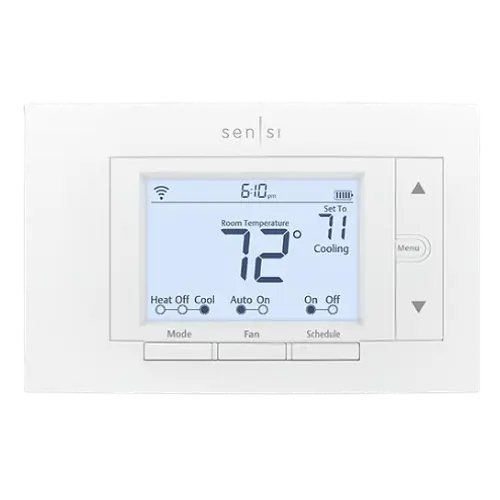
- Physical buttons and a large, readable display
- Flexible schedules, geofencing and fan circulation settings
- HVAC runtime reports in the app
- Works with Alexa, Google Home, SmartThings and Home Assistant
- Temperature and humidity sensing
- Three-year warranty
Cons
- App only accepts US and Canadian addresses
- No remote room sensors or occupancy sensing
- Occasional Wi-Fi drops reported
- Battery drain without a common wire
- Whole-degree steps in Celsius
- No Apple Home or Matter support and 2.4 GHz Wi-Fi only
Who is the Sensi Smart Thermostat for?
It is for homeowners in the US and Canada who want to replace a basic programmable thermostat without hiring an installer or learning a touchscreen. Owners include first-time DIYers who wired it alone following the app, couples who wanted buttons and a phone app at the same time, and households running three of them on a zoned heat pump. With the right accessories it also fits unusual systems: one buyer runs a gas fireplace through a 24 V transformer and relay kit, and another controls a large multi-stage rooftop air conditioner.
What buyers love
Installation is the standout. The Sensi app walks through checking the wires, connecting to Wi-Fi and choosing the heating system, and several owners had it running on the first try, including one who repurposed an unused wire as the common wire. Day to day they praise easy schedules for heat and cool, remote control from anywhere, geofencing for shift workers, a fan setting that circulates air for part of each hour, and app reports of how long the furnace and air conditioning ran. The large display and physical buttons are easy to read and use, and long-term owners describe it as reliable, with one buying a spare after two trouble-free years.
What to know before you buy
The Sensi app only accepts US and Canadian addresses, so buyers in Australia and the Middle East had to fake a location or could not set it up at all, and the schedule and outdoor temperature then follow the wrong place. Some owners see the Wi-Fi connection drop now and then, usually recovering on its own, and one long-term owner reports random temperature changes and slow support. Without a common wire it runs on two AA batteries that one owner had to replace monthly, so a C-wire or a separate transformer is the better setup. In Celsius it only moves in whole degrees. On the spec sheet there are no remote room sensors, no occupancy or air quality sensing, no temperature alerts, no touchscreen, no Apple Home and no Matter, it uses 2.4 GHz Wi-Fi only, and the trim plate costs extra.
Does the Sensi Smart Thermostat work with my smart home?
It works with Alexa, Google Home, SmartThings and Home Assistant, which also means voice control through those assistants. Sensi no longer lists it as Apple HomeKit compatible: some earlier units supported it, current ones do not, and it cannot be added by a firmware update. There is no Matter support and no way to add external temperature sensors, so it always reads the temperature where it is mounted, alongside the room humidity.
Is the Sensi Smart Thermostat worth it?
For a North American home with a well-placed thermostat, yes. Its average rating is high, owners repeatedly call it great value, and the three-year warranty is generous. If one room always runs cold, you want sensor-based comfort features or you live outside the US and Canada, a pricier thermostat with remote sensors or international app support is the better buy.
Frequently asked questions
Does the Sensi Smart Thermostat need a C-wire?
Not always. It can run on two AA batteries, but one owner without a common wire reports replacing them every month, so a C-wire or a separate 24 V transformer is the more reliable setup.
Which smart home platforms does the Sensi ST55 work with?
Alexa, Google Home, Samsung SmartThings and Home Assistant. Current units do not support Apple Home, and Matter is not supported.
Can I add remote room sensors to the Sensi Smart Thermostat?
No. It does not support external temperature sensors, so it controls the temperature based on where it is mounted.
Can the Sensi Smart Thermostat be used outside the US and Canada?
Only with workarounds. The Sensi app requires a US or Canadian address to complete setup, so the schedule time zone and outdoor weather follow that address.
Does the Sensi Smart Thermostat have a touchscreen?
No. It uses a 5 inch monochrome LED display with physical buttons.
How long is the Sensi Smart Thermostat warranty?
Three years.