
Key takeaways
- Comfort and climate control combines central control (smart thermostats) with per room control (smart radiator valves) and the sensors that feed both.
- Per room temperature control with smart radiator valves stops you from heating empty rooms, which improves comfort and lowers bills at the same time.
- Air quality monitors add a layer beyond temperature, tracking humidity, CO2, and particulates so automations can ventilate when needed.
- Schedules and presence based rules keep rooms comfortable when occupied and ease off when empty, the core of an efficient climate setup.
Comfort and climate devices manage temperature and air quality room by room. Smart thermostats control central heating and cooling, smart radiator valves let you set temperatures per room, and temperature, humidity, and air quality sensors give automations the data to keep each space comfortable without wasting energy.
Top rated comfort and climate products by category
The best reviewed product in each climate category, based on real owner ratings and review counts.
Thermostats
See all Thermostats| Product | Price | Rating | Reviews | Touch Screen | Screen Size | Occupancy | Actions |
|---|---|---|---|---|---|---|---|
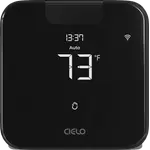 CieloCielo Breez Max CieloCielo Breez Max | $114.35 | 4.6 | 1K | YES | - | NO | ViewBUY NOWCheck price |
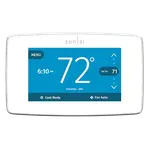 SensiSensi Touch smart thermostat SensiSensi Touch smart thermostat | $179.99 | 4.5 | 14.2K | YES | 4.3" | NO | ViewBUY NOWCheck price |
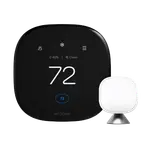 EcobeeEcobee Smart Thermostat Premium EcobeeEcobee Smart Thermostat Premium | $204.97 | 4.5 | 856 | YES | 4" | YES | ViewBUY NOWCheck price |
Radiator Valves
See all Radiator Valves| Product | Price | Rating | Reviews | Apple HomeKit | Matter | Geofencing | Actions |
|---|---|---|---|---|---|---|---|
![Bosch Smart radiator thermostat II [+M]](/img/item-types/radiator-valves/bosch-smart-radiator-thermostat-2-thumb.webp) BoschBosch Smart radiator thermostat II [+M] BoschBosch Smart radiator thermostat II [+M] | $73.99 | 4.3 | 412 | YES | YES | NO | ViewBUY NOWCheck price |
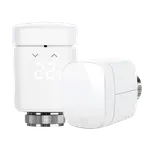 EveEve Thermo EveEve Thermo | $69.95 | 4.2 | 3.1K | YES | YES | Hub required | ViewBUY NOWCheck price |
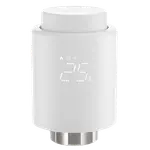 SonoffSonoff Zigbee Thermostatic Radiator Valve SonoffSonoff Zigbee Thermostatic Radiator Valve | $32.00 | 4.1 | 943 | SONOFF Hub required | SONOFF Hub required | - | ViewBUY NOWCheck price |
Temperature & Humidity Sensors
See all Temperature & Humidity Sensors| Product | Price | Rating | Reviews | Screen | Matter | Humidity | Actions |
|---|---|---|---|---|---|---|---|
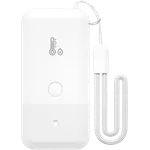 YoLinkYoLink Smart Wireless Thermometer Hygrometer YoLinkYoLink Smart Wireless Thermometer Hygrometer | $16.14 | 4.7 | 852 | NO | YoLink Local Hub required | YES | ViewBUY NOWCheck price |
 GoogleNest Temperature Sensor GoogleNest Temperature Sensor | $39.00 | 4.6 | 16.6K | NO | NO | NO | ViewBUY NOWCheck price |
 EcobeeEcobee SmartSensor EcobeeEcobee SmartSensor | $99.99 | 4.6 | 8.7K | NO | NO | NO | ViewBUY NOWCheck price |
Air Quality Monitors
See all Air Quality Monitors| Product | Price | Rating | Reviews | TVOC | PM2.5 | CO2 | Actions |
|---|---|---|---|---|---|---|---|
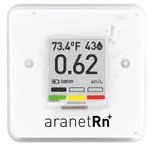 AranetAranet Radon Plus AranetAranet Radon Plus | $196.00 | 4.8 | 274 | NO | NO | NO | ViewBUY NOWCheck price |
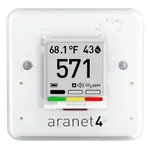 AranetAranet4 HOME AranetAranet4 HOME | $166.33 | 4.7 | 1.8K | NO | NO | YES | ViewBUY NOWCheck price |
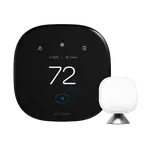 EcobeeEcobee Smart Thermostat Premium EcobeeEcobee Smart Thermostat Premium | $204.97 | 4.5 | 856 | YES | NO | YES | ViewBUY NOWCheck price |
Window Coverings
See all Window Coverings| Product | Price | Rating | Reviews | Noise Level | Blackout | Solar Charging | Actions |
|---|---|---|---|---|---|---|---|
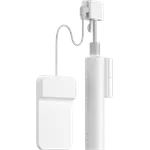 SwitchBotSwitchBot Blind Tilt SwitchBotSwitchBot Blind Tilt | $59.99 | 4.4 | 1.4K | 40dB | - | YES | ViewBUY NOWCheck price |
 YoolaxYoolax Motorized Roller Shade YoolaxYoolax Motorized Roller Shade | $119.00 | 4.4 | 1.2K | - | YES | Sold separately | ViewBUY NOWCheck price |
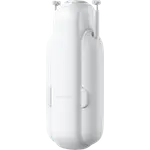 SwitchBotSwitchBot Curtain 3 SwitchBotSwitchBot Curtain 3 | $89.99 | 4.4 | 170 | 25dB | - | Sold separately | ViewBUY NOWCheck price |
Central control plus per room precision
A smart thermostat is the hub of climate control. It learns your schedule, responds to presence, and manages the central heating or cooling system from one place. On its own, though, a thermostat heats or cools the whole home to a single target.
Smart radiator valves add room by room precision. You can keep bedrooms cool at night and living spaces warm in the evening, all on independent schedules. Together, a thermostat and a set of radiator valves let you match temperature to how each room is actually used.
Why air quality belongs in the climate plan
Comfort is more than temperature. Humidity that is too high feels clammy and encourages mold, while air that is too dry irritates skin and airways. Air quality monitors track humidity, CO2, and particulates so your automations can act, for example triggering a fan or ventilation when CO2 climbs in a closed room.
Feeding temperature, humidity, and air quality data into your automations is what turns a set of devices into a climate system. The sensors decide, the thermostat and valves act, and the home stays comfortable without constant manual adjustment.
Frequently Asked Questions
- Do I need a smart thermostat and smart radiator valves?
- It depends on your heating system. A smart thermostat alone is enough for whole home control, but if you want different temperatures in different rooms, add smart radiator valves. Together they give you both central scheduling and per room precision.
- How does smart climate control save energy?
- By not heating or cooling spaces that are empty. Schedules and presence based rules ease off when rooms are unoccupied, and per room valves let you avoid heating areas you are not using. The comfort improves while the bill drops.
- What does an air quality monitor add?
- It tracks humidity, CO2, and particulates, which temperature alone cannot tell you. With that data, automations can ventilate a stuffy room, run a dehumidifier when humidity is high, or alert you when air quality drops, improving both comfort and health.
- Will smart climate devices work with my voice assistant?
- Most smart thermostats and many radiator valves integrate with the major voice assistants and smart home platforms, so you can adjust temperature by voice or include climate in scenes and routines. Check each product's supported integrations before buying.