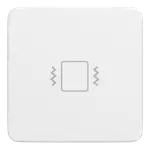
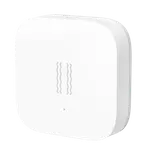
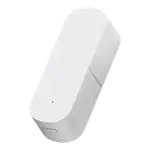
Smart Vibration Sensors are specialized security devices designed to detect physical disturbances, shocks, or movement, making them crucial components in a comprehensive smart home system. They are listed among other smart sensors and components such as Air Quality Monitors, Hubs, Motion Sensors, Presence Sensors, Radiator Valves, Relays, Sirens, Smoke & CO Detectors, Speakers, Temperature & Humidity Sensors, Thermostats, and Water Leak Sensors. To find the best smart vibration sensor options, key features to compare include sensitivity, alerts (such as tilt and drop detection), battery life, connectivity, and integrations.
Detection Capabilities and Alerts
Vibration sensors provide specific security monitoring by detecting physical disturbances, shocks, or movement of the device itself.
Sensing Features
- Vibration detection monitors when the device is moved, shaken, or experiences physical disturbances for security and monitoring purposes.
- Tilt detection monitors changes in the device's orientation or angle, allowing the sensor to alert users when it is tilted, rotated, or changes position.
- Drop detection monitors sudden falling or dropping motion of the device itself, providing alerts if the sensor falls or is knocked over.
- The Sensitivity of the sensor is an adjustable feature that controls how easily the sensor triggers. Configuring sensitivity helps balance security coverage with false alarm prevention.
Alerts
Smart vibration sensors are designed to provide immediate warnings when a disturbance occurs:
- Vibration Alerts notify users when vibration or movement is detected on the device.
- Tilt Alerts warn when the device's orientation changes are detected, indicating potential tampering or displacement.
- Drop Alerts notify users when the device falls or is dropped.
- Since these devices are often battery-powered, Low Battery Alerts are provided to ensure functionality by notifying users when the battery level is critically low.
- Some devices can provide On Device Alert Sound which are local audible alerts produced by the device itself, providing immediate local notification even if network connectivity is lost.
Connectivity, Power, and Integration
Vibration sensors generally use low-power protocols to maintain long battery life.
Connectivity
Smart vibration sensors support various connectivity protocols:
- Zigbee is a protocol that is energy-efficient, supports mesh networking to extend range and improve reliability, and is frequently supported by vibration sensors. Devices using Zigbee need a Zigbee-compatible hub to connect to the smart home setup.
- Other low-power protocols like Z-Wave and Thread Protocol are also designed for low power consumption and support mesh networking, which allows devices to relay data to extend range and reliability. Thread is IP-based and offers high security with AES-128 encryption. A Thread-enabled vibration sensor links to the network via a Thread Border Router.
- Connectivity options may also include 2.4 GHz Wifi (offering a longer range and better wall penetration but consuming more power), 5 GHz Wifi (faster data rates over shorter distances), and Bluetooth (short-range communication, typically up to 10 meters).
- The Matter unified connectivity standard is designed to simplify integration, enhancing interoperability, security, and reliability across various smart home ecosystems.
Power and Battery Life
Vibration sensors typically rely on battery power for ease of installation.
- Sensors often use standard Battery Types such as AA, AAA, or button-cell batteries (CR2032, CR123A).
- Sensors using low-power protocols like Zigbee, Z-Wave, and Thread can achieve a longer Battery Life, often lasting up to 3-5 years before needing a battery change.
- Sensors that use Wi-Fi tend to consume more power and require more frequent battery replacements.
Smart Home Integration
Smart vibration sensors are designed to enable Automations that trigger actions based on detected disturbances.
- They integrate with major platforms, including Home Assistant, Google Home, Alexa, Apple HomeKit, and Samsung SmartThings. Home Assistant is an open-source platform that supports extensive customization and integration.
- Other smart devices, such as smart sirens, may include a built-in Vibration sensor to detect tampering, providing additional security monitoring if the siren is moved or shaken.
- In one context, a built-in Tilt Sensor in a water leak sensor is noted to alert users if an appliance is moved, tipped, or vibrates unusually, which is useful for monitoring machines like washing machines or sump pumps.