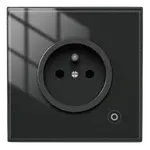
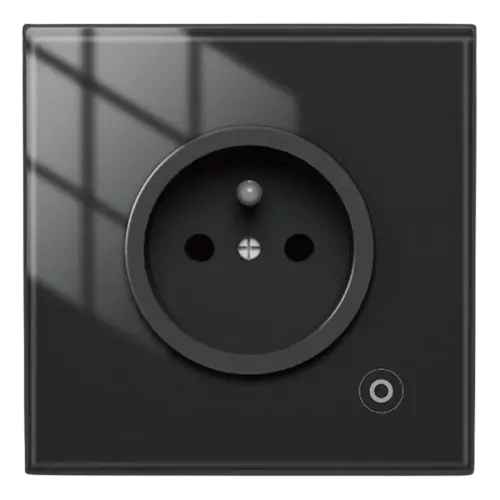

Moes WiFi Smart Wall Socket Glass (FR) Review: A French-Format Smart Outlet Rated to 16 A
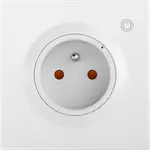
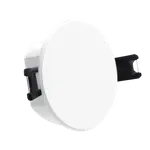
This is the Type E (French) version of Moes' in-wall smart socket, designed to replace an existing outlet rather than plug into one. It switches up to 3000 W at 16 A across a 95-245 V range, tracks energy consumption, and connects straight to 2.4 GHz Wi-Fi with no hub in between. A child lock and a physical button cover the practical basics. Google Home, Alexa and Home Assistant are supported, while Apple HomeKit, SmartThings, IFTTT and Matter are not, and several safety specifications are left undocumented.
- French Type E sockets
- High-power appliances
- Energy usage tracking
- Google Home and Alexa homes
Pros
- 16 A and 3000 W rating, well above most plug-in adapters
- Wide 95-245 V input range
- Energy monitoring per appliance
- No hub required: direct 2.4 GHz Wi-Fi
- Child lock and a physical on/off button
- Type E format for French installations
- Works with Google Home, Alexa and Home Assistant
- Low price
Cons
- Requires in-wall electrical installation
- No Apple HomeKit, SmartThings, IFTTT or Matter support
- No power-off memory after an outage
- No status LED
- Resistive loads only, with inductive and capacitive marked unsupported
- Protection features are not documented
- 2.4 GHz Wi-Fi only
- One year warranty
Who is this socket for?
Anyone who wants a permanently smart outlet without an adapter hanging off the wall. Because it replaces the socket itself, the appliance plugs in normally, nothing blocks the neighbouring outlet, and the full 16 A capacity remains usable, which is more than most plug-in smart adapters allow. The Type E format with its earth pin is the French standard, so this is the variant to buy for installations in France and other Type E regions. Control is over Wi-Fi with no hub, through Google Home, Alexa or Home Assistant.
What it handles
Resistive loads up to 3000 W at 16 A, on AC from 95 to 245 V. That rating matters for the appliances people actually want to schedule or monitor, such as heaters, kettles and washing machines, which are exactly the loads a 10 A adapter cannot take. Energy monitoring turns the socket into a measurement point, so you can see consumption per appliance rather than guessing from the household bill. The child lock prevents accidental switching, the on/off button keeps local control working if the network drops, and automations run through whichever supported platform you use.
What to know before you buy
This is an in-wall product: fitting it means working inside a back box on mains wiring, and it must be the right format for the installation, in this case Type E. Only resistive loads are documented as supported, with inductive and capacitive loads marked unsupported, which excludes some motors and transformers. There is no Apple HomeKit, SmartThings, IFTTT or Matter support. Power-off memory is not available, so the socket does not return to its previous state after an outage, and there is no status LED to show what it is doing at a glance. The overheating, overvoltage, overcurrent and overpower protections are not documented for this model. Wi-Fi is 2.4 GHz only, and the warranty is one year.
Is this Moes socket worth it?
The price is low for an in-wall smart socket with metering, and the 16 A rating covers loads that cheaper solutions have to refuse. Balance that against the unstated protection specs and the missing HomeKit and Matter support. Within a Google Home, Alexa or Home Assistant home with Type E outlets, it is a practical, cheap way to make a specific socket permanently smart.
Frequently asked questions
Which plug format is this version?
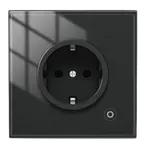
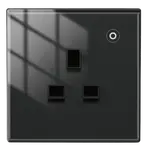
Type E, the French standard with an earth pin in the socket. Moes also makes Type C (European) and Type G (UK) versions.
What load can it handle?
Up to 3000 W at 16 A for resistive loads, on AC from 95 to 245 V.
Is a hub required?
No. It connects directly to 2.4 GHz Wi-Fi.
Which platforms are supported?
Google Home, Alexa and Home Assistant. Apple HomeKit, Samsung SmartThings, IFTTT and Matter are not supported.
Can it track how much electricity an appliance uses?
Yes. Energy monitoring is built in, so consumption is reported for whatever is plugged into it.