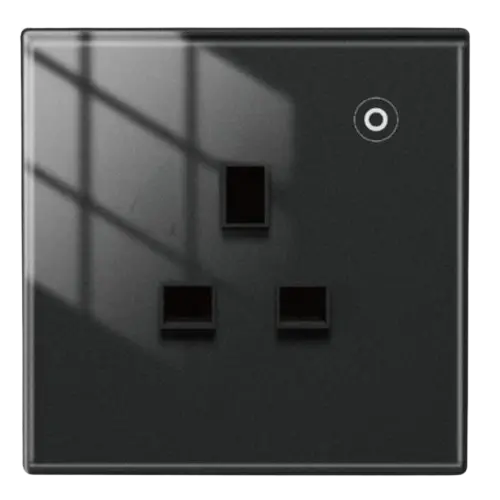
Moes WiFi Smart Wall Socket Glass (UK) Review: A Type G Smart Outlet With 16 A and Metering
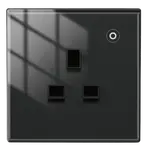
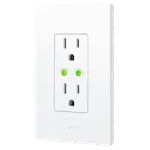
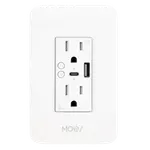
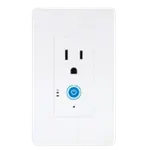
This is the Type G (UK) version of Moes' in-wall smart socket. It takes the place of an existing wall outlet, so appliances plug in as normal while gaining scheduling, remote switching and energy monitoring, and it is rated for 3000 W at 16 A on a 95-245 V range. Connection is straight to 2.4 GHz Wi-Fi with no hub, and control runs through Google Home, Alexa or Home Assistant. Apple HomeKit, SmartThings, IFTTT and Matter are not supported, and the protection specifications are not documented.
- UK Type G sockets
- High-power appliances
- Energy usage tracking
- Google Home and Alexa homes
Pros
- 16 A and 3000 W rating, higher than typical plug-in smart adapters
- Wide 95-245 V input range
- Energy monitoring per appliance
- No hub required: direct 2.4 GHz Wi-Fi
- Child lock and a physical on/off button
- Type G format for UK installations
- Flush glass panel with nothing protruding
- Works with Google Home, Alexa and Home Assistant
Cons
- Requires in-wall electrical installation
- No Apple HomeKit, SmartThings, IFTTT or Matter support
- No power-off memory after an outage
- No status LED
- Resistive loads only, with inductive and capacitive marked unsupported
- Protection features are not documented
- 2.4 GHz Wi-Fi only
- One year warranty
Who is this socket for?
It suits a spot where a smart plug adapter would be permanently in the way: behind furniture, in a kitchen, or anywhere the second outlet on a double socket matters. Replacing the socket itself keeps the wall flush, and unlike many plug-in adapters it does not derate the outlet, so the full 16 A stays available. The Type G format is the UK three-pin standard, so this is the version for British installations. Wi-Fi control means no hub to buy, and Google Home, Alexa and Home Assistant all work with it.
What it handles
Resistive loads up to 3000 W at 16 A, across a wide 95-245 V input range. That is enough headroom for the appliances worth automating, and it is where in-wall sockets beat compact plug-in adapters. Energy monitoring reports actual consumption, which is the practical way to identify what is costing money. A child lock guards against accidental switching, a physical on/off button provides local control if the network is unavailable, and automations run through the platform you connect it to.
What to know before you buy
Installation is an in-wall electrical job, and UK back boxes vary in depth, so confirm fit before starting. Only resistive loads are documented as supported, with inductive and capacitive marked as unsupported, so motors and transformers are outside its stated scope. Platform support excludes Apple HomeKit, Samsung SmartThings, IFTTT and Matter. There is no power-off memory, so the socket does not restore its previous state after an outage, and there is no status LED. Overheating, overvoltage, overcurrent and overpower protection are all left undocumented, which is worth noting for a device carrying 16 A. Wi-Fi is 2.4 GHz only, and the warranty is one year.
Is this Moes socket worth it?
For the price it delivers the two features that matter in an in-wall smart socket, a high current rating and per-appliance energy metering, in a tidier package than any adapter. The gaps are the undocumented protections and the missing Apple and Matter support. If your home runs on Google Home, Alexa or Home Assistant and you want a permanent smart outlet on a UK socket, it is a cheap and sensible option.
Frequently asked questions
Which plug format is this version?
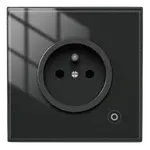
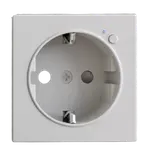
Type G, the UK three-pin standard. Moes also makes Type C (European) and Type E (French) versions of the same socket.
How much load can it take?
Up to 3000 W at 16 A for resistive loads, on AC from 95 to 245 V.
Does it need a hub or bridge?
No. It connects directly to 2.4 GHz Wi-Fi.
Does it work with Apple HomeKit?
No. Google Home, Alexa and Home Assistant are supported. Apple HomeKit, Samsung SmartThings, IFTTT and Matter are not.
Is there a child lock?
Yes, along with a physical on/off button on the socket for manual control.