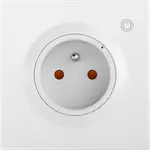
Sonoff Orb Socket Type E Review: A Matter Wall Socket That Meters What It Powers
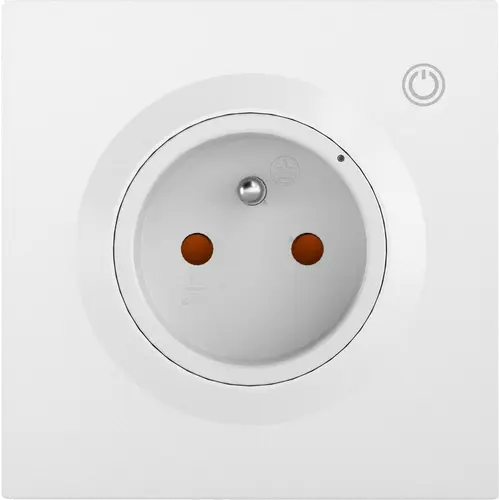
The Orb Socket Type E replaces a French-format wall outlet with a smart one instead of hanging an adapter off it, so the appliance still plugs in normally and the full 16 A stays usable. It carries 4000 W across a 100-250 V range, meters what is plugged into it, and cuts power when the current, voltage or wattage passes a limit you set yourself. Matter is the headline: one commissioning QR code puts it into Apple Home, Google Home, Alexa, SmartThings or Home Assistant, with no vendor hub in the middle. The trade-offs are a single outlet with no USB, 2.4 GHz Wi-Fi as the only radio, and no child lock or thermal cut-off.
- French Type E sockets
- Matter homes
- Energy and cost tracking
- High-power appliances
Pros
- 16 A and 4000 W rating, well above most plug-in adapters
- Matter over Wi-Fi, so Apple Home, Google Home, Alexa, SmartThings and Home Assistant all work from one QR code
- Real energy monitoring with historical charts, electricity cost tracking and data export
- Overload cut-off with current, voltage and power thresholds you set yourself
- Indicator light switches to Night Mode or off, which matters in a bedroom
- Power-on state setting and a physical button for local control
- Two-year warranty
Cons
- No child lock or settings lock
- No thermal cut-off; the protections are the electrical limits you configure
- 2.4 GHz Wi-Fi only, with no Zigbee, Z-Wave, Thread or Bluetooth radio
- One outlet and no USB ports
- Inductive load limits and capacitive load support are undocumented
- In-wall installation on mains wiring, so fitting it is not a plug-and-play job
Who is the Orb Socket Type E for?
Anyone rewiring a Type E outlet who wants the socket itself to be smart. Because it goes in the back box, nothing protrudes, the neighbouring outlet stays free, and the socket keeps its full 16 A rating rather than the lower ceiling a plug-in adapter imposes. The Type E format with its earth pin is the French and Belgian standard, so this is the variant for those installations; Sonoff sells the Schuko Type F version as a separate model. It also suits a household that runs more than one ecosystem, since Matter lets the same socket answer to several platforms at once instead of being locked to the app it was set up in.
What the Orb Socket Type E offers
The electrical side is the strong part: resistive loads to 4000 W at 16 A on 100-250 V, plus documented support for small-power inductive loads such as fans, which covers most of what people actually want to schedule. Energy monitoring turns the outlet into a measurement point, reporting real-time voltage, current and power, keeping historical charts, converting consumption into electricity costs at a rate you set, and exporting the data. Overload protection is configurable rather than fixed: you choose the current, voltage and wattage thresholds at which power gets cut. On the control side there is a physical button on the faceplate for local on and off, a blue Wi-Fi LED and a red power indicator, an indicator mode that switches between Auto, Off and Night Mode for a bedroom, a power-on state setting that decides how the socket comes back after an outage, and schedules, countdowns and scenes that run in eWeLink and in every Matter platform Sonoff documents.
What to know before you buy
This is mains work: replacing a wall socket means opening the back box and wiring live, neutral and ground, which is a job for someone qualified. The radio is 2.4 GHz Wi-Fi and nothing else, with no Zigbee, Z-Wave, Thread or Bluetooth, so the socket depends on router coverage at that point in the wall rather than on a mesh. There is one outlet and no USB ports, so it swaps one socket for one smart socket. Sonoff documents no child lock or settings lock, and no thermal cut-off either: the protection it does provide is the current, voltage and power limits you configure, not an overheating sensor. The inductive load ceiling is not published, and capacitive load support is not documented at all, so motors and transformer-heavy gear are worth checking against the 16 A limit before you commit. On the upside, the warranty runs two years, longer than most of this category.
Is the Orb Socket Type E worth it?
For a budget in-wall socket, the specification list is unusually complete: 16 A and 4000 W, real metering with cost tracking, configurable overload cut-off, and native Matter rather than a cloud bridge. What you give up against a more expensive socket is a second outlet, USB charging, a child lock and any thermal protection. If the outlet you are replacing is Type E and the home already runs Matter, this covers the practical ground, and the metering alone makes it useful on a socket feeding an appliance you actually want to measure.
Frequently asked questions
Does the Sonoff Orb Socket Type E work with Apple Home, Alexa and Google Home?
Yes, all three, and it reaches them over Matter rather than through a vendor bridge. SmartThings and Home Assistant are supported the same way, and Sonoff also offers eWeLink account linking for Alexa and Google Home.
How much power can it switch?
Up to 4000 W at 16 A, on AC from 100 to 250 V. That covers heaters, kettles and washing machines, the loads a 10 A plug-in adapter has to refuse.
Does it need a hub?
No. It joins 2.4 GHz Wi-Fi directly and is commissioned into a Matter home with the QR code on the device, so there is no Sonoff gateway in the chain.
Will it fit my outlet?
It is the Type E format, the French and Belgian standard with the earth pin in the socket, in an 86 x 86 mm faceplate that is 39.3 mm deep. Sonoff sells the Schuko Type F version separately, so check which one your wall box uses.
Can it track how much electricity an appliance uses?
Yes. It reports live voltage, current and power, keeps historical energy charts, turns consumption into a cost using a rate you enter, and lets you export the data. You can reset the statistics when you swap the appliance.
What happens after a power cut?
The power-on state setting decides whether the socket comes back on, stays off, or returns to what it was doing before the outage.