


Third Reality Smart Wall Outlet ZW1 Review: Two Independently Switched Receptacles With Per-Socket Energy Metering
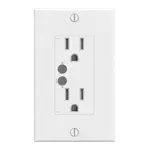
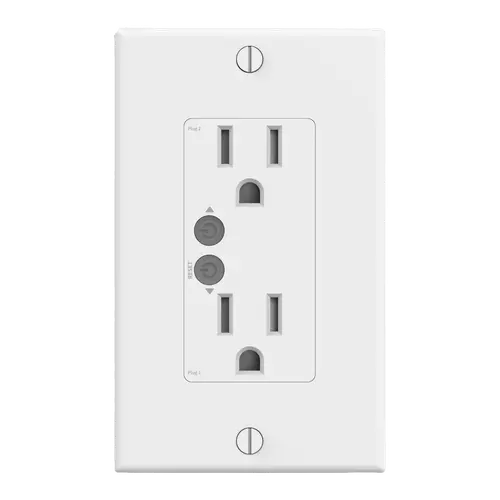
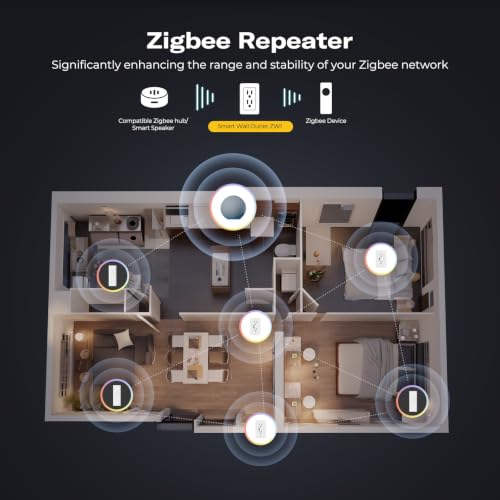
The ZW1 is an in-wall duplex receptacle that treats its two sockets as separate devices: each can be switched independently from a hub or from its own button on the faceplate, and each reports its own energy consumption. That per-socket split is the reason to choose it over a smart plug, since it turns one existing outlet into two controllable, individually metered circuits without anything protruding into the room. It runs Zigbee 3.0 and needs a coordinator, pairing as a standard Zigbee device with Home Assistant through ZHA or Zigbee2MQTT, with SmartThings hubs and the SmartThings Station, with Aeotec, and with Third Reality's own Hub and Smart Bridge. Being mains powered, it also serves as a Zigbee router, extending the mesh from inside the wall. Apple Home and Google Home require Third Reality's Smart Bridge MZ1, sold separately, and Matter is not supported. Two practical notes before buying: the rear housing is deeper than a conventional outlet, so the electrical box needs checking first, and Third Reality does not publish the electrical load ratings.
- Home Assistant and Zigbee households
- Per-device energy monitoring
- Replacing two smart plugs with one outlet
- Extending a Zigbee mesh from inside a wall
One outlet per wall box you replace.
Buy on Amazon USACheck pricePros
- Two receptacles switched and scheduled completely independently
- Separate energy monitoring for each socket, not one combined figure
- Acts as a Zigbee router, extending the mesh from inside the wall
- Pairs as a standard Zigbee 3.0 device with Home Assistant via ZHA or Zigbee2MQTT
- Works with SmartThings 2015/2018 hubs, the SmartThings Station and Aeotec
- Always-on OTA updates on Home Assistant, Hubitat and Third Reality platforms
- Zero-crossing detection for gentler switching of motors and fans
- Child-proof shutters and an ETL-certified fire-resistant housing
- Manual button and status LED per socket, so it still works without the network
Cons
- Deeper rear housing than a conventional outlet, so the electrical box needs checking first
- Requires a Zigbee coordinator and will not work standalone
- Apple Home and Google Home need the Smart Bridge MZ1, sold separately
- Matter is not supported
- Electrical load ratings are not published by the manufacturer
- No USB ports
Who is the Third Reality Smart Wall Outlet ZW1 for?
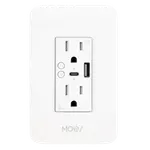
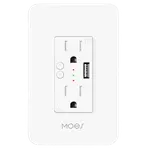
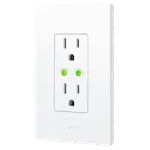
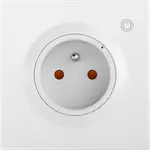
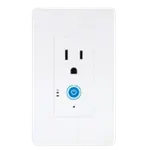
This is for someone already running a Zigbee network who wants smart control built into the wall rather than plugged into it. It is a standard Type B duplex receptacle measuring 114 x 69.7 mm on the face, and it replaces an existing outlet on a 1-gang box, arriving with a white cover plate. The defining feature is that the upper and lower sockets are genuinely independent: separate scheduling, separate remote switching, separate manual buttons on the faceplate, and separate energy reporting. That suits a spot where two different things are plugged in and you care about them individually, for example a lamp on one socket and an appliance on the other, or an entertainment setup on one and a desk on the other. It needs a Zigbee coordinator and pairs as a standard Zigbee 3.0 device with Home Assistant via ZHA or Zigbee2MQTT, with SmartThings 2015 and 2018 hubs and the SmartThings Station, with Aeotec, and with Third Reality's own Hub and Smart Bridge. Because it is permanently powered, it also acts as a Zigbee router, which is useful in a part of the house where the mesh is thin.
What the Third Reality Smart Wall Outlet ZW1 offers
Independent dual control is the headline: each receptacle can be powered on or off remotely through the app or hub, given its own schedule, or grouped with the other for whole-room automation. Precision per-outlet energy monitoring runs alongside it, reporting consumption for each socket separately so a power-hungry device can be identified rather than guessed at, though the granularity of that data depends on the hub and integration you use. The Zigbee router function strengthens the surrounding mesh, and always-on OTA firmware updates are supported on Home Assistant, Hubitat and Third Reality platforms, so it can be kept current without being taken offline. On the safety side, zero-crossing detection switches the load at the point in the AC cycle where inrush is lowest, which is gentler on motors and fans than a hard switch, and child-proof shutters block foreign objects from being pushed into the slots. The housing is ETL certified and fire resistant, and the device carries a one year warranty. Manual buttons and status LEDs on the faceplate mean it still works as an ordinary outlet when the network is down.
What to know before you buy
The most important constraint is physical. Third Reality states plainly that the ZW1 uses a deeper rear housing than a conventional wall outlet, because dual control and dual metering need the room, so the depth of the existing electrical box and the available wiring space should be checked before ordering rather than after. The second constraint is ecosystem. This is a Zigbee end device, so a coordinator is mandatory and it will not work standalone. Apple Home and Google Home are reached only through Third Reality's Smart Bridge MZ1, which is a separate purchase, and Matter is absent, so a Matter-only smart home has no direct path to it. The third gap is documentation: the electrical load ratings, meaning rated voltage, maximum current and maximum wattage per receptacle, are not published on the product page or the listing, which matters if you intend to run anything close to the limit of a 15A circuit. There are no USB ports, and the exact weight is not published either. As with any in-wall device, installation is mains wiring work and should follow local electrical rules.
Is the Third Reality Smart Wall Outlet ZW1 worth it?
It makes most sense as a replacement for two smart plugs rather than one. If you would otherwise occupy both sockets of an outlet with plug-in modules, losing the wall space and the look, this does the same job invisibly and adds a mesh repeater in the bargain. The per-socket metering is the feature that justifies the in-wall install, since plenty of smart outlets switch two sockets together and report one combined figure. For a Home Assistant or SmartThings household with an established Zigbee network, it slots straight in and updates over the air. The case is weaker if you are outside Zigbee, since the Smart Bridge MZ1 becomes a required extra to reach Apple Home or Google Home, and weaker again if your electrical boxes are shallow, because the deeper body is not negotiable. Check the box depth, confirm your hub is on the compatibility list, and it is a tidy way to make an existing outlet twice as useful.
Frequently asked questions
Does the Third Reality Smart Wall Outlet ZW1 need a hub?
Yes. It is a Zigbee 3.0 end device and requires a coordinator. It pairs as a standard Zigbee device with Home Assistant through ZHA or Zigbee2MQTT, with SmartThings 2015 and 2018 hubs and the SmartThings Station, with Aeotec, and with Third Reality's own Hub and Smart Bridge.
Can the two outlets really be controlled separately?
Yes, and it is the main reason to choose this over a simpler smart outlet. The upper and lower receptacles are exposed as independent devices, so each can be switched remotely, put on its own schedule, or grouped with the other. Each also has its own manual button on the faceplate and reports its own energy usage.
Will it fit my existing electrical box?
Check before you buy. Third Reality states that the dual-control and dual-metering design needs a deeper rear housing than a conventional wall outlet, so both the box depth and the free wiring space need verifying. The faceplate measures 114 x 69.7 mm and the body extends about 42 mm behind it. It is designed for a 1-gang box.
Does it work with Apple Home or Google Home?
Only with Third Reality's Smart Bridge MZ1, which is a separate purchase. Once that bridge is in place the outlet is exposed to Apple Home, Google Home and Home Assistant. Without it, control runs through whichever Zigbee hub you have paired it to.
How accurate is the energy monitoring?
The outlet reports consumption separately for each receptacle, which is what lets you attribute usage to a specific device rather than to the outlet as a whole. Third Reality notes that how that energy data is presented varies by hub and integration, so what you see in Home Assistant may differ in detail from what another platform exposes.
Does it still work if the network goes down?
Yes. Each receptacle has a physical button on the faceplate, so power can be switched by hand regardless of the state of the Zigbee network or your hub. Status LEDs on the face show which socket is currently on.