


Sonoff Orb-ZBDIM Review: The Zigbee Dimmer That Meters What It Dims
The Orb-ZBDIM is Sonoff's dimmer version of the Fusion Orb wall switch: a one-gang Zigbee dimmer behind a screwless faceplate, rated for 400W of incandescent or halogen and 200VA of dimmable LED, with power metering and auto or manual calibration to keep lamps from flickering at the bottom of the range. It suits a household already running a Zigbee coordinator, and it earns its place by adding mesh capacity rather than consuming it. Two constraints decide whether it fits at all: a neutral wire at the switch and 220-240V wiring, since this model is not made for 110-120V homes. The recurring complaint is speed, with several owners describing a visible lag between pressing the button and the light reacting.
- Home Assistant and Zigbee2MQTT setups
- 220-240V homes with a neutral wire
- Dimmable LED retrofits
- Tracking lighting energy use
Pros
- Pairs quickly with Home Assistant, Zigbee2MQTT and ZHA
- Auto and manual calibration delivers smooth, flicker-free dimming
- Real-time power metering on the lighting circuit
- Doubles as a Zigbee router and strengthens the surrounding mesh
- Handles dimmable LED up to 200VA and incandescent or halogen up to 400W
- Overload, overcurrent and overheat protection with automatic cut-off
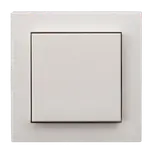
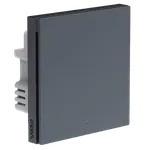
- Physical button and screwless Fusion faceplate instead of a touch panel
- Works with Alexa, Google Home and SmartThings through a Zigbee gateway
- Two-year warranty
Cons
- Requires a neutral wire, ruling out many older switch boxes
- 220-240V only, so it is not an option on 110-120V wiring
- Owners report a visible delay between pressing the button and the light responding
- The lowest brightness steps are coarse and 1% lands brighter than calibration suggests
- The pairing button is on the back, so first setup means taking the plate off
- Needs a Zigbee coordinator, since it has no Wi-Fi, Bluetooth or Thread of its own
- Not rated for fluorescent lamps, CFLs, LED strips or inductive loads such as fans
- No surge or overvoltage cut-off
- Apple Home and Matter only through a separate Sonoff bridge
Who is the Sonoff Orb-ZBDIM for?
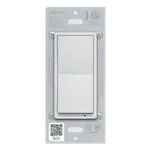
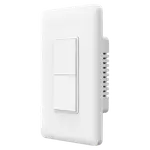
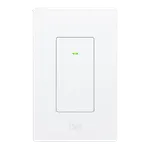
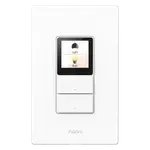
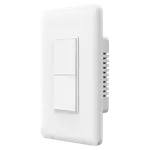
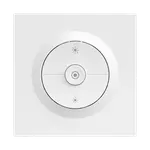
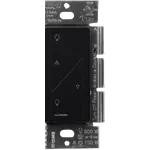
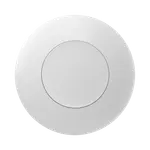
This is a single-circuit dimmer for one lighting group, built on Zigbee and wired to live and neutral at 220-240V. It has no Wi-Fi, Bluetooth, Thread or Z-Wave radio of its own, so it only makes sense if a Zigbee coordinator is already in the house, whether that is a Sonoff bridge, an iHost, an NSPanel Pro, a USB dongle or Home Assistant running Zigbee2MQTT or ZHA. Owners describe it as the plain, physical alternative to a glass touch panel: a real button on the wall, a round paddle for brighter and dimmer, and a small centre button for on and off. Several also point out that the module can be taken out of the Fusion faceplate and wired behind an existing rocker, which is how one owner matched it to the rest of the switches in the room.
What buyers love
The most consistent praise is how easily it joins an open-source setup. Owners running Zigbee2MQTT or ZHA report the switch being discovered and usable straight away, firmware updates going through over Zigbee, and the connection staying stable over weeks. The dimming itself is the other repeated compliment once calibration has run: the auto and manual calibration routine sets the usable brightness window for the lamps actually fitted, and owners running strings of dimmable LEDs describe the result as smooth and flicker-free rather than the stepped, buzzing behaviour they had from cheaper dimmers. Because the switch is permanently powered it also behaves as a Zigbee router, so it strengthens the mesh for nearby devices instead of leaning on it. The Fusion faceplate and the physical button get compliments too, particularly from people who wanted a switch that guests can operate without touching a phone, and the integrated design means fewer loose parts in the back box than a separate relay module wired behind a standard switch.
What to know before you buy
Three things dominate the critical feedback. The first is speed: owners repeatedly describe a noticeable delay between the press and the light, from a fraction of a second to a few seconds, both at the wall and through a hub, and for one buyer that lag was enough to send the smart bulbs back to plain dimmable ones. The second is the bottom of the dimming range: the 1% setting can land visibly brighter than the calibration sweep suggests, and the lowest steps are coarse, so very dim scenes are harder to hit than the 0-100% figure implies. The third is installation. This model requires a neutral wire and is a 220-240V device, the pairing button sits on the back of the unit so the first setup means having the plate off, and the body is deep enough that owners who swapped the paddle for a standard push-button had to fit a deeper box. Beyond that, the load list is strict: dimmable LED, incandescent, halogen and dimmable electronic transformers are in, while fluorescent lamps, CFLs, LED strips and inductive loads such as fans are explicitly out. The switch carries overload, overcurrent and overheat cut-offs but no surge protection, the external S1 and S2 inputs are documented thinly enough that one owner had to work out by testing that they are driven from live, and one buyer found ZHA exposing only on and off rather than the dimming channel.
Is the Sonoff Orb-ZBDIM worth it?
For a Zigbee household with the right wiring it is inexpensive for what it does, and the power metering is the part that is genuinely uncommon at this tier: the switch reports what the lighting circuit is drawing in real time, which is the data that turns a dimming habit into a number on a bill. It keeps a normal switch on the wall, it works manually with the hub offline, and it adds a router to the mesh. The case weakens if instant response matters more than anything else, since the lag is the one complaint that comes up across regions, or if the box has no neutral, in which case Sonoff's no-neutral models are the ones to look at instead. Buyers who want the same switch to reach Apple Home or a Matter controller without a Sonoff bridge should look at the Matter version of the same faceplate.
Frequently asked questions
Does the Sonoff Orb-ZBDIM need a neutral wire?
Yes. Sonoff's own FAQ states the Orb-ZBDIM requires a neutral wire for proper installation and operation, so a switch box carrying only live and load cannot run it.
Does it need a hub?
Yes, for anything beyond manual use. It is a Zigbee device with no Wi-Fi or Bluetooth, so it needs a Zigbee coordinator such as a Sonoff bridge, an iHost, an NSPanel Pro, a USB dongle or Home Assistant running Zigbee2MQTT or ZHA. It still dims from the wall without one.
Does the Orb-ZBDIM work with Alexa, Google Home and Home Assistant?
Yes, through the Zigbee gateway it is paired to. Sonoff names Home Assistant and Alexa on the product page and documents Home Assistant through its own dongle series, the retail listing adds Google Assistant, and Samsung SmartThings is listed as supported as well.
Does it work with Apple Home or Matter?
Indirectly. The switch speaks Zigbee, and Sonoff's product page documents bringing it into Apple Home over Matter through one of its Matter bridges, the ZBBridge-U or eWeLink CUBE. Sonoff sells the Orb-DIM as the natively Matter version of the same dimmer.
What bulbs can it dim?
Dimmable LED lamps up to 200VA, incandescent and halogen bulbs up to 400W, and dimmable electronic transformers up to 200W. Fluorescent lamps, CFLs, LED strips and inductive loads such as motors and fans are not supported, and leading-edge dimming is limited to legacy fixtures under 100W.
Does it measure how much power the lights use?
Yes. Power metering is built in and reports the lighting circuit's consumption in real time, which is visible in the app or in whichever platform the switch is exposed to.
Will it fit my back box?
The switch measures 86 x 86 x 34 mm and mounts on a standard 86-type box or a 60 mm European round box. Owners who kept the Fusion faceplate report it fitting a 25 mm back box when the wiring is tidy, while those who replaced the paddle with a conventional push-button needed a deeper one.