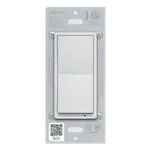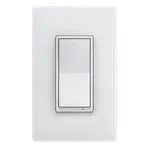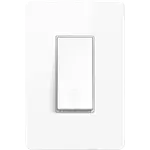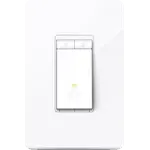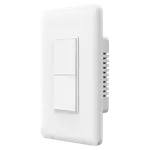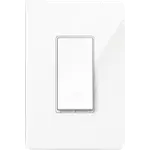


TP-Link Kasa HS200 Review: The No-Hub Smart Switch That Keeps Outselling Newer Rivals
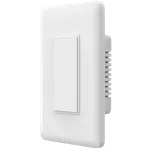
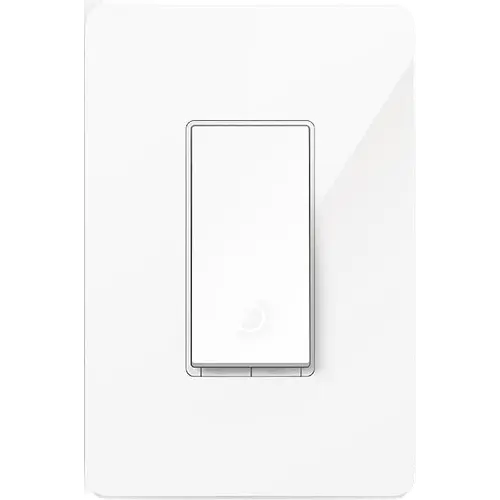
The Kasa HS200 is the default answer for anyone who wants smart lighting without buying a hub first: it joins a 2.4 GHz network on its own, then answers to Alexa, Google Home, SmartThings and Home Assistant. Owners keep coming back to two things, how quickly it installs and how rarely it drops off the network, including in detached workshops and barns at the far edge of a Wi-Fi signal. The two real constraints are physical rather than smart: it needs a neutral wire, which plenty of older boxes do not have, and it is a single pole switch, so it cannot take over a 3-way circuit. If your wiring cooperates, it is the cheapest reliable way to make an existing light switch smart.
- Budget smart lighting
- Hub-free setups
- Home Assistant users
- Outdoor, garage and workshop lights
- Single-pole switch installs
One switch per light circuit.
Buy on Amazon USACheck pricePros
- No hub required, it connects straight to 2.4 GHz Wi-Fi
- Works with Alexa, Google Home, SmartThings and Home Assistant
- Sunrise and sunset scheduling, countdown timers and Away Mode in the app
- Holds its connection at the far edge of a Wi-Fi network
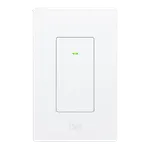
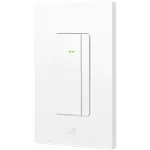
- White locator LED makes the switch easy to find in the dark
- Rated for 15 A general use, 600 W incandescent and a 1/6 HP motor
- 2 year warranty
Cons
- Neutral wire required, which many older switch boxes do not have
- Single pole only, so it cannot replace a 3-way switch
- Bulky rear module that is a squeeze in a crowded box
- 2.4 GHz Wi-Fi only, which can make pairing fiddly on merged-band routers
- No Apple Home support and no Matter certification
- No energy monitoring
Who is the TP-Link Kasa HS200 for?
This is a wired replacement for a normal single-pole light switch, aimed at people who want the light itself to be smart rather than the bulb. Because it talks 2.4 GHz Wi-Fi directly, there is no bridge, gateway or coordinator to buy, which is exactly why buyers keep choosing it over Z-Wave and Zigbee switches that need a hub before the first light turns on. The recurring installs in the reviews are telling: porch and garage lights, barn and workshop lighting a hundred feet from the house, and old X10 setups being retired. Several owners run it under Home Assistant, and the official TP-Link integration lists this exact model, so it slots into a self-hosted setup as easily as into the Kasa app.
What buyers love
The two themes that dominate are how simple the install is and how stable the connection stays. Owners with no electrical background describe wiring it in and pairing it in minutes, guided by the app, and long-term updates written years after purchase report the switches still working, including recovering on their own after a power cut. Range is a repeated surprise: one owner runs it in a detached shop with double metal walls, another in a barn over a hundred feet away on a weak signal, and both report it holding the connection. The scheduling is the other favourite, particularly sunrise and sunset triggers with an offset, so outdoor lights follow the seasons without anyone editing a timer. Voice control through Alexa and Google Home comes up constantly, and the muted white locator LED that glows when the light is off gets its own mentions from people who wanted to find the switch in a dark hallway.
What to know before you buy
The neutral wire is the single biggest gotcha and owners raise it more than any other point: switch boxes only started carrying a neutral relatively recently, so plenty of older homes will need an electrician or a different switch. The body behind the faceplate is also bulky, and more than one buyer describes shoehorning it into a crowded box. It is strictly single pole, which means a hallway or stairwell controlled from two switches is out of scope for this model, and buyers who need that point at TP-Link's 3-way version instead. On the network side it is 2.4 GHz only, so a router broadcasting a merged band can make pairing fiddly, and one long-term owner running six of them notes a single unit that occasionally drops offline and needs a button press to come back. Finally, this is an older design that predates TP-Link's HomeKit and Matter switches: there is no Apple Home path and no Matter certification, and there is no energy monitoring on board.
Is the TP-Link Kasa HS200 worth it?
For a single-pole circuit in a box with a neutral, this is close to a default recommendation, and its sustained sales rank says the market agrees. It is a budget-priced switch that skips the hub cost entirely, carries a 2 year warranty, handles a 15 A general load with 600 W of incandescent lighting or a 1/6 HP motor, and has a decade of buyer feedback behind it rather than a launch-week impression. Pay more only if you specifically need Apple Home, Matter, energy monitoring or 3-way wiring, because those are the four things this switch genuinely does not do.
Frequently asked questions
Does the Kasa HS200 need a hub?
No. It connects directly to a 2.4 GHz Wi-Fi network and is set up from the Kasa app, with no bridge or gateway to buy.
Does the Kasa HS200 require a neutral wire?
Yes. A neutral wire in the switch box is required, and this is the most common reason an install does not go ahead. Check the box before buying.
Can the Kasa HS200 be used in a 3-way circuit?
No. It is a single pole switch, so it cannot control a light that is also switched from a second location. TP-Link sells a separate 3-way model for that wiring.
Does the Kasa HS200 work with Home Assistant?
Yes. The official Home Assistant TP-Link integration lists the HS200 among its supported Kasa wall switches, and owners running it that way report it working alongside the Kasa app.
Does the Kasa HS200 work with Apple Home or Matter?
No. It predates both, and TP-Link's HomeKit-enabled and Matter-certified switches are different models. Alexa, Google Home, SmartThings and Home Assistant are the supported routes.
How much load can the Kasa HS200 handle?
It is rated for 15 A general use at 120 V, up to 600 W of incandescent lighting, and a motor load of up to 1/6 HP, such as a ceiling fan.