


Eve Water Guard Review: A HomeKit-Native Sensing Cable That Covers More Ground Than a Spot Sensor
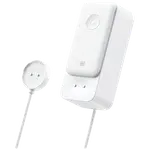
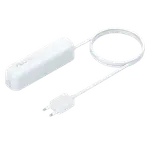
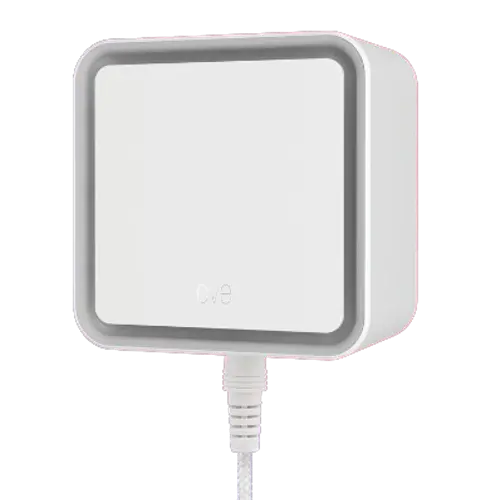
The Eve Water Guard swaps the usual spot-based leak puck for a 6.5 ft sensing cable that can be extended up to 490 ft, letting one unit watch an entire kitchen or laundry run instead of a single point. Owners consistently describe it as reliable, well-built, and among the smoothest Apple HomeKit integrations in the leak-sensor category, several credit it with catching a leak early enough to avoid real damage. The trade-offs are a noticeably higher price than spot sensors, a wired power requirement that limits where it can go, and no Alexa, Google Home or SmartThings support. It is the strongest option for HomeKit or Thread households that want broad coverage from a single sensor rather than several small pucks scattered around a room.
- Apple HomeKit and Thread households
- Covering a long run behind appliances (kitchen, laundry)
- Buyers who value fast, reliable HomeKit-native alerts
- Households near an outlet who don't need battery power
Pros
- Extendable sensing cable covers a whole appliance run, not just one spot
- Native, account-free Apple HomeKit integration
- Loud 100 dB on-device siren plus alert light and app notifications
- Wired power means no batteries to replace
- Consistently described as reliable, including by owners it saved from real leaks
Cons
- Pricier than most spot-based leak sensors
- No Alexa, Google Home, SmartThings or IFTTT support
- Requires constant wall power, limiting placement options
- Matter support not yet available
- A small share of buyers report connection failures or units that stopped detecting over time
Who is the Eve Water Guard for?
This sensor is built for Apple HomeKit households (and, via Thread, other Matter-adjacent setups) who want a single sensor covering more ground than a typical spot detector. Owners use its 6.5 ft sensing cable, extendable up to 490 ft, to trace behind a whole kitchen run of fridge, sink and dishwasher, along a laundry area, or around a mechanical closet with a water heater and softener, rather than needing several separate pucks. Since it plugs into a wall outlet for power rather than running on batteries, it suits placements near an outlet, like a utility closet or under a sink, better than remote spots far from power.
What buyers love
The most repeated praise is reliability paired with real HomeKit integration: reviewers describe setup as scan-and-add with automations configured directly in the Home app, and several specifically contrast this with competitors that require a manufacturer account. Multiple owners report the alarm catching an active leak (a failed toilet flapper, a leaking roof, a washing machine drip) with in-time notifications through both the on-device siren and light and the Eve/Home apps, matching its supported 100 dB siren and alert light. The extendable sensing cable is called out repeatedly as the standout feature versus single-point sensors, letting one unit monitor a full appliance run instead of just the spot directly beneath it. Being wired rather than battery-powered is also appreciated by some as one less thing to maintain.
What to know before you buy
Price is the most consistent caveat, several reviewers explicitly call it expensive compared to spot sensors, though most say the protection is worth it. It has no Alexa, Google Home, Samsung SmartThings or IFTTT support, this is a HomeKit-and-Thread-first device (Matter support is planned but not yet available), so it is a poor fit outside that ecosystem. Because it requires constant wall power, placement options are more limited than a battery sensor, and a small number of buyers report units that failed to connect, stopped detecting, or needed replacement after a few months, though those who contacted Eve support generally describe a responsive resolution. A couple of reviewers also note the fabric sensing cable needs to absorb a small amount of water before triggering, making it very slightly less instantaneous than a bare-contact spot sensor, and one long-term owner found it overly sensitive to minor moisture.
Is the Eve Water Guard worth it?
For HomeKit and Thread households, this is widely seen as one of the most trustworthy leak sensors available, buyers repeatedly frame the higher price as cheap insurance against a flooded basement or ruined floor, and the sensing-cable design genuinely covers more area than a comparable spot sensor. It is not the budget pick, and it will not suit anyone without Apple HomeKit or a nearby outlet, but for its intended audience the strong, consistent feedback backs up the premium price.
Frequently asked questions
Does the Eve Water Guard work with Alexa or Google Home?
No. It supports Apple HomeKit and Home Assistant, with Thread connectivity (a Thread Border Router is required), but has no native Alexa, Google Home, SmartThings or IFTTT support.
Does it run on batteries?
No, it is wired for power (100-240V) and plugs into a wall outlet, so there are no batteries to replace, but it does need to be installed near an outlet.
How much area does the sensing cable cover?
It ships with a 6.5 ft (2 m) sensing cable that itself acts as the sensor, and it can be extended up to about 490 ft (150 m) to monitor a wide area rather than a single spot.
Does it have an on-device alarm?
Yes, it includes a 100 dB siren and an alert light on the device itself, in addition to app notifications.
Does the Eve Water Guard support Matter?
Matter support is planned but not yet available. Today it connects natively through Apple HomeKit and Thread.