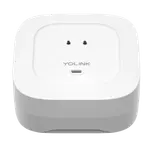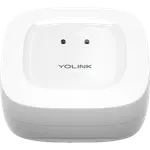
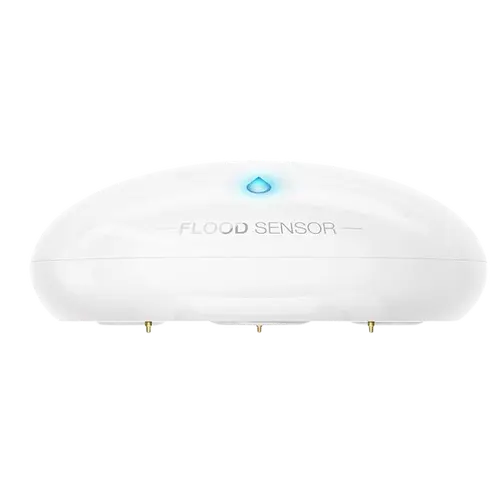


Fibaro Flood Sensor (HomeKit) Review: A Compact Bluetooth Leak Detector Built for Apple Home
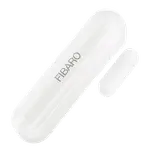
The Fibaro Flood Sensor (HomeKit) is a compact, easy-to-place puck aimed squarely at Apple Home users who want direct water-leak, freeze and tamper alerts without a separate hub, since it pairs over Bluetooth through an Apple TV, HomePod or iPad. Owners consistently report it catching real leaks early and describe long battery life, but it depends on solid Bluetooth range to a HomeKit hub and lacks a way to silence or remotely stop the on-device alarm, so it fits best in smaller homes already built around Apple Home rather than larger properties or non-Apple ecosystems.
- Apple HomeKit households
- Smaller homes and apartments
- Buyers wanting simple leak plus freeze alerts
- No-hub, battery-only setups
Pros
- Small, inconspicuous, easy-to-place design
- Native Apple HomeKit support with no separate hub required
- Combined water-leak, temperature and tilt/tamper sensing
- Long CR123A battery life with optional wired backup power
- Fast on-device alert sound and light plus quick HomeKit push notifications
Cons
- Bluetooth-only; range depends on proximity to a HomeKit hub (Apple TV/HomePod/iPad)
- No native Google Home, Alexa, Samsung SmartThings, IFTTT or Matter support
- No way to silence or remotely stop the on-device alarm
- Low-battery alerts are not a confirmed feature
- Not officially weather-resistance rated
Who is the Fibaro Flood Sensor (HomeKit) for?
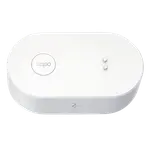
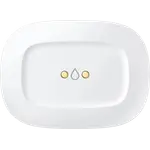
This sensor is built specifically for the Apple Home ecosystem: it needs an Apple TV, HomePod or iPad acting as a HomeKit hub to relay its Bluetooth connection, so it is the right pick for HomeKit households rather than Alexa, Google Home or SmartThings users, none of which the spec sheet lists as supported. Buyers commonly place it near a water heater, washing machine, sump pump or under a sink, and its small, light body (59g, about 71 x 71 x 29.3 mm) and 2-year CR123A battery life make it easy to tuck into tight spots and mostly forget about.
What buyers love
The recurring theme is peace of mind: several owners describe the sensor catching a real leak (a failed sump pump, a slow drip) before it caused serious damage, with the HomeKit push notification and on-device alert sound and light both firing quickly. The temperature sensor is called out as a useful bonus for freeze-alert automations, and the built-in tilt/tamper sensor is appreciated as an extra layer against the unit being moved. Setup through the Fibaro app and pairing into the Home app is generally described as fast, and multiple owners report batteries still reading close to full after a year or more, matching the roughly 2-year rated battery life.
What to know before you buy
Because it relies on Bluetooth rather than Wi-Fi, Zigbee or Z-Wave, its range depends entirely on how close a HomeKit hub (Apple TV, HomePod or iPad) is; several buyers in larger homes or with concrete/multi-wall layouts needed an extra Apple TV as a repeater, and a handful reported the sensor dropping offline and needing a reset. There is no native Google Home, Alexa, Samsung SmartThings, IFTTT or Matter support, matching the negative flags in the spec sheet, so this is a HomeKit-only device (Home Assistant is also supported directly). Some owners also note there is no way to silence the on-device alarm remotely or run it in a quiet/notification-only mode, and low-battery alerts are not a confirmed feature, so keep an eye on battery status manually. A few reviewers felt the price was high for what the device does.
Is the Fibaro Flood Sensor (HomeKit) worth it?
For an Apple Home household that wants a small, dedicated leak and freeze sensor without adding a separate smart-home hub, this is a solid, purpose-built option with a strong record of catching real leaks and a battery that comfortably lasts years. It is a weaker fit for larger homes that would need extra Bluetooth repeaters, or for anyone outside the Apple ecosystem, since none of Google Home, Alexa or SmartThings are supported. Buyers who want the same detection with deeper automation options should also compare it against Fibaro's own Z-Wave version, which several reviewers note offers more configurable alarm and notification settings.
Frequently asked questions
Does the Fibaro Flood Sensor (HomeKit) need a separate hub?
It needs an Apple HomeKit hub, meaning an Apple TV, HomePod or iPad set up as a home hub, since it connects over Bluetooth rather than Wi-Fi. It does not require a dedicated Z-Wave or Zigbee bridge.
Does it work with Alexa, Google Home or SmartThings?
No. The spec sheet lists it as supporting only Apple HomeKit and Home Assistant directly, with no native Google Home, Alexa, Samsung SmartThings, IFTTT or Matter integration.
How long does the battery last?
It runs on a single CR123A battery rated for about 2 years, and several long-term owners report the battery still reading near full after a year or more of use. It can also be wired to a 12/24V DC power source so the battery serves as backup rather than the primary supply.
Does it also detect temperature or tampering, not just water?
Yes. Besides water-leak detection, it includes a temperature sensor (with temperature and freeze-temperature alerts) and a tilt sensor that triggers tamper alerts if the unit is moved.
Can I turn off or silence the alarm remotely?
No dedicated silent or remote-mute mode is documented, and some owners note the on-device alarm keeps sounding until the contacts dry out, with no way to stop it through an automation.