

Flume 2 Review: Whole-House Leak Detection Without Touching a Pipe
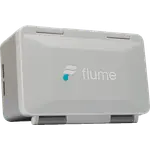
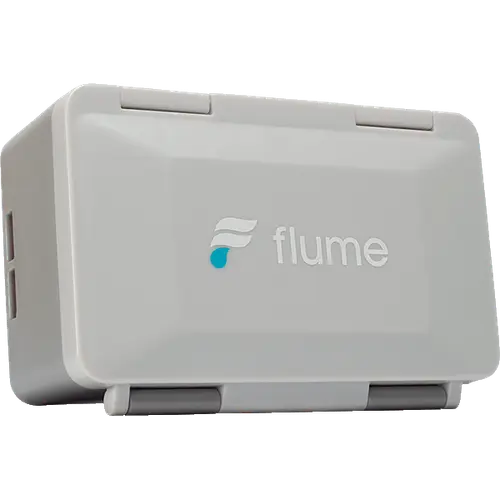
Flume 2 solves a different problem from every other device in this category. Instead of waiting for water to reach a sensor on the floor, it straps to the outside of your existing water meter, reads the meter magnetically, and reports every drop the house uses to a Wi-Fi bridge indoors. That means it catches leaks that never touch a floor, like a toilet flapper seeping into the bowl or a buried irrigation line, and it doubles as a detailed usage monitor with per-minute history and budgets. Installation needs no plumbing at all. The two real gripes are Flume's move to a proprietary battery pack and per-fixture attribution that owners find less precise than advertised.
- Whole-house leak detection
- Homes with irrigation or a large garden
- Tracking and reducing water bills
- Renters and owners who cannot alter plumbing
Pros
- Detects leaks anywhere in the property, including ones that never reach a floor
- Installs on the existing meter in minutes with no plumbing or plumber
- Compatible with about 95 percent of US residential water meters
- Real-time usage with per-minute history retained long term
- Water budgets and unusual-usage alerts
- Long radio range between the meter sensor and the indoor bridge
- Works with Amazon Alexa and Google Home
Cons
- Replacement battery is now a proprietary Flume pack
- Per-fixture attribution is less precise than some buyers expect
- No siren, so alerts are app-only
- Needs a mains outlet indoors for the bridge, within range of the meter
- No Apple HomeKit or Matter support
- Requires a compatible meter, so check the list before buying
Who is the Flume 2 for?
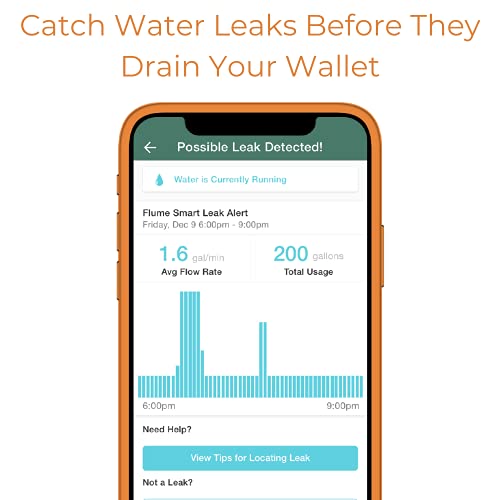
It is for anyone who wants to know about a leak anywhere in the property, not just where they happened to put a sensor. The device clamps to the outside of a standard residential water meter with the supplied straps and reads it magnetically, so there is no cutting, no plumber and nothing inserted into the water supply. Flume states compatibility with about 95 percent of residential meters in the US, and the sensor talks to an indoor Wi-Fi bridge on its own long-range radio, which one owner confirmed working across a distance well beyond a typical garden. Because it measures actual flow, the app can show real-time usage, keep per-minute history indefinitely, set budgets, and flag unusual patterns as possible leaks.
What buyers love
The catches are what owners write about. One buyer credits it with finding a toilet flapper leaking into the bowl, something their floor-based sensors could never have seen because no water ever reached the ground, and another was alerted to a hidden leak they would not otherwise have noticed. Installation is described as easy and non-invasive, with the hardest part usually being digging out around an in-ground meter box. Range beats expectations, and the data depth draws real enthusiasm: owners like being able to review any minute of any past day, and gardeners with automated drip systems use it to keep irrigation inside budget. Flume states many customers save around 15 percent on their water bill.
What to know before you buy
The biggest complaint is not about detection but about batteries. Flume changed the replacement pack to a proprietary part, and long-term owners are unhappy about it, with one lowering their rating specifically over it and another calling it a reason not to buy. The second issue is expectation setting: because the device infers activity from total meter flow rather than watching individual fixtures, an owner looking for precise per-fixture reporting found it fell short of the marketing. Setup also requires Wi-Fi and a phone, the bridge needs a mains outlet indoors within radio range of the meter, and you should check the published meter compatibility list before ordering. There is no HomeKit or Matter support, and unlike a floor puck it has no siren, so every alert arrives through the app.
Is the Flume 2 worth it?
If your worry is a leak you cannot see, this is the only mainstream device that watches the whole property at once, and it does so without a plumber. That makes it complementary to cheap floor sensors rather than a replacement for them, and it earns its keep fastest on properties with irrigation, a pool, or a history of surprise water bills. Weigh the proprietary battery against that, confirm your meter is on the compatibility list, and treat the usage analytics as a whole-house picture rather than a fixture-by-fixture breakdown.
Frequently asked questions
Does the Flume 2 require plumbing work?
No. The sensor straps to the outside of your existing water meter and reads it magnetically, so nothing is cut, opened or inserted into the water supply. Most installations take minutes, though an in-ground meter box may need digging out first.
What kinds of leaks can the Flume 2 detect?
Because it measures total flow at the meter, it sees anything that uses water, including a toilet flapper seeping into the bowl, a dripping fixture, or a buried irrigation break. Those are exactly the leaks that floor-based sensors miss.
How far can the Flume 2 sensor be from the bridge?
Flume rates the link between the meter sensor and the indoor Wi-Fi bridge at up to 1000 feet, and owners with meters well away from the house report the connection holding up.
Will the Flume 2 work with my water meter?
Flume states it works with about 95 percent of residential meters in the US. There is a published compatibility list, and it is worth checking your meter model against it before ordering.
Does the Flume 2 need a subscription?
No. Usage monitoring, history, budgets and leak alerts come with the device through the Flume app, which is one of the reasons owners pick it over metered alternatives.
What powers the Flume 2?
The meter sensor runs on a battery pack, now a proprietary Flume part rather than off-the-shelf cells, which is the most common complaint from long-term owners. The indoor bridge plugs into a mains outlet.