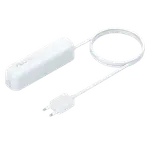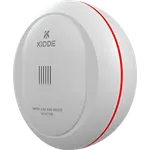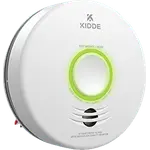
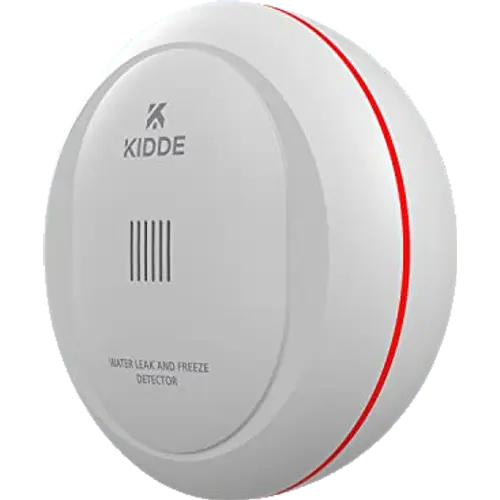


Kidde WiFi Water Leak & Freeze Detector Review: Cheap Insurance That Mostly Just Works
This is the straightforward version of the leak sensor: a small battery-powered puck that goes under a sink or next to the water heater, joins Wi-Fi on its own with no hub, and pushes an alert to your phone and to family when it finds water or the temperature drops toward freezing. Owners report it doing exactly that, including one who was 300 miles away on holiday when it caught a basement leak. It also works with Alexa and Google Home. The recurring frustrations are all at setup, where Wi-Fi pairing defeats a meaningful number of buyers, plus a battery compartment several people found genuinely hard to open and a freeze reading that only refreshes twice a day.
- Under sinks, water heaters and washing machines
- Basements and garages at risk of freezing
- Budget whole-home leak coverage
- Homes without a smart hub
Pros
- Detects both water leaks and freezing conditions
- Connects straight to Wi-Fi with no hub or base station
- Alerts to your phone and shareable with family
- Slim design fits under sinks and behind appliances
- Two AA batteries included, easy to replace once open
- Freeze alert at 37 °F or on a rapid temperature drop
- Works with Amazon Alexa and Google Home
- Inexpensive enough to place several around the house
Cons
- Wi-Fi setup defeats a meaningful number of buyers
- Battery compartment is very difficult to open
- Room temperature only refreshes every 12 hours, limiting freeze warning speed
- 2.4GHz Wi-Fi only
- Support was unable to help owners whose units would not pair
- No Apple HomeKit, SmartThings or Matter support
- Only a one-year warranty
Who is the Kidde WiFi Water Leak & Freeze Detector for?
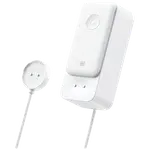
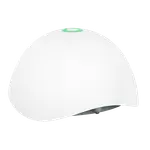
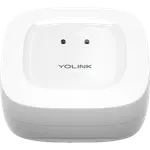
It is the cheap, sensible option for putting a sensor everywhere water might appear. The design is deliberately slim so it fits next to a dishwasher, refrigerator, water heater or toilet, or under a sink, and it is aimed squarely at basements and garages. Two AA batteries are included and it joins 2.4GHz Wi-Fi directly, so there is no base station to buy or place, and setup is meant to be a matter of scanning the QR code on the device in the Kidde app. Beyond water it tracks temperature and raises a freeze alert at 37 degrees Fahrenheit or when it sees a rapid drop, which is the warning that matters for pipes. Alerts go to your phone and can be shared with friends and family, and it works with Amazon Alexa and Google Home.
What buyers love
When it works, owners are genuinely grateful. One describes putting a unit on the basement floor, forgetting about it, and receiving a leak alert more than a year later while 300 miles from home on holiday. Another had previously been flooded by a failed water heater and now feels covered. A third admits they never even connected it to the app, left it under the kitchen sink, and nearly two years later it was still doing its job. Several call setup easier than the reviews had led them to fear, with the app walking them through it, and the general verdict from satisfied buyers is that it is an excellent detector for the money from a brand they already trust for alarms.
What to know before you buy
Setup is the weak link and it comes up repeatedly. One owner needed roughly a dozen attempts before the sensor joined Wi-Fi, another describes it as one of the most frustrating devices they have connected, and a third bought two units that never paired at all, with support unable to resolve it and a promised callback that never came. Like most sensors of this type it needs a 2.4GHz network, which trips up modern combined-band routers. The second practical issue is the battery compartment, which one owner spent an hour trying to open before calling customer service and concluded was simply a bad design. The third is the freeze function specifically: an owner points out the room temperature only updates every twelve hours with no way to force a refresh, which limits how early a freeze warning can arrive. There is also no HomeKit, SmartThings or Matter support.
Is the Kidde WiFi Water Leak & Freeze Detector worth it?
At its usual discounted price, yes. It does the core job, it needs no hub, it covers freezing as well as leaks, and the success stories are the kind that pay for the device many times over. Budget some patience for the initial Wi-Fi pairing, have a 2.4GHz network ready before you start, and do not rely on the freeze alert as an early-warning system given the twelve-hour temperature refresh. If you want faster freeze reporting or deeper smart-home integration, spend more elsewhere, but as a cheap sensor to scatter around the house it earns its place.
Frequently asked questions
Does the Kidde water leak detector need a hub?
No. It joins a 2.4GHz Wi-Fi network directly and reports to the Kidde app, so a single sensor works on its own without a base station or bridge.
At what temperature does the freeze alert trigger?
Kidde sets the freeze warning at 37 degrees Fahrenheit, and it also alerts on a rapid temperature drop. Note that owners report the temperature reading only refreshing every twelve hours, so it is not an instant warning.
How is the Kidde leak detector powered?
Two AA batteries, included in the box. Several owners warn that the battery compartment is unusually hard to open, so factor that into replacement time.
Is the Kidde leak detector hard to set up?
It can be. The intended process is scanning the QR code on the device in the Kidde app, and plenty of owners found that straightforward, but a significant number needed many attempts to get it onto Wi-Fi and a few never managed it.
Does it work with Alexa and Google Home?
Yes, it is compatible with Amazon Alexa and Google Home as well as iPhone and Android through the Kidde app. There is no Apple HomeKit, SmartThings or Matter support.
Where should I put the Kidde water leak detector?
Anywhere water is likely to appear first: under sinks, next to dishwashers, refrigerators, water heaters and toilets, and on basement or garage floors. The slim shape is designed to slide into those tight spots.