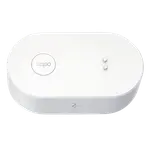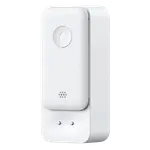



Third Reality Smart Water Leak Sensor WL2 Review: A Silent Zigbee Sensor Built for Automations
The Third Reality Smart Water Leak Sensor WL2 is a Zigbee 3.0 leak detector for homes that already run a hub and want a leak to trigger automations rather than shout from the floor. It pairs directly with SmartThings, Aeotec, Hubitat, Homey and Third Reality coordinators and with Home Assistant through ZHA or Zigbee2MQTT, and its integrated sensing dots pick up both slow drips and standing water without a probe cable. The trade-off is deliberate: unlike the previous generation there is no onboard siren, so every alert travels through the hub and the app, and Apple Home, Google Home and Matter arrive by way of the separately sold Smart Bridge MZ1. At a budget price, with an IP65 shell and long battery life, it fits automation-first setups far better than a household that wants a standalone alarm.
- Zigbee hub owners
- Home Assistant and SmartThings setups
- Automation-driven alerts
- Multi-room leak coverage
- Budget buyers
One sensor per water source: kitchen, bathroom, laundry.
Buy on Amazon USAPros
- Integrated drip and leak detection, with no probe cable to route
- IP65 rated enclosure for kitchens, bathrooms and basements
- Three-year battery rating on two standard AAA cells
- Pairs with Home Assistant, SmartThings, Hubitat and Homey Zigbee hubs
- Reports battery level, so a low cell raises an alert
- Screw-free battery compartment and over-the-air firmware updates
- Feeds hub automations instead of acting alone
Cons
- No onboard siren, unlike the previous generation
- No on-device alert light either
- Needs a Zigbee hub, it cannot run on its own
- Apple Home, Google Home and Matter require the separately sold Smart Bridge MZ1
- No built-in temperature sensor, so no freeze alerts
- No tilt detection
- Batteries are not included
Who is the Third Reality Smart Water Leak Sensor WL2 for?
This sensor is built for homes that already have a Zigbee coordinator running. It is a Zigbee 3.0 end device, so it needs that hub before it can report anything: a SmartThings, Aeotec, Hubitat, Homey or Third Reality hub, or a Home Assistant install using ZHA or Zigbee2MQTT. Once it is on the network its job is notification and automation rather than noise. Water reaching the sensing dots raises an alert that the hub turns into a push notification and, if you want, into an action such as closing a smart valve or cutting power to a washing machine. Placement is flexible because the detection is built into the body, so it drops under a sink, behind a toilet, beside a dishwasher or water heater, or straight onto a basement floor.
What the WL2 offers
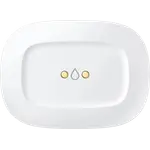
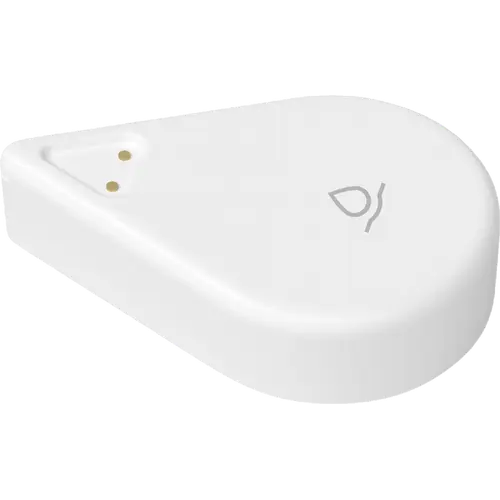
The detection design is integrated: metal sensing dots on the device itself register both slow drips and pooled water, so there is no probe cable to route or lose. The enclosure is rated IP65, meaning it is sealed against dust and protected against water jets, which is a sensible margin for kitchens, bathrooms, laundry rooms and basements where splashes and humidity are routine. Power comes from two AAA alkaline cells rated at three years, the kind of figure Zigbee sensors reach precisely because the protocol is designed for low-power battery devices, and the compartment snaps open without screws when the cells do run down. The sensor reports its battery level back to the hub, so a dying cell surfaces as an alert rather than as a silent failure, and it accepts over-the-air firmware updates.
What to know before you buy
The biggest change from the previous generation is the one to plan around: the WL2 has no siren. There is no on-device alert sound and no alert light, so if the hub is down or the notification goes unseen, the sensor stays quiet. A household that wants a detector able to raise the alarm on its own is better served by a model with an onboard alarm. The hub requirement is absolute rather than optional, and the ecosystem picture splits in two, with Alexa left out because it has no device type for leak sensors: Home Assistant and SmartThings reach the sensor over plain Zigbee, while Apple Home, Google Home and Matter all arrive through Third Reality's Smart Bridge MZ1, which is sold separately and is a second purchase to budget for. Coverage is water only, with no built-in temperature sensor and therefore no freeze warnings for pipes in an unheated space, and no tilt detection. Batteries are not in the box.
Is the Third Reality Smart Water Leak Sensor WL2 worth it?
At the budget end of the leak-sensor market the WL2 buys a well-sealed, hub-native sensor with long battery life and integrated drip detection, and it joins an existing Zigbee mesh without adding another cloud account or another app to check. The trade is the siren. Third Reality's earlier Zigbee leak sensor kept an onboard alarm and this one drops it on purpose, in favour of a quieter device aimed at homes whose alerts already run through a phone and a set of automations. If the hub is dependable and the notifications land, this is a cheap way to cover several rooms at once. If the alert needs to be audible in the room where the water is, the trade runs the wrong way.
Frequently asked questions
Does the Third Reality Smart Water Leak Sensor WL2 need a hub?
Yes. It is a Zigbee 3.0 end device, so it has to join a Zigbee network before it can report anything. Compatible coordinators include SmartThings, Aeotec, Hubitat, Homey and Third Reality hubs, and Home Assistant running ZHA or Zigbee2MQTT.
Does the WL2 have an alarm?
No. Third Reality dropped the siren its previous Zigbee leak sensor carried, so the WL2 has no on-device alert sound and no alert light. Alerts are delivered as app notifications through the hub it is paired with, which is also what lets a leak trigger an automation such as closing a smart water valve.
Does it work with Home Assistant?
Yes. Third Reality lists Home Assistant as a supported platform through both ZHA and Zigbee2MQTT, and Zigbee2MQTT ships a converter for this exact model, so it is recognised as a water leak sensor with battery reporting.
How does the WL2 reach Apple Home, Google Home and Matter?
Through Third Reality's Smart Bridge MZ1, which is sold separately. The sensor itself speaks Zigbee, and the MZ1 is a Zigbee to Matter bridge that republishes it to Matter controllers, which is the route into Apple Home and Google Home. SmartThings takes a shorter path, pairing the sensor over Zigbee directly, while Alexa has no device type for leak sensors.
What batteries does it use and how long do they last?
Two AAA alkaline batteries, rated at three years of typical use, and they are not supplied in the box. The compartment snaps open without screws, and the sensor reports its battery level to the hub so a low cell can raise an alert before it stops working.
Can the WL2 warn about freezing pipes?
No. It is a dedicated water sensor with no built-in temperature sensor, so it offers no freeze warnings. Pipes in an unheated garage, crawl space or basement need a sensor that measures temperature as well.