MOES WiFi Smart Water/Gas Valve Controller Review: A Budget Retrofit Actuator for Your Existing Valve
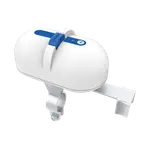
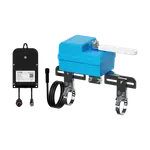
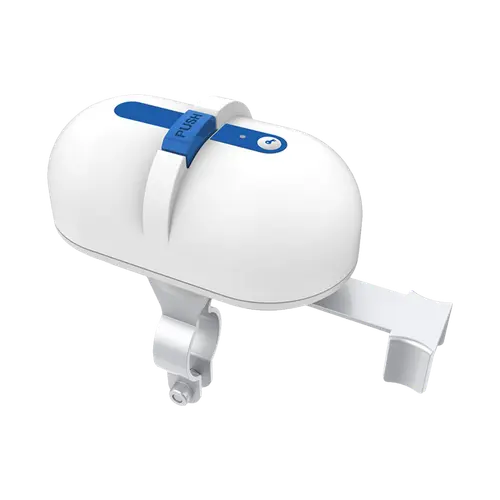
The MOES WiFi Smart Water/Gas Valve Controller is a motorized clamp that fits over the handle of a 1 inch or 1.25 inch valve and opens or closes it through the Smart Life app, Alexa or Google Home, with no hub. It is a very affordable way to make an existing valve smart, but it senses nothing itself: it only shuts the water when a separate Tuya leak sensor triggers an automation through the cloud, it has no battery backup, and several specs (weight, water resistance, valve exercise) are unpublished.
- Budget buyers
- Existing lever valves
- Tuya / Smart Life homes
- Voice control
Pros
- Retrofits onto an existing lever or butterfly valve with no plumbing work
- Fits 1 inch and 1.25 inch valves with a strong motor (up to about 5.9 N·m)
- No hub required, controlled through the Smart Life app
- Works with Alexa and Google Home voice control
- Schedules, timers and leak sensor scene linkage
- 2 year warranty
Cons
- No flow sensor or micro-leak test of its own
- Leak shutoff depends on the Tuya cloud and a separate leak sensor
- Plug-in power with no battery backup
- No Apple Home, SmartThings or Matter support
- Weight, water resistance and valve exercise are not published
Who is the MOES Valve Controller for?
It suits someone who already has a lever (spanner) or butterfly valve on a 1 inch or 1.25 inch line and wants remote or scheduled control without replacing plumbing. Because it is a retrofit actuator that clamps onto the handle, nothing is cut or soldered. It needs a Wi-Fi network on the 2.4 GHz band and a power outlet for its adapter, and it works inside the Tuya / Smart Life app, so it fits households that already run Tuya devices.
What stands out on paper
The motor delivers up to about 5.9 N·m of torque (30-60 kg·cm), enough to turn the handles it lists, and it opens or closes in 5 to 10 seconds. Control comes from the app, schedules and timers, and Alexa and Google Home voice commands, with Home Assistant reaching it through the Tuya integration. Scene linkage lets a Tuya water leak sensor close the valve automatically. MOES backs it with a 2 year warranty, a long term for a product at this tier.
What to know before you buy
This is an actuator, not a leak-protection system. It has no flow sensor and no micro-leak test, and the leak-to-shutoff automation runs through the Tuya cloud, so it needs the internet and a separate Tuya leak sensor. It runs on a plug-in 12 V adapter with no battery backup, so a power outage leaves it in its last position. There is no Apple Home, SmartThings or Matter support. The maker does not publish the weight, the water resistance rating or whether the valve exercises itself, and the printed pressure and temperature figures are unclear.
Is the MOES Valve Controller worth it?
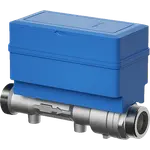
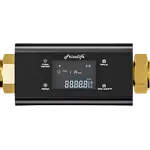
For a simple, inexpensive way to shut or open a manual valve from anywhere, it does the job without a hub. If your priority is automatic protection that keeps working offline, a purpose-built shutoff valve with its own flow sensing, such as an inline valve with micro-leak testing and battery backup, is the better category, and it costs far more. Treat this one as a smart handle turner, and pair it with leak sensors to add protection.
Frequently asked questions
Does the MOES valve controller need a hub?
No. It connects straight to a 2.4 GHz Wi-Fi network and is controlled through the Tuya / Smart Life app.
Does it detect leaks by itself?
No. It has no flow sensor or micro-leak test. It closes the valve when a separate Tuya water leak sensor triggers an automation in the app, which runs through the Tuya cloud.
Which valves does it fit?
MOES lists 1 inch and 1.25 inch valves with a lever (spanner) or butterfly handle, using a motor rated at 30-60 kg·cm (about 2.9-5.9 N·m).
Does it work with Alexa, Google Home and Home Assistant?
Yes for Alexa and Google Home, per MOES. Home Assistant can control it through its Tuya integration. Apple Home, SmartThings and Matter are not supported.
What happens during a power outage?
It runs on a plug-in 12 V adapter and has no battery backup, so it stays in its last position until power returns.